Reading Log for Homeschoolers: Free Printable & Flexible
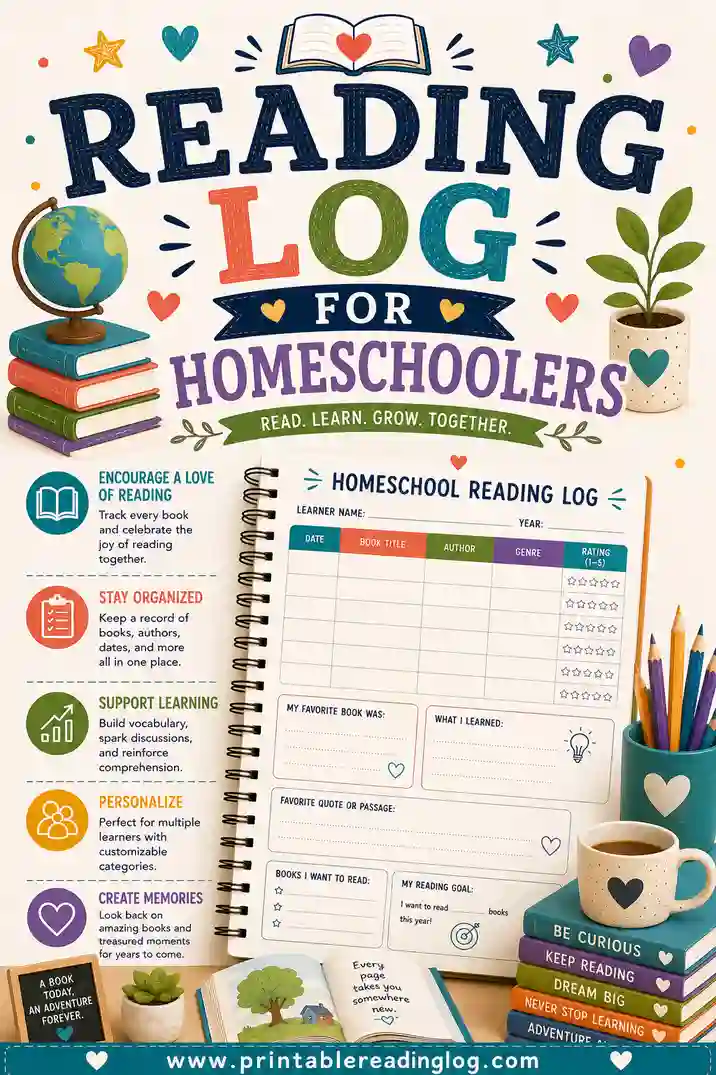
A reading log for homeschoolers is a printable sheet that records what your child reads each day, how long, and which books, so you have both a habit-builder and a tidy record for your portfolio. Because homeschool reading covers everything from solo chapter books to family read-alouds and audiobooks, the log needs to flex. The easiest way to get one that fits your setup is a free reading log builder where you choose the columns, the date range, and the style, then print exactly what you need.
Want to skip ahead? Open the free tool, pick a log that tracks minutes, books, or pages, and print a copy for each learner. No sign-up, no fee, nothing to install.
Why Homeschoolers Need a Different Kind of Log
Most reading logs online are built for a classroom or a single after-school habit. Homeschool reading doesn't fit that mold. Your day might include a science book read aloud at breakfast, an hour of independent reading, an audiobook in the car, and a picture book at bedtime. A standard log with five tidy minutes-per-night rows can't capture that.
A homeschool log has two jobs at once. First, it builds the daily habit, same as any log. Second, it doubles as a record. Depending on your state, you may need to show what your child read, and a finished log is the easiest proof there is. Build it with both jobs in mind and you save yourself a scramble at portfolio time.
The good news: one flexible template handles all of it. You just need the right columns.
What to track in a homeschool log
Pick the fields that match your style. A few common setups:
- Title and author — the backbone of any records-friendly log.
- Minutes read — for habit-tracking and state hour requirements.
- Read-aloud vs. independent — so you can show both kinds of reading.
- Subject or genre — handy if reading counts toward multiple subjects.
- A short note or rating — a one-line "what we thought" jogs your memory later.
You don't need all of these. Two or three columns that match your goal beat a cluttered sheet nobody keeps up.
Free Printable Homeschool Reading Log Formats
Here are the log styles homeschoolers reach for, matched to how they're usually used. Build the one that fits your week with the tool.
| Format | Best for | Tracks | Records-friendly? |
|---|---|---|---|
| Daily minutes log | Hour requirements | Minutes per day | Yes |
| Book list log | Portfolio building | Title, author, dates | Very |
| Read-aloud log | Multi-age families | Books read together | Yes |
| Subject reading log | Counting toward subjects | Title + subject | Yes |
| Per-child weekly log | Multiple learners | Minutes + titles | Yes |
The book list log is the workhorse for record-keeping. The daily minutes log is best if your state counts instructional hours. Many families print both and use them side by side.
A sample week for a mixed-age family
Here's what a week might look like when you've got an early reader and an older sibling sharing the day.
| Day | Reader | Book | Type | Minutes |
|---|---|---|---|---|
| Mon | Both | The Wild Robot | Read-aloud | 25 |
| Tue | Sam (10) | Percy Jackson | Independent | 30 |
| Tue | Mia (6) | Elephant & Piggie | Independent | 10 |
| Wed | Both | Magic School Bus | Read-aloud | 20 |
| Thu | Sam (10) | Percy Jackson | Independent | 30 |
| Fri | Mia (6) | Bob Books | Independent | 10 |
One sheet, two readers, three kinds of reading. That's the flexibility a homeschool log needs, and it's exactly the kind of record that makes portfolio reviews painless.
How to Build Your Homeschool Reading Log
No design skills required. From blank screen to printed log in a few steps:
- Open the reading log tool. It loads instantly in your browser.
- Choose your format. Minutes, books, or pages, in a kid or grown-up style.
- Set the date range. A week for habit tracking, a month or term for records.
- Add the columns you need. Title, type, subject, a notes line.
- Print one per learner. Plus a master copy you can reprint each term.
Keep finished logs in a binder or folder by month. Come review time, you've got a clean, dated record without lifting a finger.
Build it once, reuse it all year
Save yourself the monthly rebuild with these habits:
- Lock in your settings. Note the format you chose so next term's print is instant.
- Date the header. Month or term names keep your binder in order.
- Print a quarter at a time. Less frequent printing, fewer "we ran out" moments.
- Use one format per child. A first grader and a seventh grader need different sheets.
Fitting Reading Logs Into Your Homeschool Day
The log works best when it's woven into a routine, not bolted on. Homeschool gives you flexibility classrooms don't, so use it.
- Morning basket. Read-alouds at the start of the day are easy to log right after.
- Independent reading block. A set quiet hour gives you a clean minutes number.
- Audiobooks count. Car rides and chore time become reading time; log them like any book.
- Bedtime stories. For little ones, the last book of the day is the simplest one to track.
The key is logging close to when the reading happens. A sheet filled in at bedtime from memory misses things; one marked right after each block stays accurate.
Tracking read-alouds and audiobooks
Homeschool reading often isn't solo. Read-alouds and audiobooks are real reading and absolutely belong on the log, especially for younger kids and reluctant readers. Use a "type" column or a dedicated read-aloud log for parents so shared and listened books get counted. If audiobooks are a big part of your routine, our guide on logging them, linked from the tool, covers how to track them cleanly.
Reading Logs and Your Portfolio
If your state requires a portfolio or progress review, your reading log is one of the easiest pieces to assemble, as long as you keep it dated and titled. Reviewers love seeing a running book list because it shows breadth, level, and consistency at a glance.
A few tips to make logs review-ready:
- Always note the date and title. These two fields do the heavy lifting in a portfolio.
- Keep them in order. A monthly binder beats a shoebox of loose sheets.
- Show range. A mix of genres and levels tells a stronger story than 30 books in one series.
- Don't over-document. A clean list beats a log so detailed you stopped filling it in.
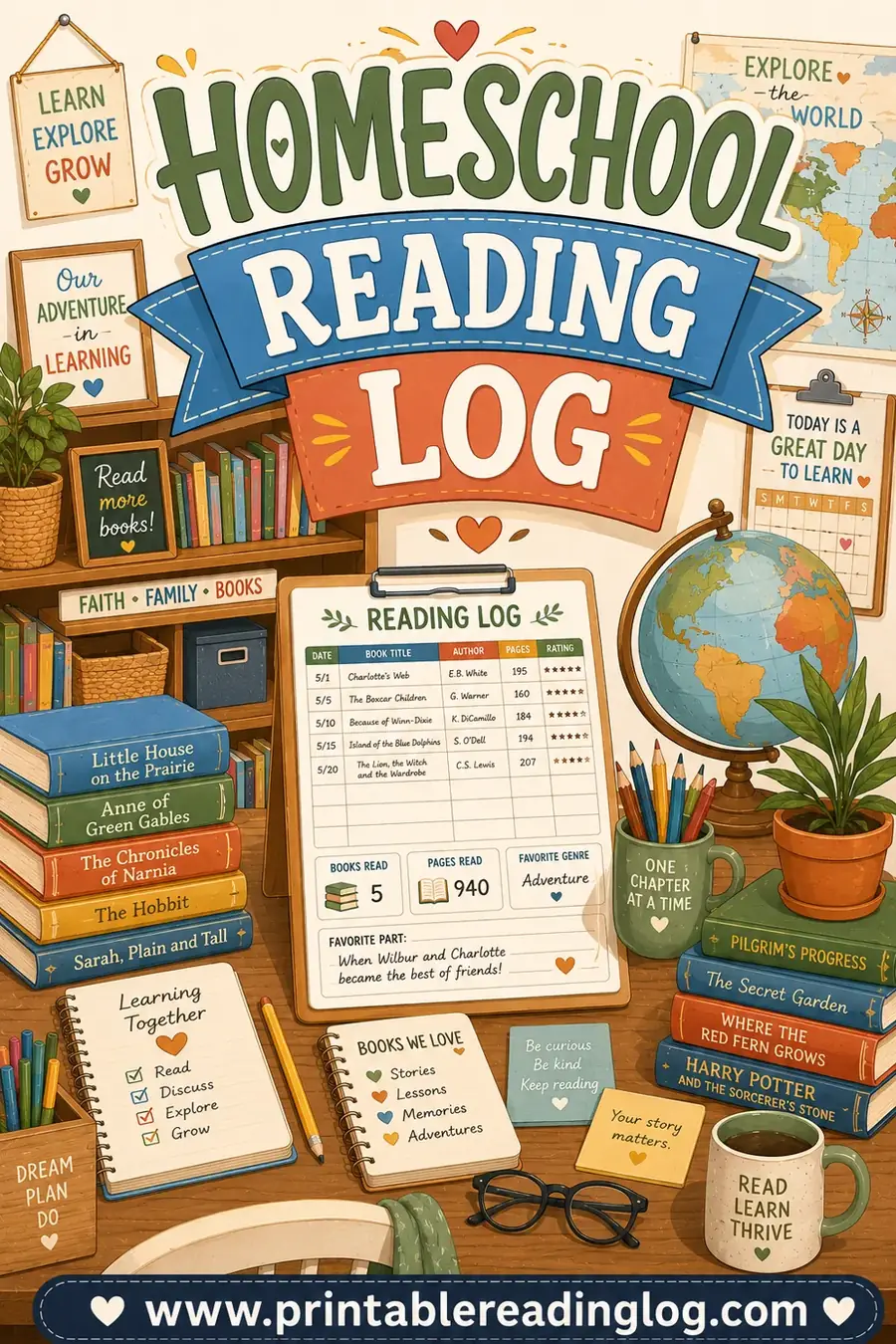
For more homeschool-specific options and templates, our homeschool reading log and best free reading logs for homeschool articles dig deeper.
Using the Log Across Subjects
One of the quiet advantages of homeschooling is that reading bleeds into everything. A history living book, a science biography, a nature guide, a poetry anthology, they're all reading, and they often count toward a subject as well. A reading log can capture that double duty if you add a simple subject column.
- History. Living books and biographies often replace a textbook entirely. Log the title and tag it "history."
- Science. Nature guides, science readers, and how-things-work books all count as both reading and science.
- Literature. Novels and classics are obvious, but so are plays and short story collections.
- Read-alouds across subjects. A morning-basket read-aloud might cover geography one day and a fairy tale the next.
Tagging reading by subject turns one log into evidence for several parts of your curriculum. Come review time, you can point to a single sheet and show reading happening across the whole school day, not just during a "reading" block.
Tracking Multiple Ages at Once
Many homeschool families juggle several children at different reading levels, and a one-size log rarely fits all of them. The smart move is to match the format to each child while keeping your system consistent.
| Child | Format | Daily target | What they track |
|---|---|---|---|
| Early reader (5–6) | Read-aloud + minutes | 10 min solo | Books read together |
| Middle child (8–9) | Minutes + title | 20 min | Independent reading |
| Older child (11+) | Pages or books | 30 min | Pages, books finished |
Print a format per child, but file them in the same binder so your records stay tidy. Read-alouds you do together can go on every child's sheet, since the whole family shares them. This keeps each kid's record honest to their level while giving you one clean place to find everything at portfolio time.
Frequently Asked Questions
What should a homeschool reading log include?
At minimum, the date, book title, and author, plus minutes read if your state counts hours. Add a "type" column to separate read-alouds, independent reading, and audiobooks. Keep it to a few columns so it stays easy to maintain and doubles as a clean portfolio record.
Do audiobooks and read-alouds count on a homeschool log?
Yes. Both build vocabulary, comprehension, and a love of reading, and both are legitimate to log, especially for younger or struggling readers. Use a "type" column to note them so your records show the full range of reading happening in your home.
Is this reading log really free to print?
Yes. You build and print it yourself with no cost and no sign-up. There's no watermark, so you can print fresh logs every week or term, one per child, for the whole year.
How do I use a reading log for my portfolio?
Keep each log dated and titled, then file them in a binder by month or term. A running book list shows reviewers the breadth, level, and consistency of your child's reading at a glance, which is exactly what most progress reviews want to see.
Can I track multiple children on one log?
You can, with a "reader" column, but it's usually cleaner to print one log per child so each has their own record and habit streak. The tool makes printing a second copy quick, and you can use a different format per child's age.
How many minutes should my homeschooler read each day?
It varies by age and your state's requirements, but 20 to 30 minutes of independent reading is a solid target for elementary and up, with read-alouds on top. Younger children might do 10 to 15 minutes of solo reading plus daily read-alouds.
Ready to Build Your Homeschool Reading Log?
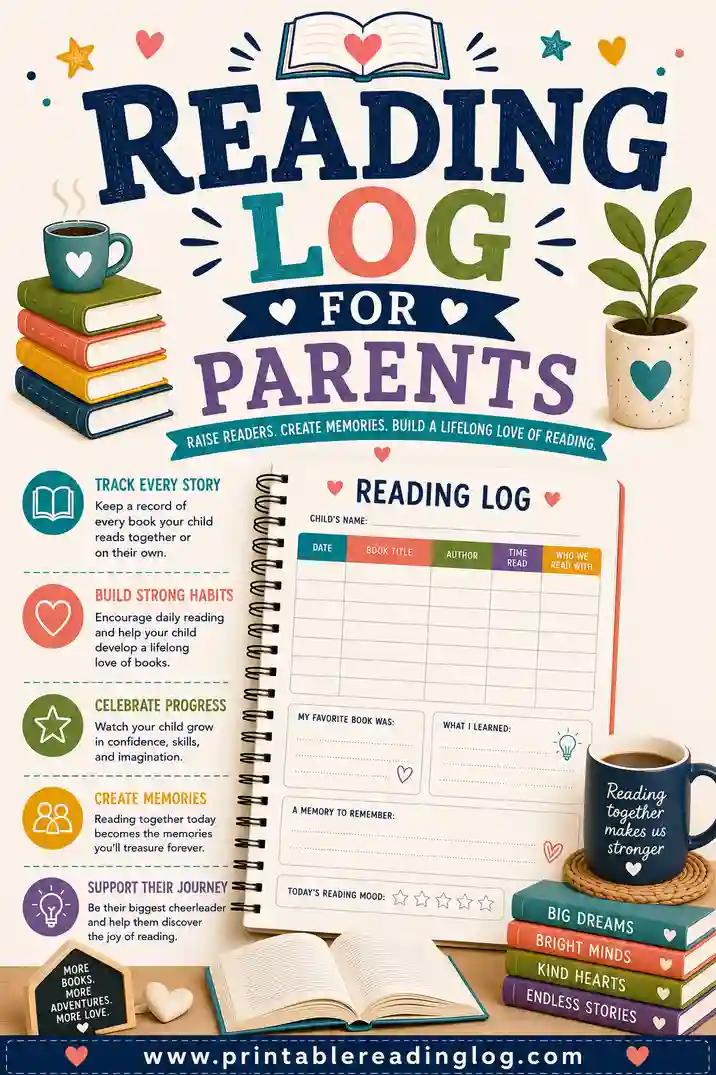
Choose the format that matches your homeschool, open the free reading log tool, and print a log for each learner in minutes. It's free, there's no sign-up, and you can shape the columns to double as both a habit tracker and a portfolio record. Start logging this week and let the record build itself. For more options, see our homeschool reading log and reading log for parents.