Reading Log for Parents: Free Printable You'll Actually Use
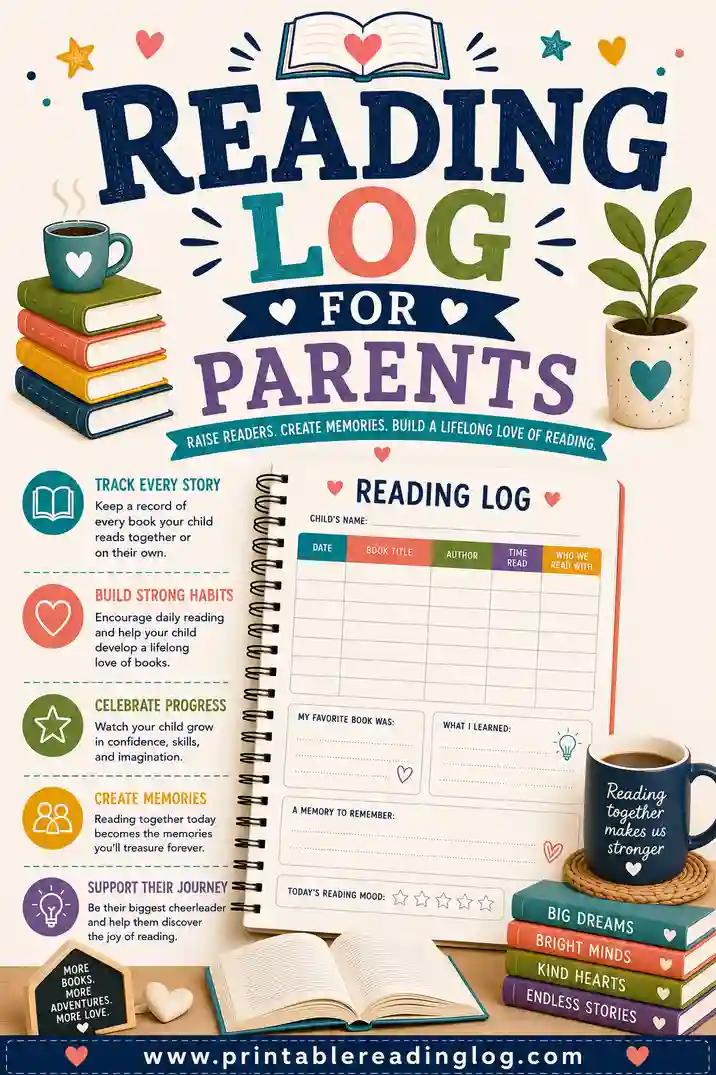
A reading log for parents is a simple sheet you keep at home to track how much your child reads each day, what book they're in, and whether they hit their goal. It turns "did you read tonight?" into something you can both see, which makes the nightly habit far easier to keep. The quickest way to get one is to use a free reading log builder that lets you choose minutes, books, or pages and print a kid-friendly version in seconds.
Just want to print one and start tonight? Open the free tool, pick a tracker that fits your child's age, and print a copy for the fridge. No sign-up, no cost, nothing to download.
Why a Reading Log Helps at Home
Reading every day is one of those things everyone agrees is good and almost nobody does consistently without a nudge. A log is that nudge. It makes the habit visible. Your child can see the row filling up, you can see the streak forming, and the whole thing stops being a battle.
It also does something quieter but just as useful: it shows you what's actually happening. Maybe your kid breezes through 30 minutes on Saturdays but skips weeknights. Maybe they're stuck on the same book for two weeks and quietly bored. The log surfaces those patterns so you can do something about them.
And it builds ownership. When kids mark their own minutes, reading becomes their project, not just another chore you're enforcing. That small shift is often the difference between a habit that sticks and one that fizzles.
What a parent's log should track
You don't need a complicated sheet. The best home log fits one of these simple shapes:
- Minutes per day — the classic. Aim for 15 to 20 minutes a night.
- Books finished — satisfying for kids who love to count.
- Pages read — good for older kids deep in chapter books.
- Read-alouds — for younger children you read to.
Pick one. A log that tries to track everything just becomes a thing nobody fills in.
Free Printable Reading Logs by Age
Different ages need different logs. A toddler can't write a book title, and a fifth grader will roll their eyes at a sticker chart. Here's what works at each stage so you print the right one the first time.
| Age / stage | Best log type | Daily goal | What to track |
|---|---|---|---|
| Toddler (2–4) | Read-aloud log | 1–2 books | Books you read together |
| PreK–Kindergarten | Picture log + minutes | 10 min | Minutes, sticker per day |
| Grades 1–2 | Daily minutes log | 15 min | Minutes, book title |
| Grades 3–5 | Minutes + title log | 20 min | Minutes, title, quick rating |
| Middle school | Pages or books log | 20–30 min | Pages, books finished |
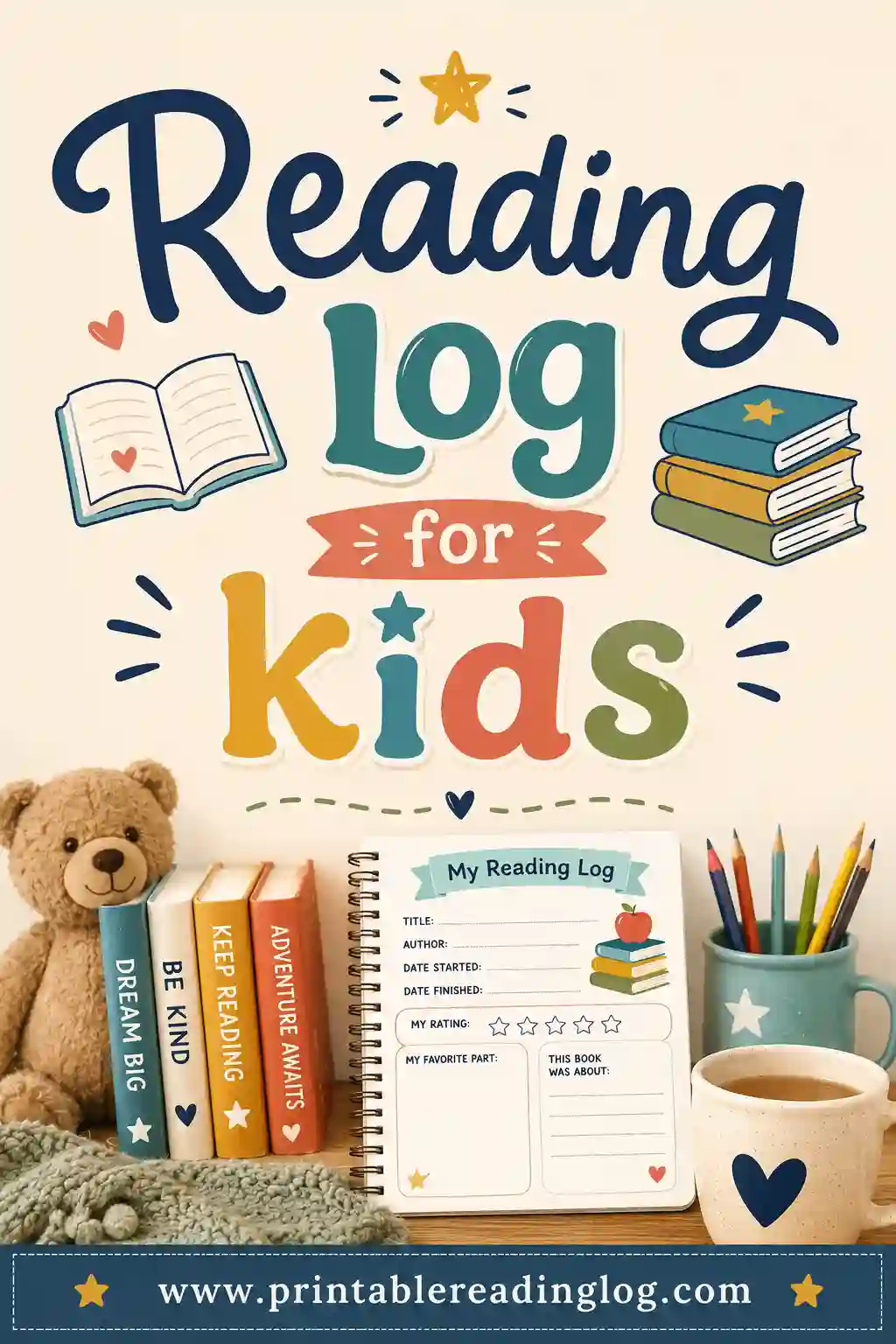
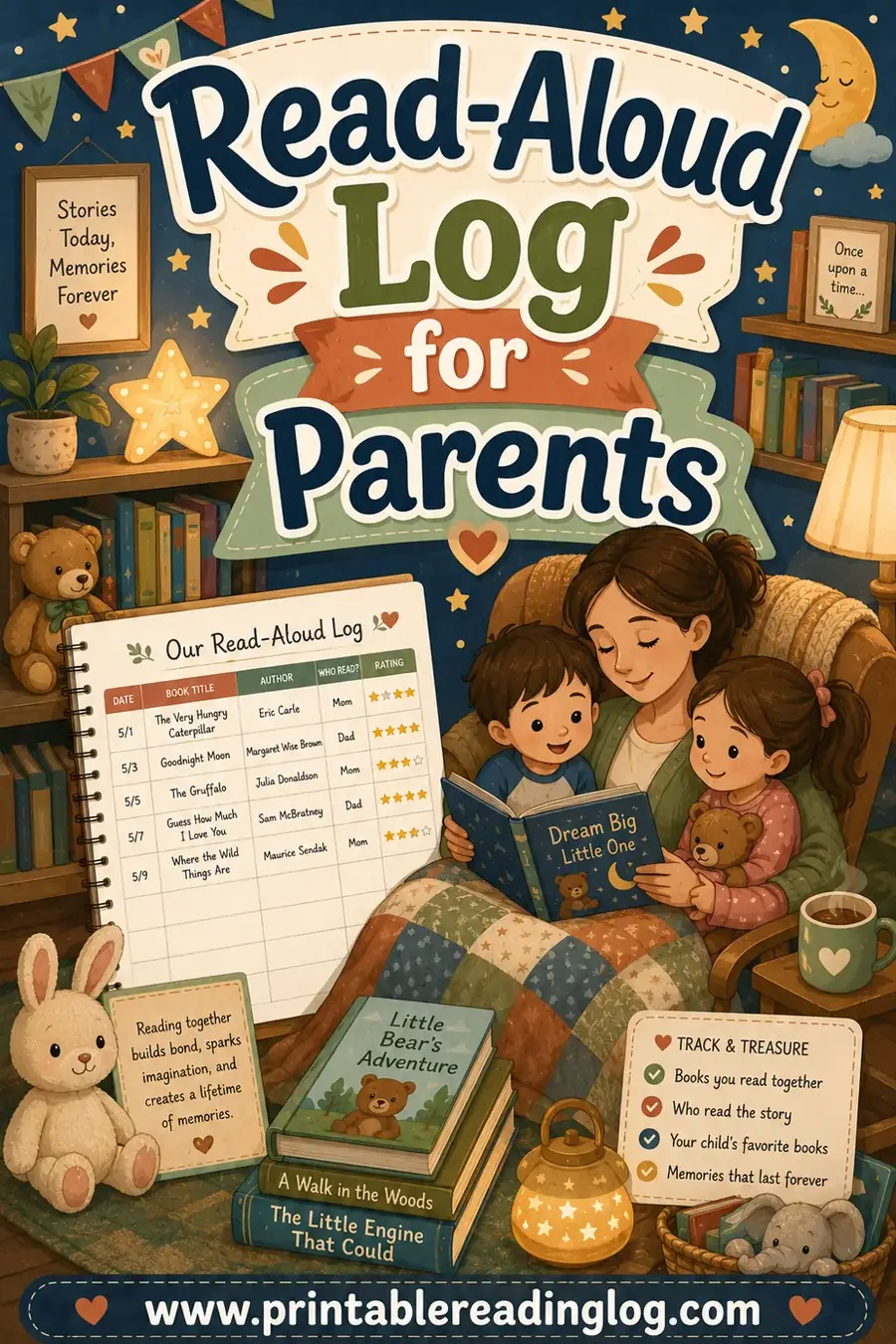
If your child is on the younger end, a dedicated reading log for kids keeps the boxes big and the goals friendly. For little ones you're still reading to, a read-aloud log for parents captures shared books instead of solo reading.
A week that looks like real life
Here's a filled-in week for a second grader, including a skipped night, because that's honest and totally fine.
| Day | Book | Minutes | Done |
|---|---|---|---|
| Mon | Frog and Toad | 15 | ⭐ |
| Tue | Frog and Toad | 20 | ⭐ |
| Wed | (soccer practice) | 0 | — |
| Thu | Magic Tree House | 15 | ⭐ |
| Fri | Magic Tree House | 25 | ⭐ |
| Sat | Magic Tree House | 30 | ⭐ |
Four stars out of six is a great week. The log isn't about perfection. It's about seeing the pattern and keeping the streak alive most nights.
How to Make Your Reading Log in Minutes
Building one takes less time than finding a printable you actually like online. Here's the whole thing:
- Open the reading log tool. It runs right in your browser.
- Choose your format. Minutes, books, or pages, in a kid or grown-up style.
- Pick a date range. A week is easy to fill; a month feels like a bigger accomplishment.
- Set the goal. Type in your nightly target so it's printed right on the sheet.
- Print it. One copy for the fridge, one spare for the backpack.
Tape it somewhere your child sees every day. The fridge, the back of their door, the wall by their bed. Out of sight is out of mind with reading habits.
Make it stick
A printed sheet is step one. These small moves make the habit actually take hold:
- Pair it with a routine. Reading right after dinner or right before bed beats "sometime today."
- Let them mark it. Handing over the pen builds ownership.
- Celebrate streaks, not perfection. A missed night isn't a failure.
- Read alongside them. Kids copy what they see, so let them catch you with a book.
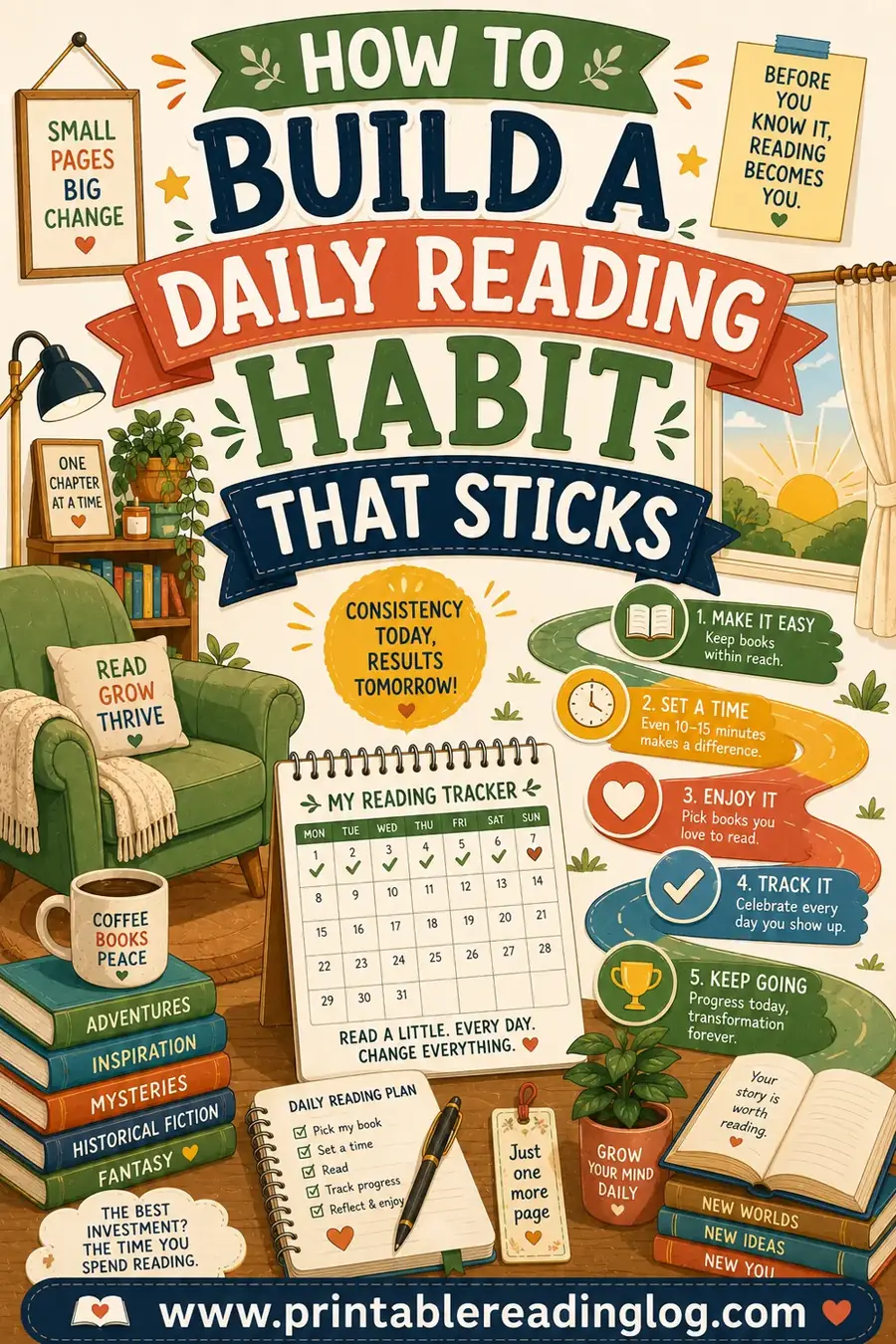
For a deeper playbook on this, our guide on how to build a daily reading habit walks through the routines that work.
Keeping Reading Fun, Not a Chore
The fastest way to kill a reading habit is to make the log feel like homework. A few guardrails keep it light:
- Don't quiz them. The log tracks minutes, not a book report. Save questions for casual chats.
- Let them pick the books. Comics, joke books, and re-reads all count. A kid who chooses gets invested.
- Keep goals reachable. Better to nail 15 minutes a night than to set 45 and miss it constantly.
- Tie in small rewards. A full week might earn a trip to the library or movie night, not money.
Reading should feel like the good part of the day, not a tax on it. If the log ever becomes a source of friction, shrink the goal until it's easy again, then build back up.
When your child resists
Some kids dig in their heels. If reading is a fight, the log can still help by making the goal small and visible. Start with five minutes. Let them read the same beloved book ten times. Try audiobooks or letting them read to a pet. The point is to keep the streak alive while reading stays positive. Our piece on motivating reluctant readers, linked from the tool, has more specific tactics.
Working With Your Child's Teacher
If your child already brings home a school log, you don't need a separate system. Use the school's sheet on school nights and your home log for weekends and breaks, so the habit never pauses. Many teachers love when parents extend reading into the summer and holidays, when the famous "slide" tends to happen.
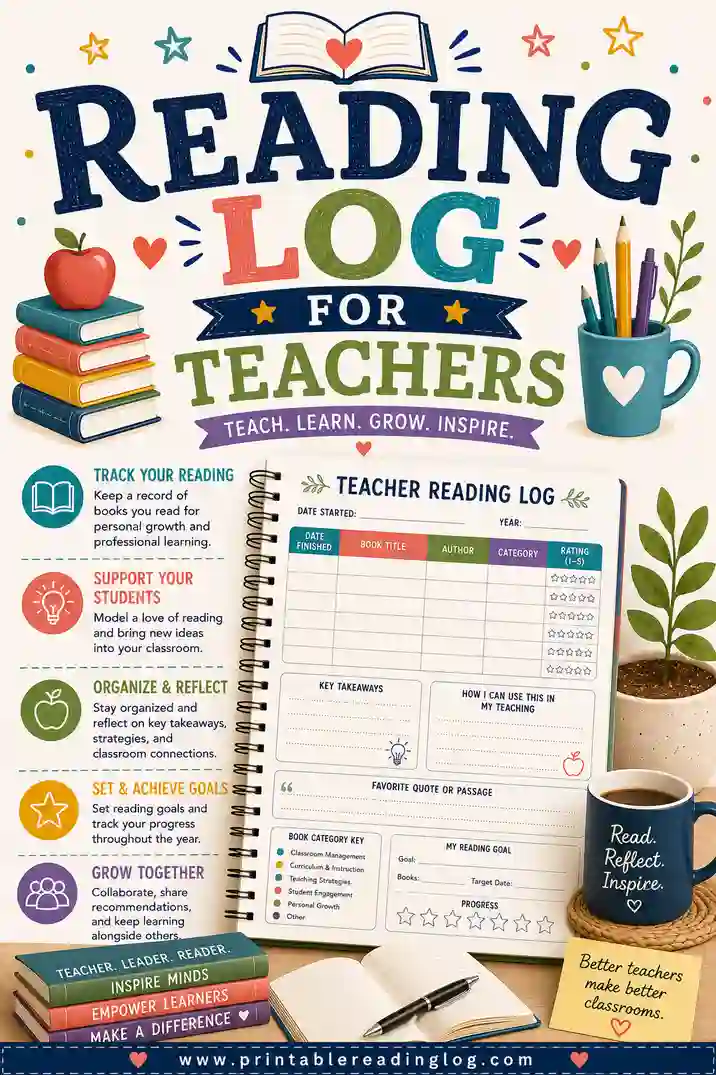
It helps to know what the teacher is tracking. If their reading log for teachers counts minutes, match that at home so the numbers line up. A quick note to the teacher asking what counts (audiobooks? re-reads? being read to?) saves confusion later.
Reading Goals by Age, So You Aim Right
One of the most common questions parents ask is simply "how much should my kid be reading?" The honest answer is that consistency matters more than any exact number, but having a target helps you set the goal on the log. Here are reasonable daily aims by stage.
| Stage | Daily reading goal | What counts | Notes |
|---|---|---|---|
| Toddler (2–4) | 1–2 books | Read-alouds | Repeats are great |
| PreK–Kindergarten | 10 minutes | Read-alouds + early reading | Build the routine |
| Grades 1–2 | 15 minutes | Independent + shared | Start solo reading |
| Grades 3–5 | 20 minutes | Independent reading | The classic target |
| Middle school | 20–30 minutes | Books and pages | Longer books |
Treat these as friendly defaults, not rules. A child who reads 12 minutes every single night is doing better than one who does 30 minutes twice a week. Set the goal a notch below what your child can comfortably do, so the log fills up and the wins keep coming. You can always nudge it up once the habit is solid.
Handling Busy Weeks and Slumps
Real life happens. Sports, sickness, travel, and the occasional reading slump will all dent your streak, and that's completely normal. The log helps you ride through these without giving up the habit entirely.
- Shrink the goal, don't drop it. A wild week might call for five minutes instead of twenty. Five minutes keeps the streak alive.
- Lean on audiobooks. Busy and on the road? An audiobook in the car still counts and still builds the habit.
- Re-reads are fine. A slump often eases if you let your child fall back into an old favorite they love.
- Restart without guilt. A broken streak isn't a failure. Just start a fresh row and keep going.
The families who succeed with reading aren't the ones who never miss a night. They're the ones who get back on track quickly after they do. The log makes that restart easy and visible.
Frequently Asked Questions
How many minutes a day should my child read?
A common target is 15 to 20 minutes of reading a day for elementary kids, building toward 30 for middle schoolers. Younger children might start at 10 minutes. The exact number matters less than reading most days, so set a goal you can actually hit.
Does being read to count on the log?
Yes, especially for younger children. Read-alouds build vocabulary and a love of stories before kids can read alone. Use a read-aloud column or a separate read-aloud log so those shared books get counted.
Is this reading log really free?
Yes. You build and print it yourself at no cost. There's no account to create and no watermark, so you can print fresh sheets every week for as long as you like.
My child hates reading. Will a log help?
It can, if you keep the goal tiny and the mood positive. Start at five minutes, let them pick any book including comics, and celebrate streaks instead of policing them. The log makes small wins visible, which builds momentum without pressure.
Should I reward my child for reading?
Small, occasional rewards tied to streaks (a library trip, choosing movie night) work better than paying per book. The aim is to make reading its own reward over time, so keep prizes light and don't make every page transactional.
Can I use the same log for two kids?
It's cleaner to print one per child so each owns their streak. The tool makes it quick to print a second copy, and you can even use a different format for each child's age and reading level.
Ready to Print Your Reading Log?
Pick the format that fits your child, open the free reading log tool, and print a copy for the fridge tonight. It's free, there's no sign-up, and you can match it to your child's age and goal in a couple of clicks. Start the streak this evening and watch the minutes add up. For more options, check out our reading log for kids and our guide to building a daily reading habit.