Reading Log for Sunday School: Track Bible Reading
A reading log for Sunday school is a simple sheet that helps kids track the Bible stories, passages, and memory verses they read each week, often with stars or stickers to celebrate progress. Teachers use it to encourage at-home reading between classes, and kids love watching their rows fill up. The easiest way to make one is to use a free reading log generator, pick a kid-friendly style, and print copies for your whole class.
Want to jump straight in? Open the free tool, choose a simple sticker-style log, and print a sheet for each child. No sign-up, no fee, nothing to install.
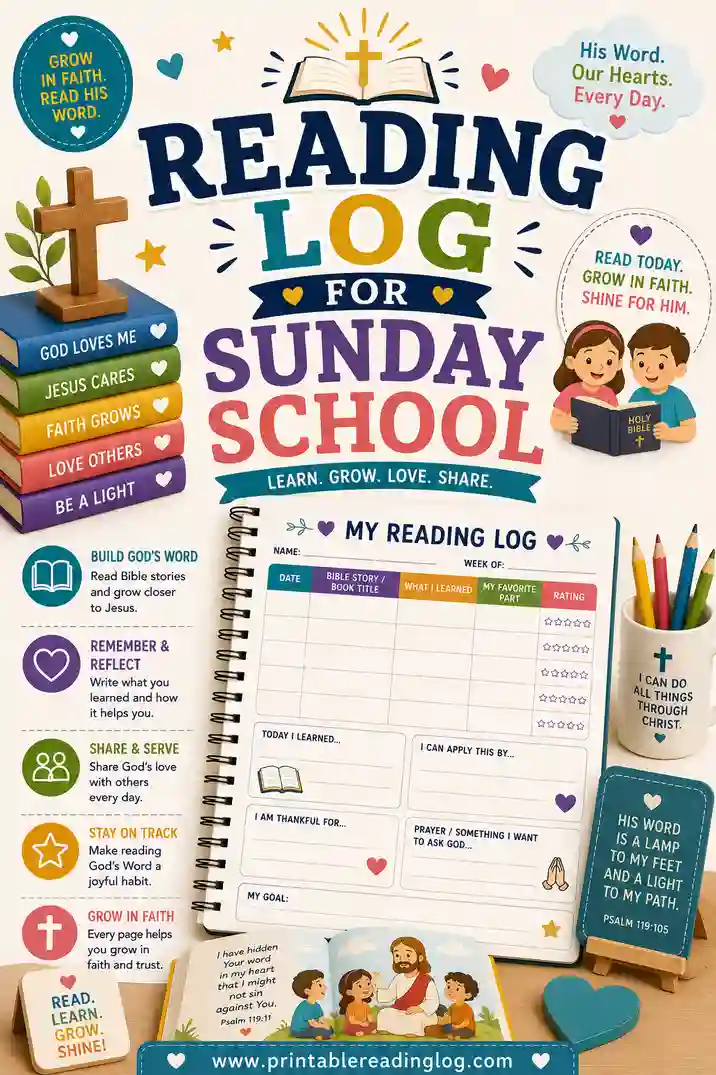
What Is a Sunday School Reading Log?
It's a tracking sheet built around faith-based reading rather than school assignments. Instead of logging novels or minutes, kids record the Bible stories they read, the passages they cover, or the verses they memorize. Each entry gets a check, a star, or a sticker, turning weekly reading into something a child can see and feel proud of.
Most classes only meet once a week, so a big part of the log's job is to keep reading going between Sundays. A child who has a sheet at home, with a few empty star boxes waiting, is far more likely to open a children's Bible during the week than one who only thinks about it on Sunday morning.
A typical Sunday school log includes:
- A row per story or passage read during the week.
- A memory verse spot to track the verse the class is learning.
- A star or sticker space to celebrate each entry.
- An adult initial line so a parent can confirm reading at home.
Why Use a Reading Log in Sunday School?
A log does more than track. In a faith setting, it gently builds a habit of returning to Scripture, and it gives kids a sense of accomplishment that keeps them engaged.
- It extends class beyond Sunday. One hour a week isn't much. A take-home log keeps the stories alive all week long.
- It motivates with visible progress. Kids love filling in stars. That little reward makes reading feel like an adventure, not a duty.
- It involves families. When a parent initials the log, reading becomes a shared moment at home, not just a classroom activity.
- It celebrates memory work. Tracking memorized verses gives kids a concrete sense of "look how much I've learned."
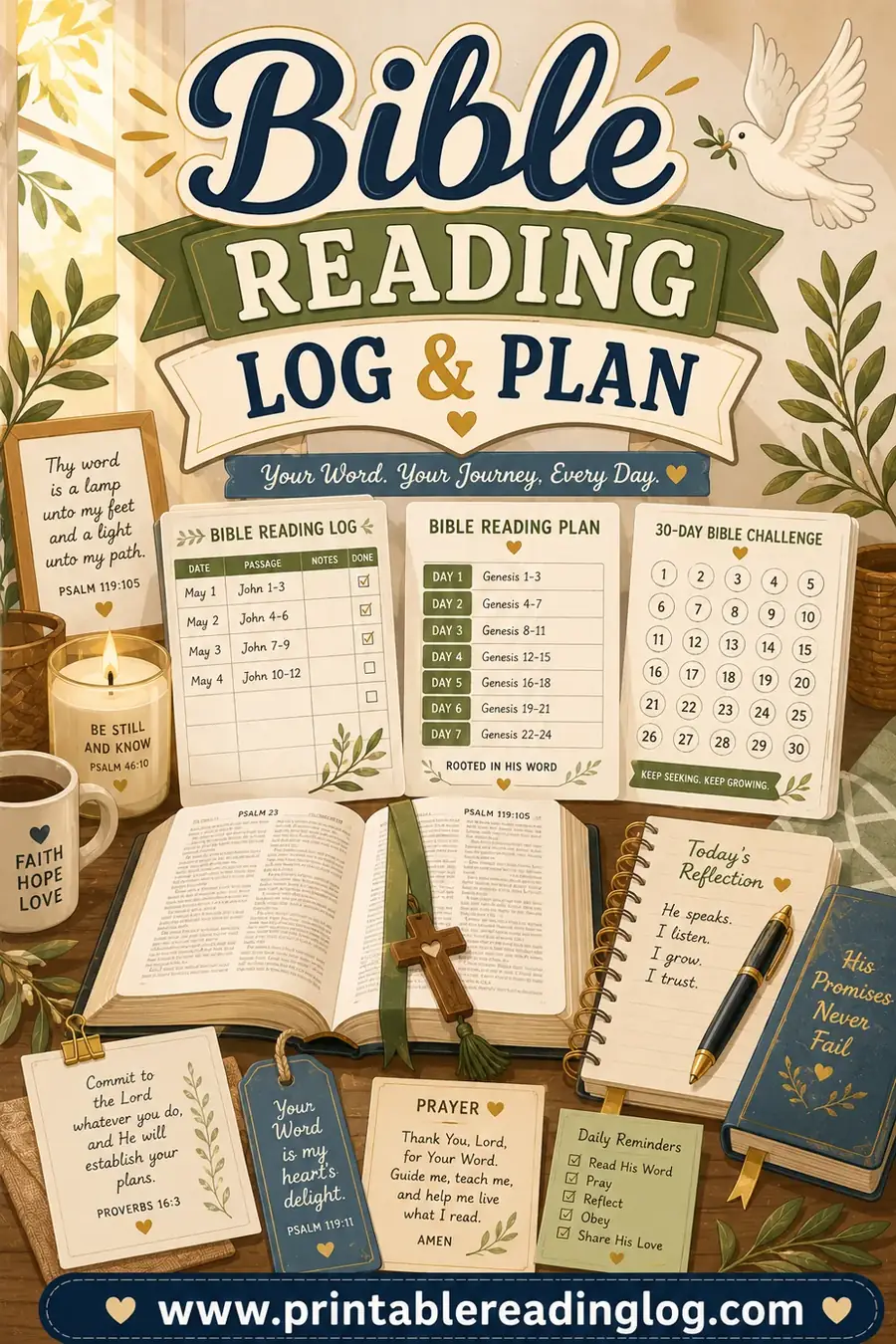
If you want a structured plan to read alongside the log, our Bible reading log plan guide lays out an approach you can adapt for any age.
What to Track on a Sunday School Log
Keep it simple and joyful, especially for younger kids. The aim is consistent reading and a positive feeling about it, not a heavy record. A clean log tracks just a few things.
- Story or passage — what was read (for example, "Noah's Ark" or "Psalm 23").
- Date or week — to see the weekly rhythm.
- A star or sticker — the reward.
- Memory verse — the verse being learned, with a box to mark when it's memorized.
For older kids, you can add a small spot for "one thing I learned" or a favorite verse, which gently builds reflection. For little ones, stick to stickers and a parent's initials.
A sample Sunday school reading log
| Week | Bible story | Memory verse | Star |
|---|---|---|---|
| 1 | Creation (Genesis 1) | John 3:16 | ⭐ |
| 2 | Noah's Ark | Psalm 23:1 | ⭐ |
| 3 | David and Goliath | Proverbs 3:5 | ⭐ |
| 4 | Daniel and the Lions | Philippians 4:13 | ⭐ |
| 5 | The Good Samaritan | Luke 10:27 | ⭐ |
Five weeks of stars is a tidy, visible record a child can show off, and a memory-verse column doubles as a little curriculum of its own.
Ideas to Keep Kids Reading All Week
A log only works if kids actually use it between classes. A few gentle incentives go a long way.
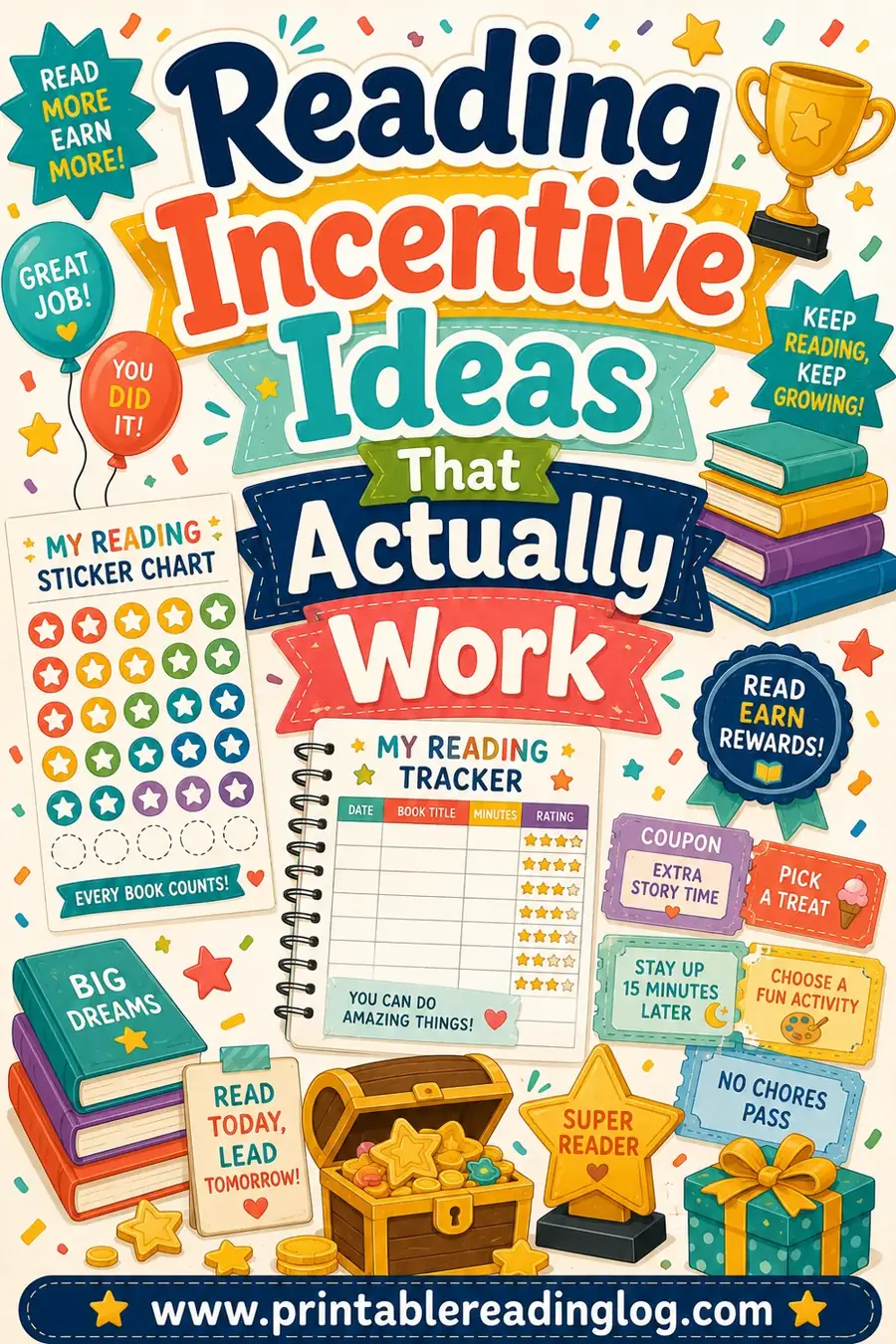
Tie stars to a small reward. A certain number of stars earns a class sticker, a bookmark, or first pick at the snack table. Keep it small and kind. Our reading incentive ideas guide has plenty that fit a Sunday school budget.
Celebrate as a class. Start each Sunday by inviting kids to share a story they read at home. Recognition in front of friends is its own reward.
Use a class chart, too. Alongside individual logs, a big shared chart on the wall lets the whole class watch their collective reading grow.
Make memory verses a game. Practice the week's verse with clapping, motions, or a quick call-and-response. Kids learn faster when it's fun, and they'll fill in that verse box with pride.
Send the log home with a note. A short line to parents explaining the log turns it into a family activity, which is where the real habit forms.
Adapting the Log for Different Ages
Sunday school classes span a wide age range, so one layout won't fit everyone. Match the log to the group.
| Age group | Log style | What to track |
|---|---|---|
| Preschool (3–5) | Big sticker boxes, pictures | Story heard, with a sticker |
| Early elementary (6–8) | Simple rows, star boxes | Story read, memory verse |
| Older elementary (9–11) | Rows plus a reflection line | Passage, verse, "what I learned" |
| Middle school (12+) | Fuller log | Daily passages, verse, a short note |
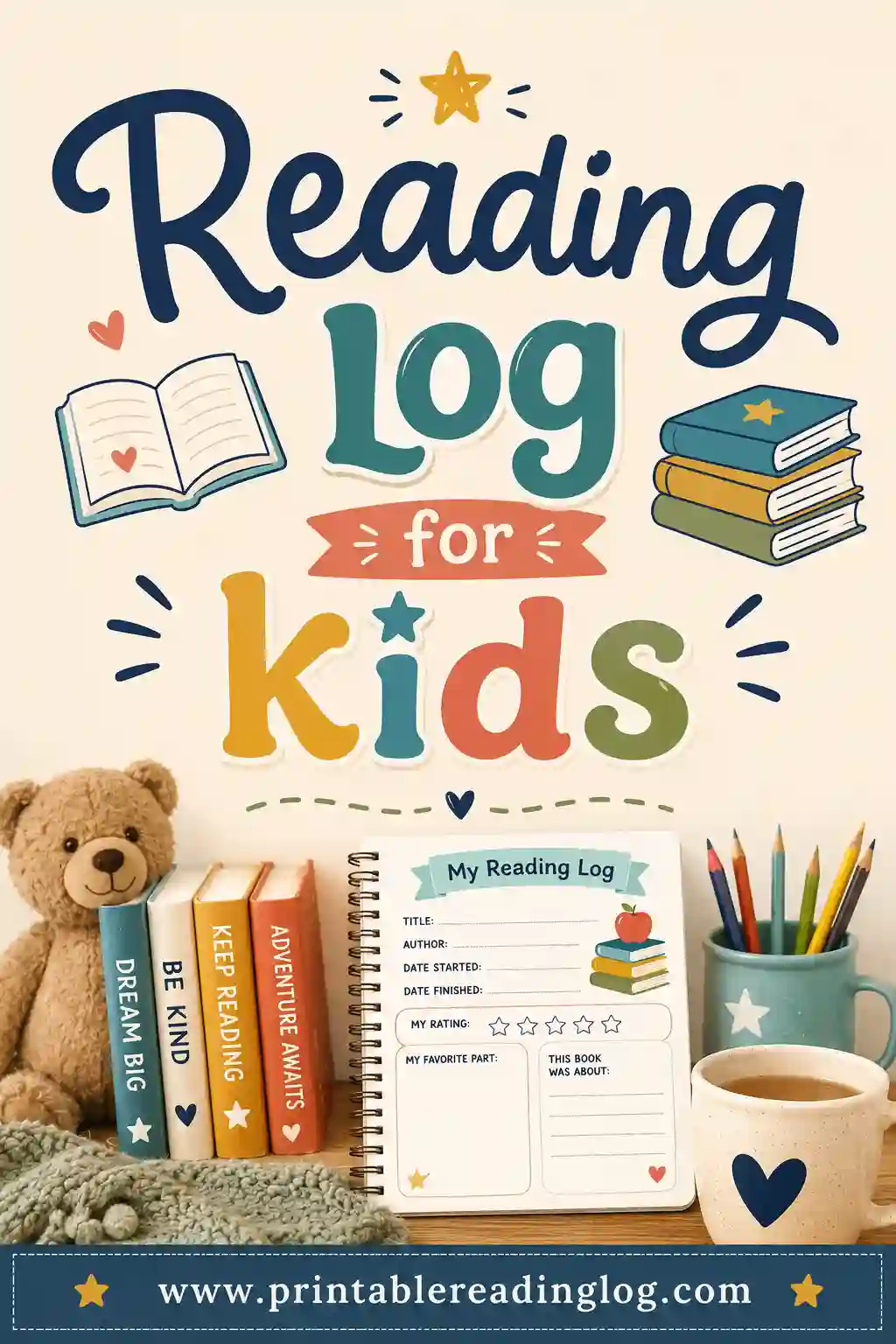
For the youngest kids, lean entirely on read-alouds and stickers; they're listening and absorbing, not reading independently yet. For older kids, you can move toward daily personal reading. The general tips in our reading log for kids guide carry over nicely across these ages.
Working the Log Into Class Routine
A little structure makes the log a natural part of Sunday, not an afterthought.
Hand out fresh logs on a schedule. A new sheet each month or unit keeps things tidy and gives a clear "start" each time.
Open class by reviewing logs. Spend two minutes celebrating the week's reading before you dive into the lesson. It signals that the at-home reading matters.
Connect the log to the lesson. If this week's story is on the log, kids who read it at home come in ready to participate. The log becomes prep, not just tracking.
Keep tone warm, never shaming. Some weeks a child won't read. That's fine. Celebrate what got done and gently encourage the next week. The goal is a lasting love of Scripture, not pressure.
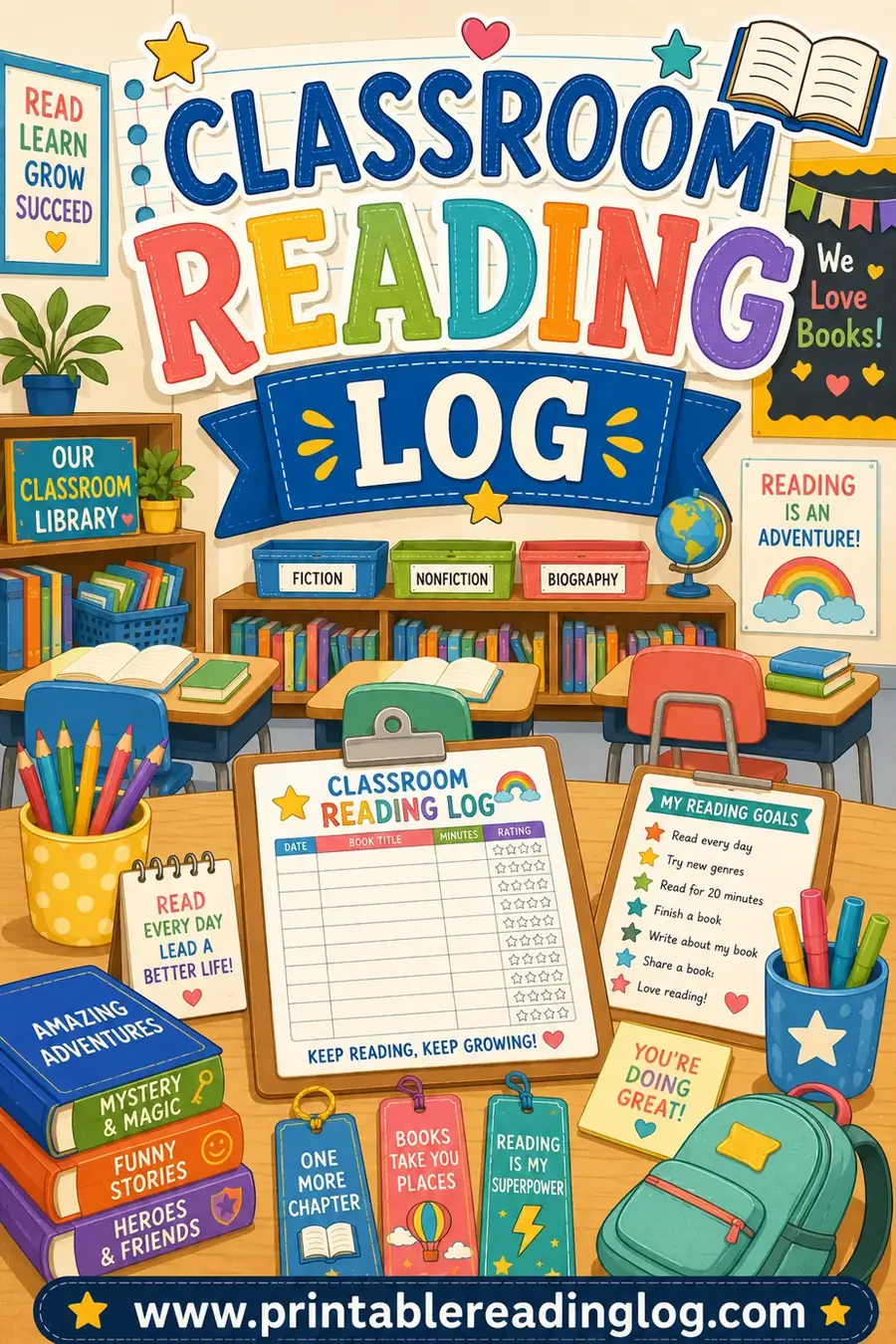
The same routines work beautifully in any group setting, much like a classroom; our classroom reading log ideas can be borrowed and adapted for the church context.
Building habits that outlast the class
The real win isn't a full sheet of stars, it's a child who reaches for Scripture on their own. A log helps plant that habit by making reading regular, low-pressure, and rewarding. Over a year, a kid who fills in even a few rows a week builds a quiet familiarity with the stories and verses, and that familiarity becomes a foundation they carry forward. Talk with kids about what they read, not just whether they read it. A two-minute conversation about why David wasn't afraid, or what the Good Samaritan teaches, turns a checked box into something that sticks. The sheet is the scaffolding; the conversations are what make it last.
Partnering with parents
Sunday school works best when it doesn't stay inside the classroom walls. The log is a natural bridge to home. Clip a short, friendly note to each child's sheet explaining how the log works and inviting families to read together a few minutes a week. When parents and teachers are pulling in the same direction, kids get a consistent message that Scripture matters and that reading it can be joyful. Many families find the log becomes a sweet part of their own routine, a few quiet minutes with a children's Bible before bed.
Making the Log Print-Ready
A few choices make your Sunday school log easy to use week after week.
- Pick a friendly kid style. Big boxes and a clean layout suit younger readers. The free tool has kid-friendly options built in.
- Leave room for stickers. Generous star boxes make the reward part easy and fun.
- Print a class set at once. Run off enough copies for every child, plus spares for newcomers.
- Add a memory-verse box. A dedicated spot keeps verse work front and center.
- Use sturdy paper. Cardstock survives a month of stickers, backpacks, and little hands.
- Put a name line at the top. And maybe a spot for the parent's initials, so home reading gets counted.
Frequently Asked Questions
What should a Sunday school reading log track?
Keep it simple: the Bible story or passage read, the week, a star or sticker, and the memory verse being learned. For older kids you can add a short "what I learned" line. The goal is consistent, joyful reading, not a heavy record.
How do I get kids to read at home between classes?
Send the log home with a friendly note to parents, tie stars to small rewards, and celebrate at-home reading at the start of each class. When reading is fun and recognized, kids are far more likely to open their Bible during the week.
Can I use one log for different ages?
You can adapt one tool for every age. Use big sticker boxes and read-alouds for preschoolers, simple rows and verses for early elementary, and add reflection lines for older kids. The free tool lets you print a style that fits each group.
How should I handle memory verses on the log?
Add a small column or box for the week's verse, and let kids mark it when they've memorized it. Practicing the verse with motions or games in class makes it stick, and checking that box gives kids a real sense of progress.
What rewards work well without big spending?
Stickers, bookmarks, a class certificate, first pick at snack time, or simply sharing their reading with the class. Recognition and small, kind incentives motivate kids more than anything expensive. Keep it warm and never use it to shame a child who missed a week.
Is the printable Sunday school reading log free?
Yes. You build and print it yourself at no cost, with no sign-up and no watermark. Print a fresh class set whenever you start a new unit.
Ready to Build Your Sunday School Reading Log?
Choose a kid-friendly style, add a memory-verse box, and open the free reading log generator to print a sheet for every child in your class. It's free, there's no sign-up, and a page full of stars is a wonderful way to help kids fall in love with God's Word, one story at a time. Happy reading.