Reading Log for Summer Programs: Free & Printable
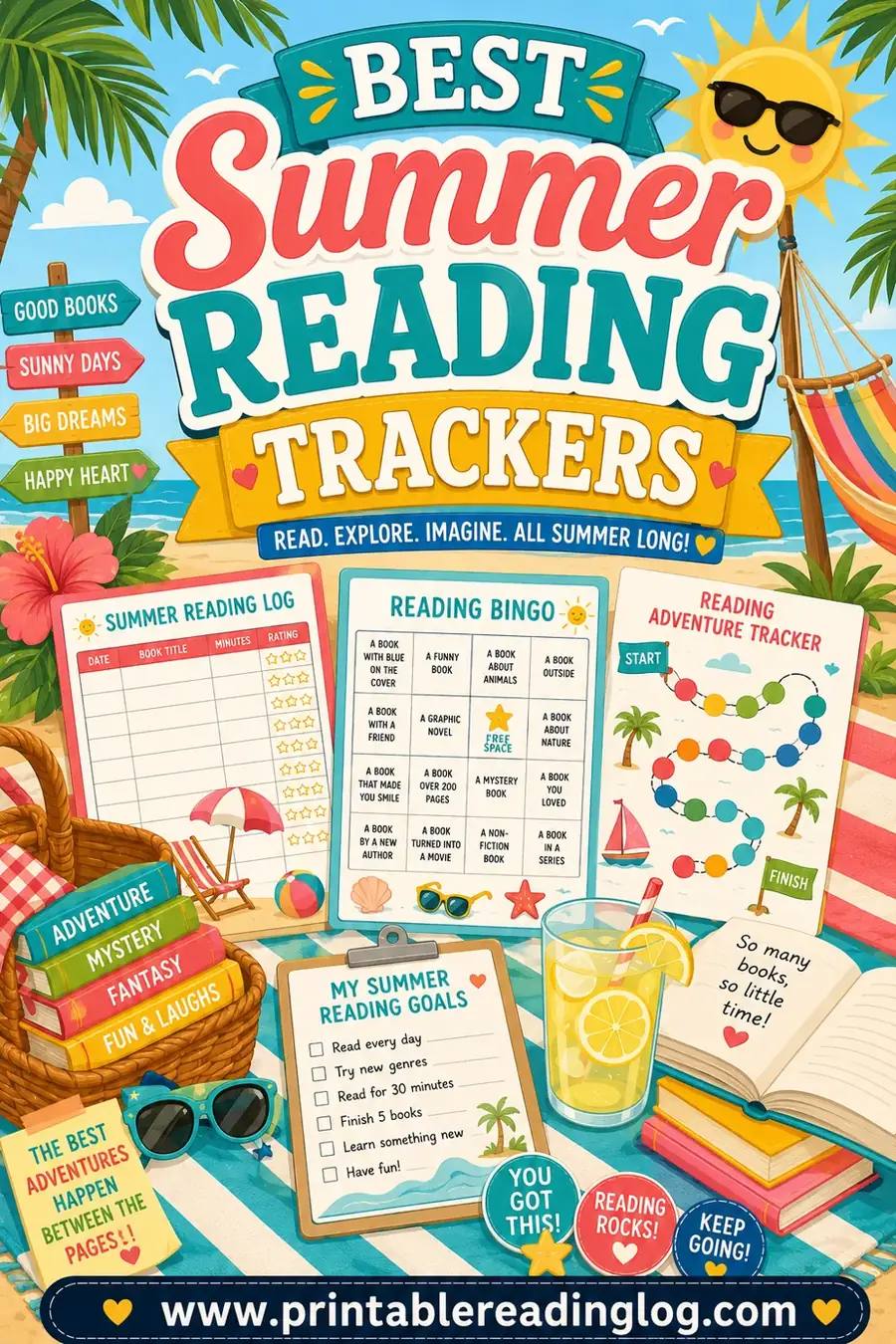
A reading log for summer programs is a printable tracker that helps kids and teens record what they read over the break — by minutes, books, or pages — so a camp, library, or school program can reward progress and keep reading from sliding. The best summer logs are simple, colorful, and goal-based, with space for a star rating and a finish-line reward. You can make one for free in under a minute with our printable reading log maker: pick a kid-friendly layout, set a summer goal, and print a stack for your whole group.
In a hurry? Open the free tool, choose "by minutes" or "by books," add a goal row, and print. No sign-up, no app, no cost — perfect for a program running on a tight budget.
Why Summer Programs Need a Reading Log
Summer is when reading skills quietly slip. Kids who don't read over the break can lose a chunk of what they learned during the school year — the so-called "summer slide." A reading log is the simplest tool to fight it.
A good log does three jobs at once:
- It keeps reading on the calendar. When there's a log to fill in, reading becomes a daily thing instead of an afterthought.
- It makes progress visible. Kids love watching a goal bar fill up. A log turns "read more" into something they can see and chase.
- It powers your rewards. Whether you give out badges, prizes, or pizza-party tickets, the log is the proof that earns them.
For a deeper look at why the break is risky, our guide on how to prevent the summer slide breaks it down. The short version: a little daily reading goes a long way, and a log keeps it going.
What to Put on a Summer Reading Log
A summer log should feel like a fun challenge, not a worksheet. Keep the columns minimal and lean into the goal.
Here's what earns its place and what to skip:
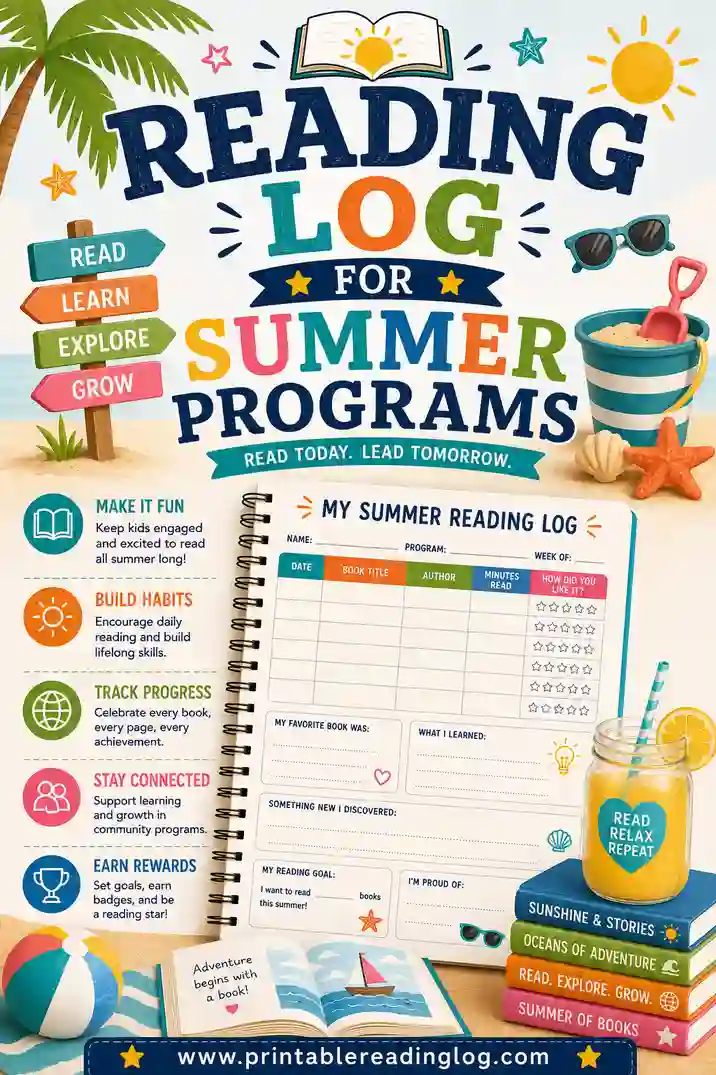
| Column | What it does | Keep it? |
|---|---|---|
| Date | Builds a daily streak | Yes |
| Book title | Encourages variety | Yes |
| Minutes (or pages) | The core progress metric | Yes |
| Stars / rating | Lets kids react quickly | Yes — kids love it |
| Goal tracker | A bar or thermometer to color | Yes — the star of the show |
| Long summary | A full write-up | Skip for most ages |
The goal tracker is what sets a summer log apart. A thermometer kids color in, or a row of circles they cross off toward a prize, turns the whole thing into a game. That visible target is what keeps reluctant readers picking up books in July.
Pick your unit: minutes, books, or pages
Most summer programs track minutes, because it's the fairest measure across ages and reading levels. A first grader and a sixth grader can both hit "20 minutes a day." Some programs track books finished (great for a "read 10 books, win a prize" challenge), and a few use pages. Pick one and stick with it so the goal is clear.
Setting a Summer Reading Goal
A goal gives the log a purpose. Without one, a log is just a list. With one, it's a challenge worth finishing.
Here are realistic summer goals by age, which you can adjust to your program's length:
| Age group | Daily goal | Whole-summer goal |
|---|---|---|
| Ages 4–6 | 10 minutes | Read 10 picture books |
| Ages 7–9 | 15–20 minutes | 600 minutes total |
| Ages 10–12 | 20–30 minutes | Read 8–10 books |
| Teens | 30 minutes | 1,500 minutes or 6 longer books |
Don't make the goal so big it feels impossible. A goal a kid can actually reach by August is far more motivating than a giant number they give up on in week two. You can set any of these targets with the free reading log maker and print a log that shows the finish line right on the page.
A Sample Summer Reading Log
Here's how a week might look for an 8-year-old aiming at 15 minutes a day:
| Date | Book | Minutes | Stars |
|---|---|---|---|
| June 12 | "The Bad Guys #1" | 18 | ⭐⭐⭐⭐⭐ |
| June 13 | "Dog Man" | 15 | ⭐⭐⭐⭐ |
| June 14 | Library picture book | 12 | ⭐⭐⭐ |
| June 15 | "The Bad Guys #2" | 20 | ⭐⭐⭐⭐⭐ |
| June 16 | Comic from home | 15 | ⭐⭐⭐⭐ |
That's 80 minutes in five days, plus a kid who's clearly enjoying the ride. Over a 10-week summer, those small sessions stack up into a real reading habit — and a log that's fun to flip back through.
How to Run a Summer Reading Program With Logs
A few smart moves make your program run itself.
- Print a log per participant. Use the free tool to make a class or camp set in one go. Print on regular paper, or cardstock if logs need to survive a backpack all summer.
- Hand out logs at kickoff. Pair the log with a quick explanation of the goal and the reward. Excitement at the start carries a long way.
- Set check-in points. Weekly or biweekly check-ins keep kids on track and let you cheer them on. A quick sticker or stamp for each check-in works wonders.
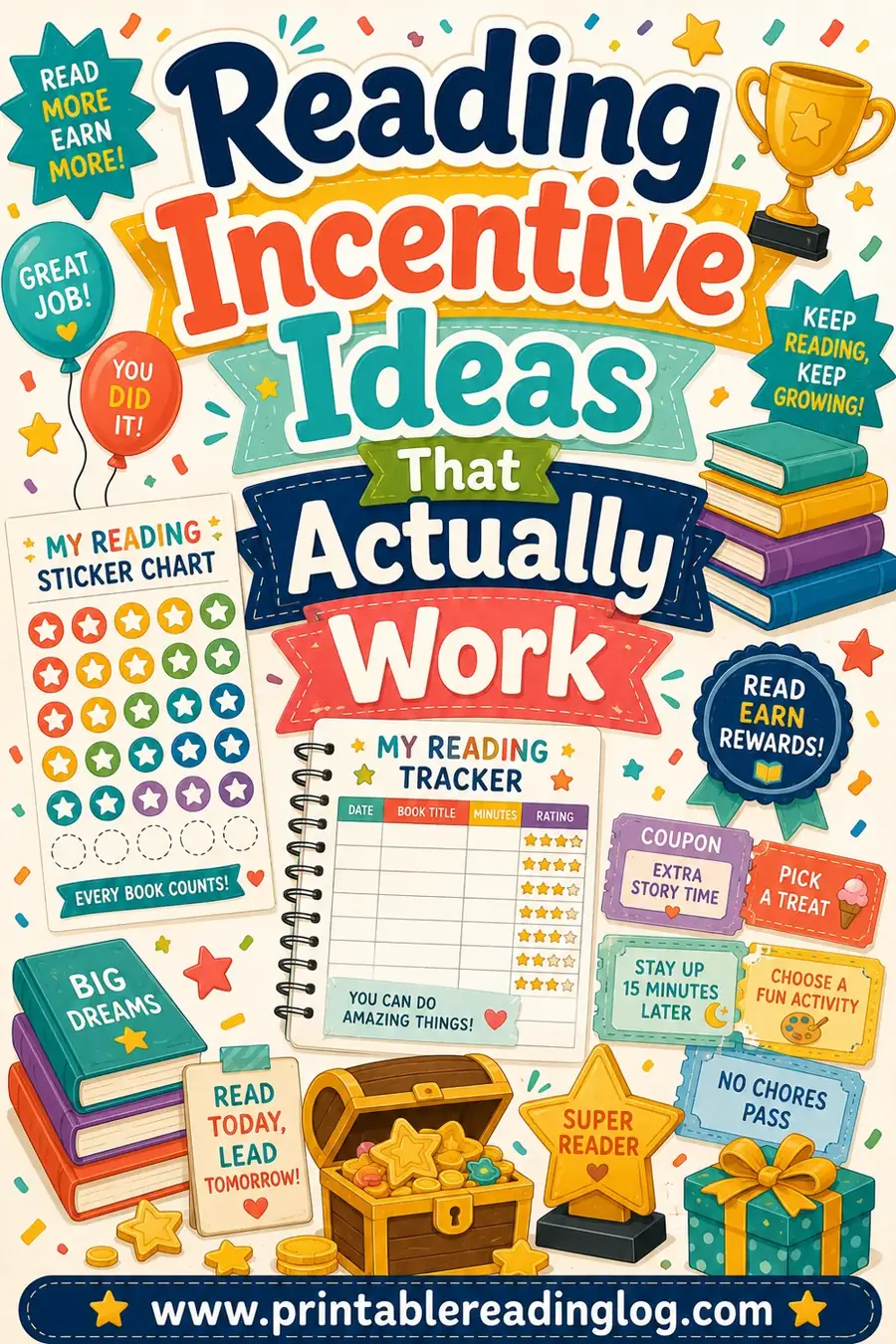
- Tie rewards to milestones. Small prizes at the halfway mark and a bigger one at the finish keep motivation steady. Our reading incentive ideas guide has plenty that cost little or nothing.
- Celebrate at the end. A finish-line party, certificate, or shout-out turns the summer's reading into something kids remember and want to repeat next year.
Make logging easy for families
If kids log from home, keep instructions simple: read, fill in the date and minutes, color a bit of the goal bar. The easier it is, the more families will actually do it. A log that takes 20 seconds to update gets updated; a complicated one ends up in the recycling.
Summer Logs for Libraries and Camps
Different programs need slightly different logs.
Public libraries
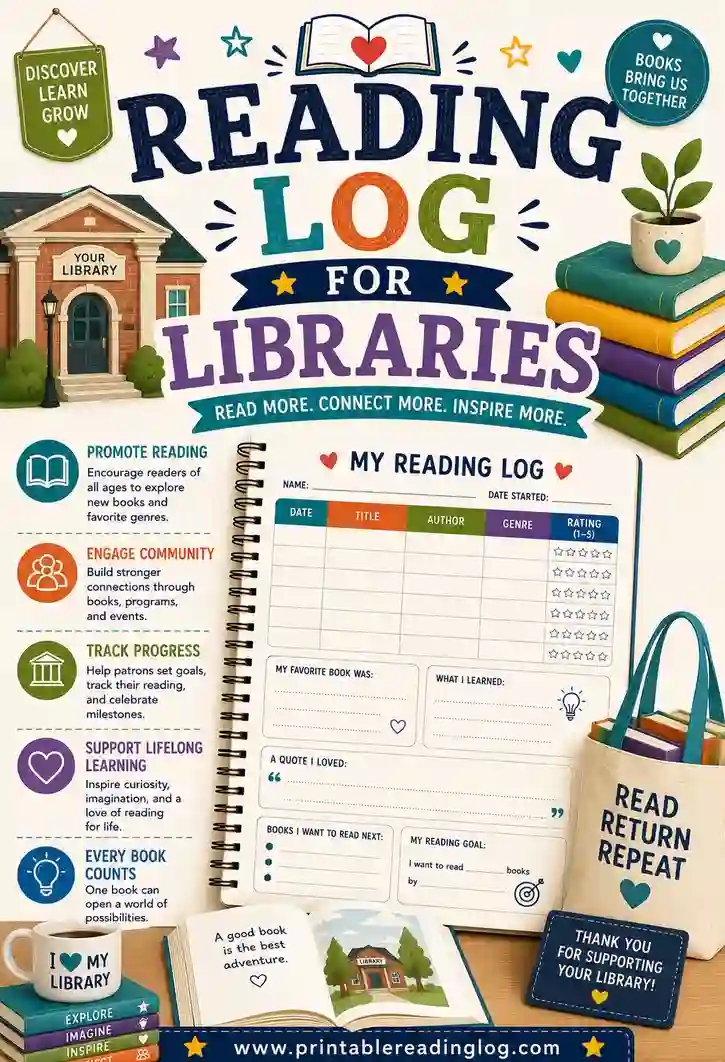
Libraries run some of the biggest summer reading programs around. A printable log lets every kid track at home and bring it in for prizes, even without an app or account. Many libraries hand out a paper log at sign-up and stamp it at each visit. Our reading log for libraries guide goes deeper on running a library program smoothly.
Day camps and summer schools
Camps can build 20 minutes of reading into the daily schedule and have kids log it on the spot. A clipboard log per camper, checked at pickup, keeps families in the loop and gives staff an easy progress snapshot.
Faith and community programs
Vacation programs, church groups, and community centers can use the same simple log with their own book lists and rewards. The format flexes to fit whatever you're reading.
Picking Summer Books Kids Actually Want
A reading log only fills up if kids enjoy what they're reading. Summer is the time to loosen the rules and let reading feel like a treat instead of an assignment.
A few things that keep summer reading fun:
- Let kids choose. Choice is the single biggest driver of summer reading. A kid who picks their own comic will read more than one handed a "good for you" novel.
- Count everything. Graphic novels, joke books, magazines, audiobooks, even the back of a cereal box. It all builds reading muscle, and counting it keeps reluctant readers in the game.
- Series are your friend. Once a kid loves book one of a series, books two through ten are an easy sell. A summer is the perfect stretch to binge a favorite series.
- Match the level loosely. Summer isn't the time to push hard texts. An easy, breezy read that gets finished beats a challenging one that gets abandoned at the pool.
- Visit the library often. A weekly library trip keeps fresh books coming and ties neatly into your log's check-in rhythm.
When the books are genuinely fun, the log stops feeling like a chore and starts feeling like a scoreboard kids are proud of. That shift — from obligation to game — is what carries a reading program all the way to August.
Tracking Progress Toward the Goal
Half the magic of a summer log is watching the goal get closer. Make that progress impossible to miss.
The most motivating logs put the goal front and center:
- A thermometer to color. Kids fill in a bit more each week. Seeing the red climb toward the top is weirdly powerful.
- A row of circles or stars. Cross one off per book or per 100 minutes. The shrinking number of empty circles pulls kids forward.
- A path or map. Some programs draw a winding path with the prize at the end and a marker that moves. Great for younger kids.
- Milestone badges. Stickers or stamps at the quarter, half, and three-quarter marks keep the momentum going between the start and the finish.
Whatever style you choose, update it together at each check-in so the progress feels shared and celebrated. A goal a kid can see is a goal a kid will chase.
Common Summer Log Mistakes to Avoid
A few easy slips can sink an otherwise great program:
- Goals that are too big. A wildly high target discourages kids by July. Aim for reachable.
- Too much writing. A summer log should be quick. Long summaries kill the fun.
- No reward in sight. Kids need a reason to keep going. Even a tiny prize at the end makes a difference.
- Forgetting check-ins. Without a midpoint nudge, momentum fades. Build in regular touchpoints.
- Ignoring choice. Let kids pick their own books — including comics and graphic novels. Forced reading lists are the fastest way to lose a reluctant reader.
Steer clear of these and your reading log for summer programs becomes the engine that keeps kids reading all break long.
Frequently Asked Questions
What should a summer reading log include?
Keep it simple and fun: a date column, book title, minutes or pages read, a star rating, and a visible goal tracker like a thermometer to color in. Skip long summary boxes for most ages. The goal tracker is the key piece — it turns reading into a challenge kids want to finish.
How many minutes a day should kids read in a summer program?
A common, realistic target is 15–20 minutes a day for elementary kids and 30 minutes for teens. Even 10 minutes daily for the youngest readers helps prevent the summer slide. Track minutes in the log so the daily streak stays visible and rewarding.
Should a summer reading log track minutes or books?
Most programs use minutes because it's fair across ages and reading levels — a young child and an older one can both hit a time goal. Books-finished works well for "read 10 books" challenges. Pick one unit and keep it consistent so the goal stays clear.
How do I motivate kids to keep reading all summer?
Set a reachable goal, make the log visible, and tie small rewards to milestones. A goal thermometer kids color in, weekly check-ins with stickers, and a finish-line celebration all keep momentum up. Letting kids choose their own books — comics included — matters just as much.
Can libraries and camps use the same printable log?
Yes. The same simple format works for libraries, day camps, summer schools, and community programs — just swap in your own book list, goal, and rewards. The free reading log maker lets you customize columns and print a full set for any group size.
Is this summer reading log free to print?
Completely free. You build and print it yourself with no sign-up, no watermark, and no app. Make a single log or a whole program's worth of copies in a couple of clicks and print as many as your group needs.
Ready to Print Your Summer Reading Logs?
A great reading log for summer programs is simple, goal-driven, and fun to fill in — the kind of thing kids actually want to update. Set a reachable target, tie it to a reward, and let the log do the rest. Open the free reading log maker, choose your layout and summer goal, and print logs for your whole group in minutes. For more ideas, browse our summer reading log guide and tips on reading incentive ideas. Here's to a summer full of books.