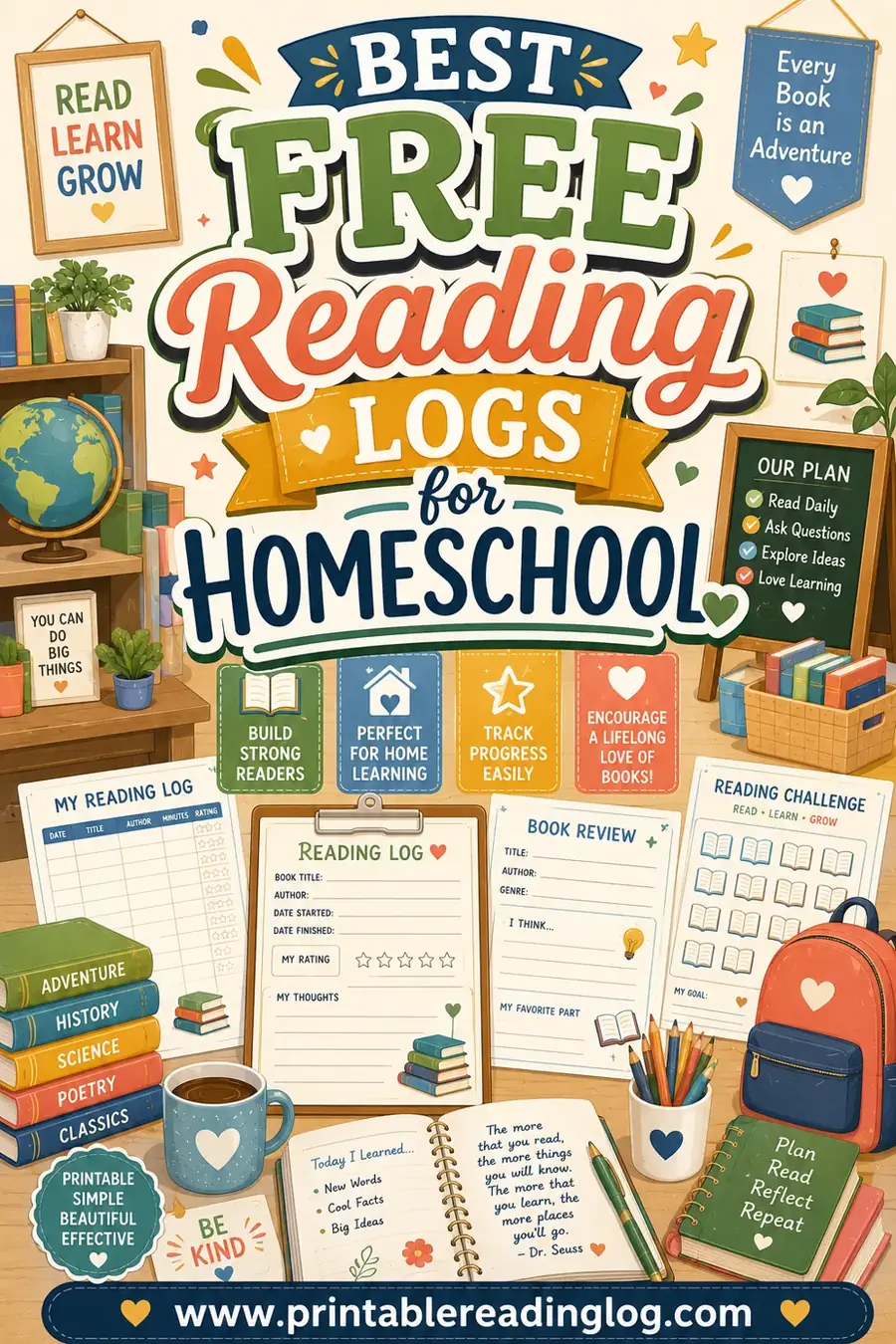
Best Free Reading Logs for Homeschool (2026 Picks)
The best free reading log for homeschool is one you can customize for each kid, print as many copies as you need, and track without a subscription. A simple printable log that records the date, title, minutes or pages, and a quick reaction beats any pricey app for most families. The fastest way to get one is a free reading log maker where you pick your columns, print, and start logging the same day.
Want to skip the comparison and just make one? Open the free reading log maker, choose your layout, and print a clean log for every child in a couple of minutes. No sign-up, no fee, nothing to install.
What Makes a Reading Log "Best" for Homeschool
Homeschool is a different animal than a classroom. You might have a kindergartner and a sixth grader on the same couch, and you want one system that flexes for both. So "best" here doesn't mean fanciest. It means flexible, free, and fast to use.
When we compared options, we weighed five things:
- Cost. Free should mean actually free, no trial that turns into a bill.
- Customization. Can you change columns for a non-reader versus a chapter-book kid?
- Print quality. Does it print clean on a home printer without eating ink?
- Record-keeping. Many states ask homeschoolers to keep records. A good log doubles as proof of work.
- Kid-friendliness. If your child won't fill it in, it doesn't matter how nice it looks.
A log that nails those five will serve you far better than a flashy tracker your kids ignore.
The Top Free Reading Logs for Homeschool, Compared
Here's how the most common options stack up. We put the free printable maker first because it's the most flexible pick for a multi-age family, but every option here can work depending on your style.
| Option | Cost | Customizable | Best for | Catch |
|---|---|---|---|---|
| Free printable reading log maker | Free | High — pick your own columns | Multi-age families, record-keeping | You print at home |
| Generic printable PDF (one-size template) | Free | Low — fixed layout | One kid, simple needs | Can't change columns |
| Reading apps (Goodreads, etc.) | Free tier | Medium | Older, screen-comfortable kids | Screens, sign-ups, ads |
| Notebook or composition book | Cheap | Total — but manual | Kids who like to write | No structure, easy to skip |
| Spreadsheet you build yourself | Free | High | Parents who love a grid | Setup time, not kid-facing |
Why a printable maker leads for homeschool
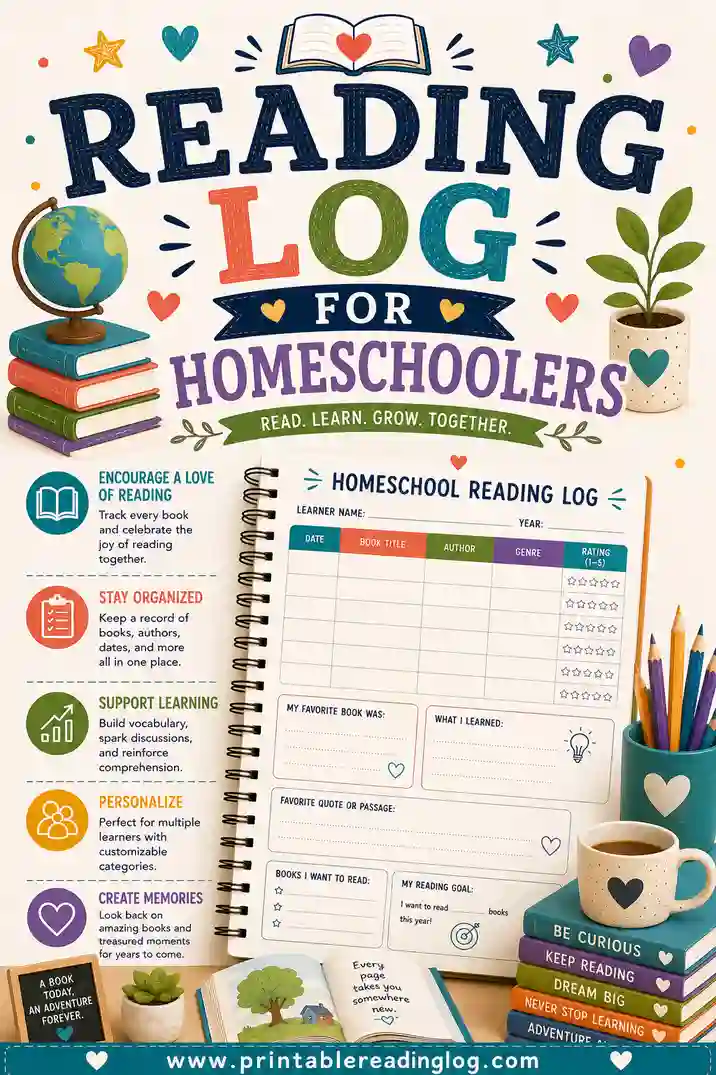
The win for homeschool is customization without screens. With a reading log maker you can build a picture-friendly log for your youngest, a minutes-based log for a reluctant reader, and a title-plus-summary log for your oldest, all from the same tool, all free. Then you print exactly the copies you need. Nothing to log in to, no monthly fee, and the finished pages slide straight into a binder for your records.
What to Track on a Homeschool Reading Log
You don't need a busy log. The most useful homeschool logs track just enough to show progress and spark a quick conversation about the book.
Core columns that work for almost any age:
- Date — when they read.
- Title — what they read.
- Minutes or pages — pick one and stay consistent.
- Who read — child solo, read-aloud, or audiobook.
- A quick reaction — a star rating, a smiley, or one word.
For older kids, swap the reaction column for a one-line summary. That tiny addition turns a log into light comprehension practice, and it gives you something concrete for a portfolio review.
Sample homeschool reading log
Here's a filled-in week so you can see the format in action. Yours can be simpler or richer depending on the kid.
| Date | Title | Reader | Min | Rating |
|---|---|---|---|---|
| Mon | Frog and Toad | Solo | 15 | ⭐⭐⭐ |
| Tue | Magic Tree House #1 | Solo | 20 | ⭐⭐⭐⭐ |
| Wed | The Gruffalo | Read-aloud | 10 | ⭐⭐⭐⭐⭐ |
| Thu | Magic Tree House #1 | Solo | 25 | ⭐⭐⭐⭐ |
| Fri | National Geo Kids | Audiobook | 15 | ⭐⭐⭐ |
One glance tells you who's reading, how long, and whether they liked it. That's the whole job.
Free Reading Logs by Homeschool Age
Because homeschool spans every age at once, here's how to shape the log for each stage. The same free maker handles all of these.
Preschool and kindergarten
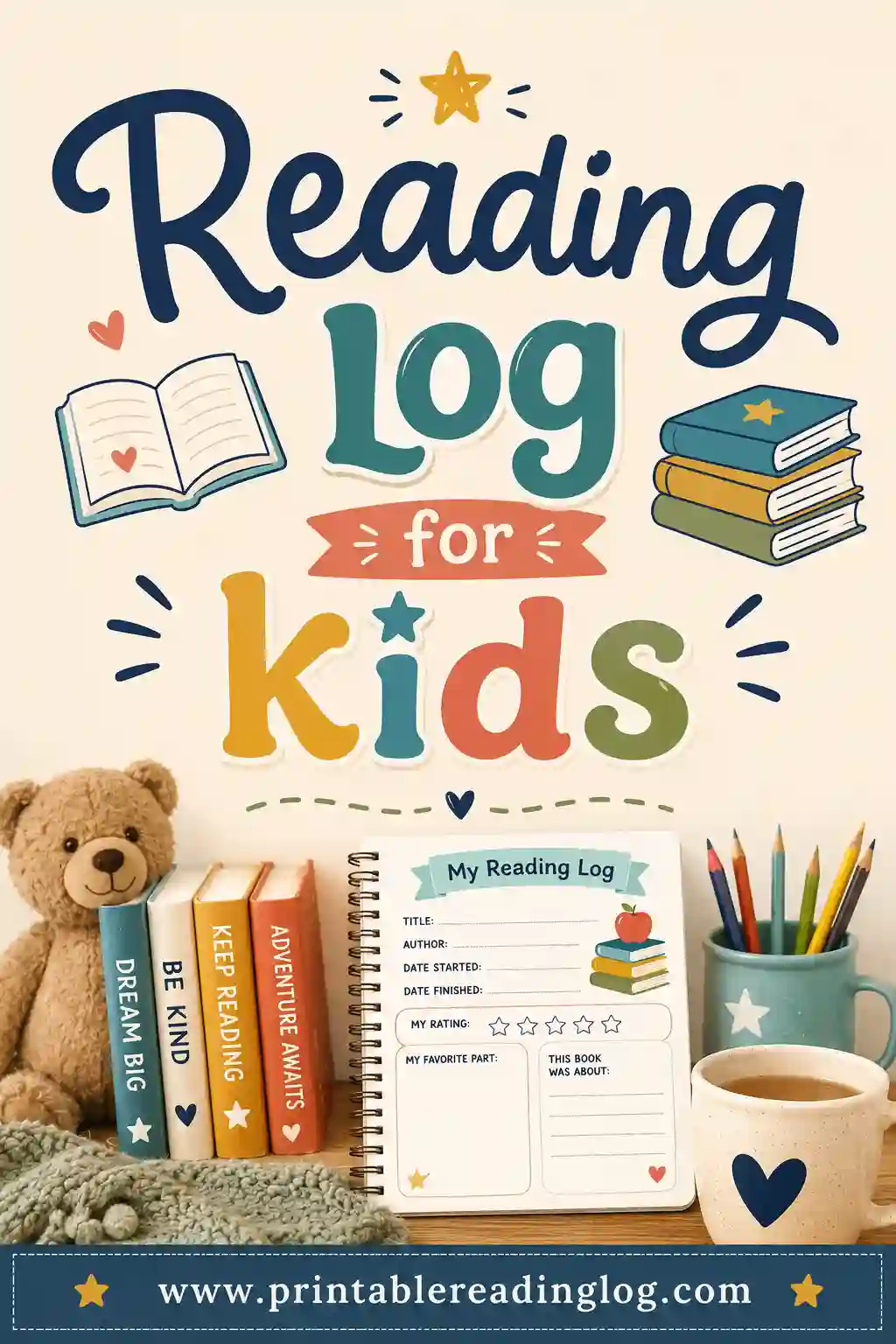
Non-readers need a picture-based log. Use big rows, a spot to draw a star or a sticker, and a "read to me" checkbox. Keep it to one page a week so it never feels like a chore. A short, colorful log is the goal here.
Early elementary (grades 1–3)
This is the sweet spot for a classic title-plus-minutes log. Kids can write the title themselves, color in a star, and watch their minutes add up. Add a small weekly total so they can race their own record.
Upper elementary and middle school (grades 4–8)
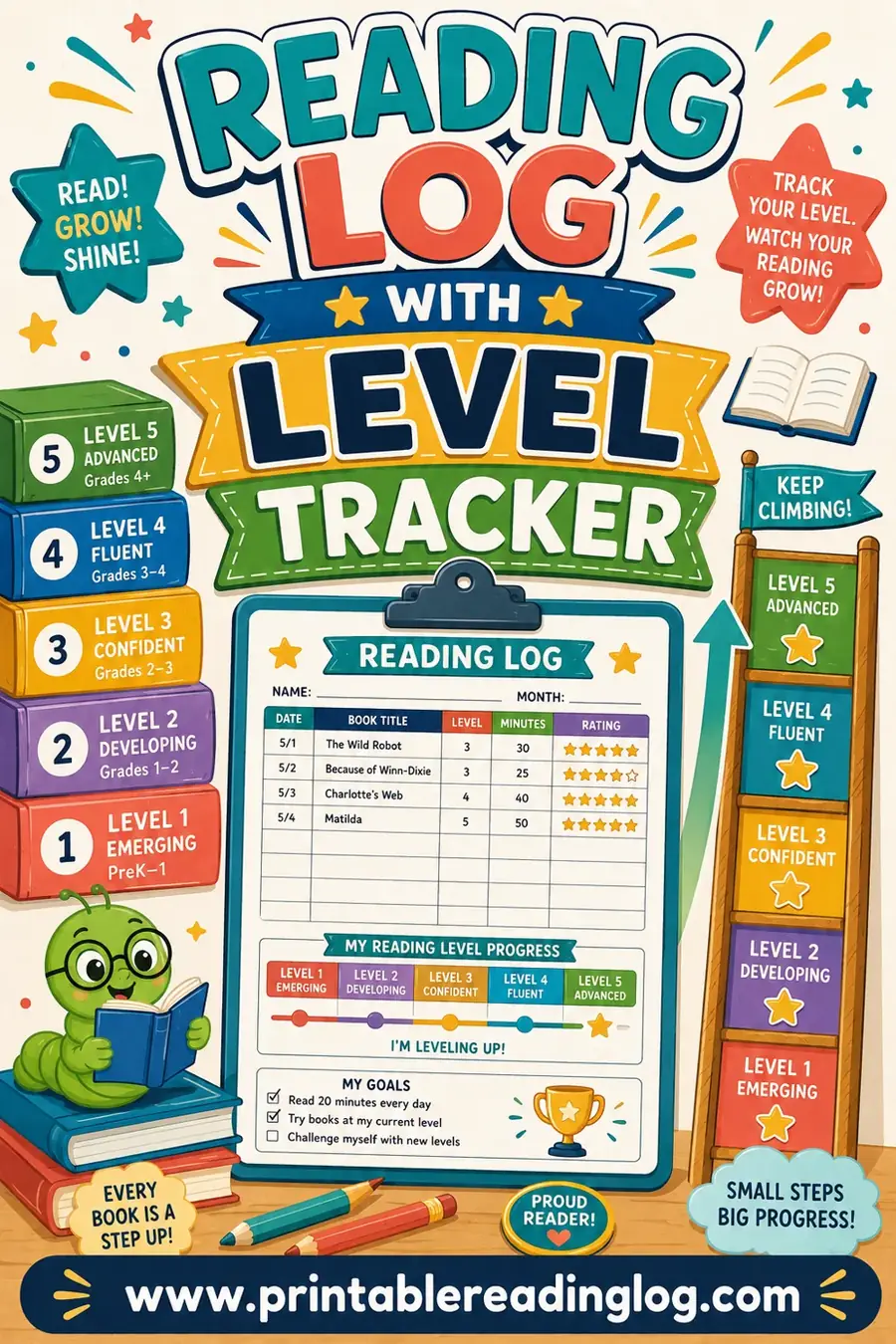
Add a one-line summary or a "favorite part" column. This is where a log starts doubling as comprehension work. A reading log with a level tracker also helps if you're following a leveled curriculum.
High school
Older students do well with a log focused on titles, page counts, and a short reflection. It's less about supervision and more about building a habit and a record they can point to on a transcript or portfolio.
How to Make Your Homeschool Reading Log in 4 Steps
You can have a custom log printed before your coffee gets cold.
- Open the free maker. Head to the reading log maker — no account needed.
- Pick your columns. Choose date, title, minutes or pages, reader, and a rating. Drop anything you don't need.
- Set the layout. Daily, weekly, or monthly. Weekly is the homeschool favorite because it fits a typical school rhythm.
- Print one per kid. Print a stack, three-hole-punch them, and drop them in each child's binder.
If you want them to last, print on cardstock or slip them into sleeves so kids can mark with a dry-erase marker and you reuse the same sheet.
Tips to Keep Kids Actually Using the Log
A reading log only works if it gets filled in. A few small habits make all the difference.
- Log right after reading. Tie it to a routine — snack time, before lunch — so it never gets forgotten.
- Let kids own it. Even a four-year-old can stick on a sticker. Ownership beats nagging.
- Keep it short. Five quick fields, not fifteen. A log that takes 20 seconds gets done.
- Celebrate milestones. Hit 500 minutes? Pick a special book or a small reward.
- Read together sometimes. Logging read-alouds counts and models that reading is for everyone.
Common mistakes to avoid
- Over-designing the log. A gorgeous, complicated log that no one fills out is worse than a plain one that gets used.
- Switching units mid-year. Pick minutes or pages and stick with it so your totals mean something.
- Forgetting record-keeping. If your state requires logs, keep them filed by month from day one rather than scrambling at review time.
Free Printable vs. Paid Apps for Homeschool
It's worth being clear-eyed about apps. They're not bad, they're just often the wrong fit for a homeschool family. Apps mean screens, sign-ups, and sometimes ads aimed at kids. They also tie your records to someone else's account.
A free printable log keeps everything offline and in your hands. The pages live in your binder, not in the cloud, which matters if you ever need to show your work for a portfolio review. And because it's printable, the same system works for the kid who can't yet log in to anything.
If your older student genuinely loves tracking on a screen, a reading log that works as a Goodreads alternative can bridge both worlds. For most homeschool families, though, the free printable wins on simplicity.
Frequently Asked Questions
What's the best free reading log for a multi-age homeschool?
A customizable printable maker, because it lets you build a different log for each child from one free tool. Make a picture log for your youngest and a summary log for your oldest, then print exactly what each kid needs. Try the free reading log maker and tailor it per child.
Are these reading logs really free?
Yes. The printable maker is free to use and print, with no sign-up and no watermark. You can make a fresh log for every child and every month at no cost.
Do homeschool reading logs count as official records?
In many states, yes — a dated reading log is solid evidence of schoolwork. Keep your printed logs filed by month and they'll be ready for a portfolio review. Check your own state's requirements to be sure.
How do I get a reluctant reader to use a log?
Keep it short, let them own it, and track minutes instead of pages so even five minutes feels like a win. A reading log for reluctant readers approach plus small rewards works wonders.
Should I track minutes or pages?
Either works — just pick one and stay consistent so your totals are meaningful. Minutes suit younger or reluctant readers; pages suit older kids reading chapter books.
Can one log work for the whole family?
You can use one shared family log for read-alouds, but most families give each child their own sheet so progress is personal. A family reading log is great for shared read-aloud time alongside individual logs.
Make Your Free Homeschool Reading Log Today
The best free reading log for homeschool is the one your kids will actually use — flexible, printable, and free. Open the reading log maker, pick your columns, and print a custom log for every child in minutes. Slot the pages into a binder and you've got progress tracking and tidy records in one. Happy reading, and happy homeschooling.