Reading Log for ESL Students: Free, Printable & Easy
A reading log for ESL students is a simple chart where English learners write down what they read, for how long, and any new words they met along the way. The best ones keep the writing light, ask for a word or two of summary instead of full paragraphs, and leave room to track minutes so progress feels real. You can build one for free in under a minute with our printable reading log maker — pick "by minutes," add a "new words" column, and print a stack for your class or your own learner.
Want to skip ahead? Open the free tool, choose a kid or adult layout, turn on the columns you want, and print. No sign-up, no app, no cost.
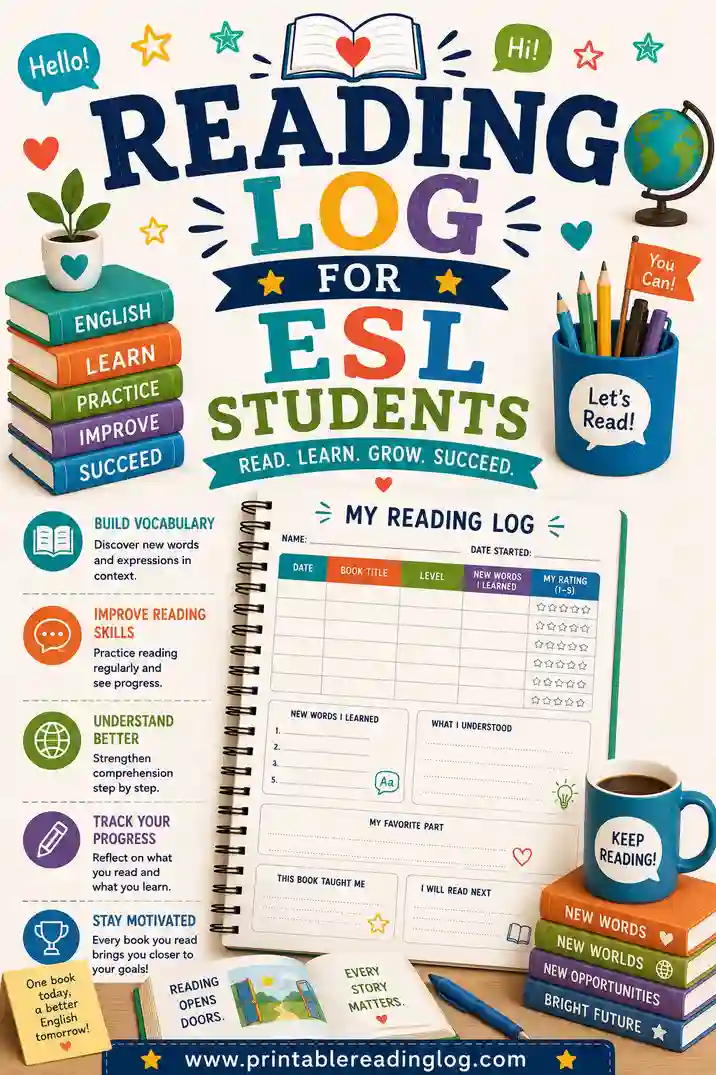
What Makes an ESL Reading Log Different
A regular reading log just asks what you read and when. An ESL reading log does a little more, because the goal isn't only to track books — it's to build English along the way.
The big differences come down to three things:
- Less writing, more checking. New English speakers shouldn't have to write a paragraph to log a book. Boxes, short fields, and word counts do the job without slowing anyone down.
- A spot for new words. A small "new words" or "words I learned" column turns every reading session into a tiny vocabulary lesson.
- Minutes over pages. Reading in a second language is slower at first. Tracking minutes (say, 15 a day) is fairer and far less discouraging than a page count.
Keep those three ideas in mind and your log will support learning instead of feeling like a worksheet.
Why ESL Students Benefit From a Reading Log
Logging reading sounds like extra work, but for English learners it pays off fast.
First, it builds a habit. Fifteen minutes a day, every day, beats a two-hour cram once a week. A log makes that streak visible, which keeps motivation up.
Second, it shows progress you can't feel day to day. A student rarely notices their English improving. But flip back four weeks in a log and the change is obvious — longer books, more minutes, fewer unknown words per page. That proof is a real confidence boost.
Third, it gives teachers and tutors a clear picture. You can spot who's reading below level, who's avoiding harder texts, and who's quietly flying ahead — all from a quick glance.
What to Include in a Reading Log for ESL Students
You don't need every column under the sun. Start with the essentials and add only what helps your learner.
Here's a column-by-column breakdown of what works and why:
| Column | What it tracks | Why it helps ESL learners |
|---|---|---|
| Date | The day they read | Builds a visible daily streak |
| Book or text | Title or short description | Encourages variety, not just textbooks |
| Minutes | Time spent reading | Fairer than pages for new readers |
| New words | 1–5 words they learned | Turns reading into vocabulary practice |
| How it felt | A face or 1–5 stars | Captures comfort level without writing |
| Quick note | One short sentence | Light summary practice in English |
For beginners, drop the "quick note" column at first and lean on the face icons. As English improves, swap the face for a one-sentence summary, then a two-sentence one. The log grows with the student.
Skip the heavy stuff
Resist the urge to add a "write a full book report" box. It scares off beginners and makes logging feel like homework. The point is to read more, not to write essays. Keep it light and they'll keep coming back.
Choosing the Right Log Format by Level
One size doesn't fit all here. A brand-new English speaker and an advanced learner need different logs. Match the format to the level and reading stays low-stress.
| English level | Best format | Key columns to use |
|---|---|---|
| Beginner | Daily, minutes-based | Date, minutes, face icon, 1 new word |
| Early intermediate | Daily or weekly | Date, book, minutes, 3 new words |
| Intermediate | Weekly | Book, minutes, new words, one-sentence note |
| Advanced | Weekly or monthly | Book, pages, summary, star rating |
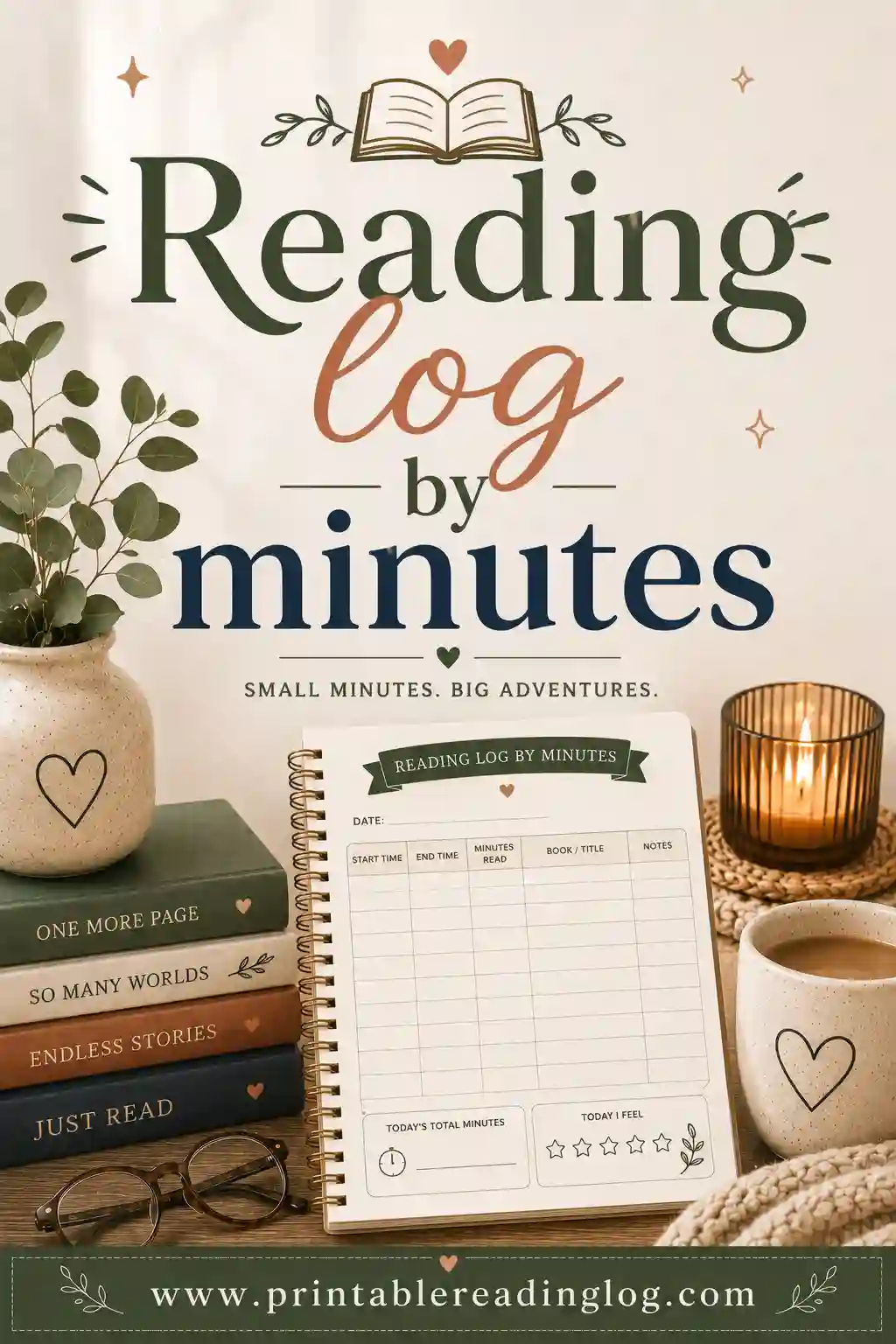
You can build any of these layouts with the free reading log maker — just turn columns on or off and pick a daily, weekly, or monthly grid. For a deeper look at choosing minutes versus pages, see our guide on a reading log by minutes.
A Sample ESL Reading Log (Filled In)
Sometimes it helps to see one in action. Here's how a week might look for an early-intermediate learner reading 15 minutes a day:
| Date | Book or text | Minutes | New words | How it felt |
|---|---|---|---|---|
| Mon | "Frog and Toad" | 15 | pond, lonely | 🙂 |
| Tue | News article (easy) | 12 | weather, flood | 😐 |
| Wed | "Frog and Toad" | 18 | brave, button | 🙂 |
| Thu | Comic strip | 10 | sneaky, plan | 😄 |
| Fri | Picture book | 15 | garden, seed | 🙂 |
Notice how short and doable this is. No paragraphs, no pressure — just a quick record that adds up to 70 minutes and ten new words in a single week. Over a school term, that's hundreds of words and a real reading habit.
How to Use a Reading Log With ESL Students
A log only works if it's easy to keep up. These small choices make the difference between a log that's used and one that's abandoned by week two.
- Set a tiny daily goal. Fifteen minutes is plenty for most learners. Make it small enough that nobody can use "no time" as an excuse.
- Read at the right level. A text should be mostly understandable, with just a handful of new words per page. Too hard and the log fills with frustration; too easy and there's nothing to learn.
- Celebrate the new-words column. Review the words at the end of each week. Use them in a sentence, quiz lightly, or just say them out loud. This is where the real learning sticks.
- Keep the streak visible. Post the log where the student sees it. A growing line of checked boxes is a quiet but powerful motivator.
- Praise effort, not speed. Reading in a new language is hard. Notice the consistency, not how many books got finished.
For classrooms and tutors
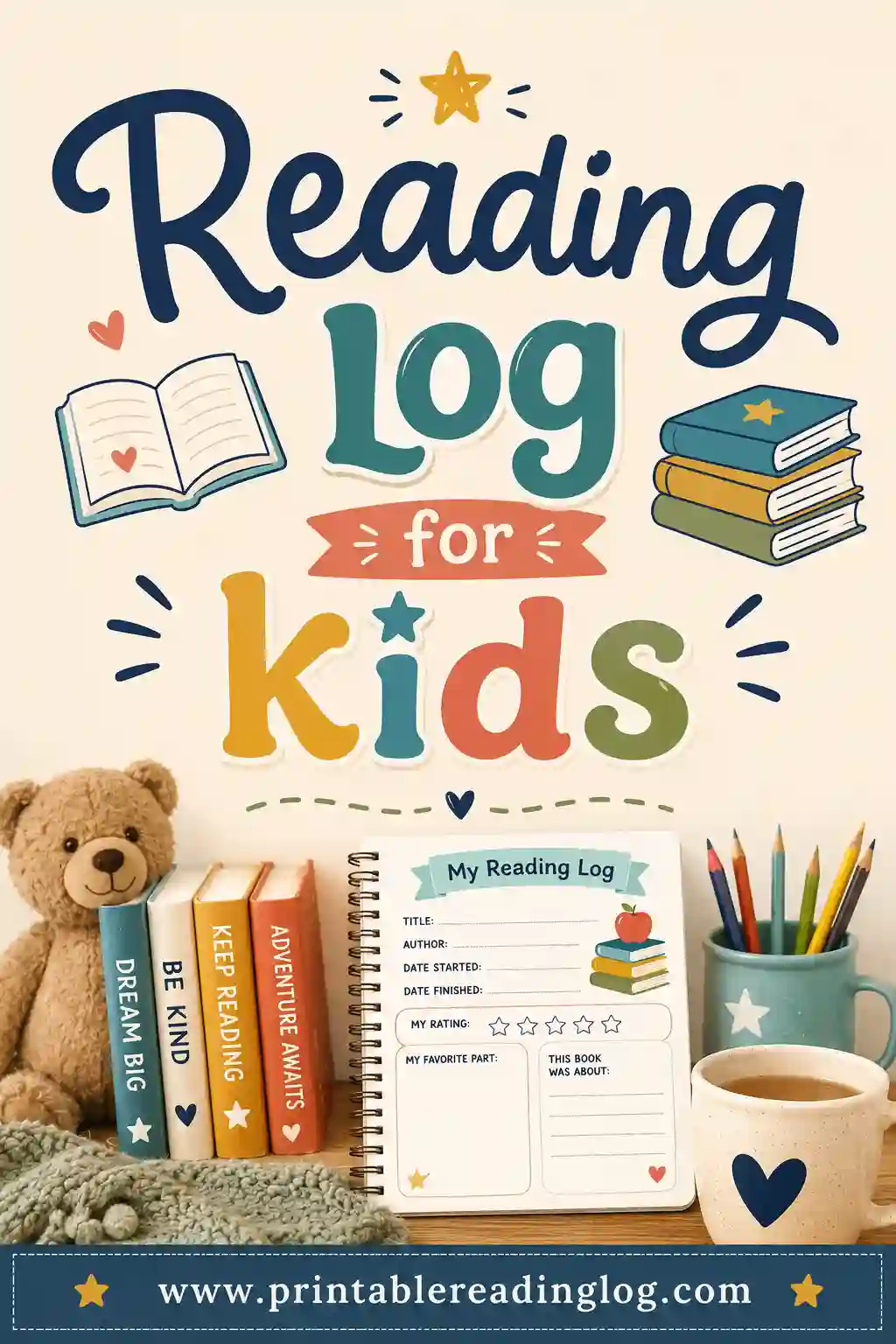
If you teach a group, print one log per student and collect them weekly. A 30-second glance tells you who needs easier texts and who's ready to level up. For broader classroom strategies, our reading log for kids guide has more setup ideas you can adapt for English learners of any age.
Picking Books for English Learners
The log is only as good as the books that fill it. The right choices keep learners reading instead of giving up.
A few guidelines that work across ages:
- Choose high-interest, low-difficulty texts. Graphic novels, joke books, and simple non-fiction about real interests pull learners in without overwhelming them.
- Repeat-readings are fine. Re-reading a favorite builds fluency and confidence. Don't push for "new" every time.
- Mix formats. Picture books, comics, news-for-learners sites, and short stories all count. Variety keeps the log fresh.
- Use the five-finger rule. Have the student read a page and hold up a finger for each unknown word. Five or more on one page? The book's probably too hard right now.
When a book is too easy, the new-words column dries up — a quiet sign it's time to level up. When it's too hard, the minutes drop and the face icons turn frowny. The log itself tells you when to adjust.
Common Mistakes to Avoid
A few easy slips can turn a helpful log into a chore:
- Too many columns. A crowded log feels like a test. Start small.
- Demanding full summaries. Long writing scares beginners away from the whole thing.
- Picking books that are too hard. This is the number-one reason logs get abandoned. Match the text to the level.
- Logging only at school. Encourage reading (and logging) at home too, even just 10 minutes. The habit matters more than the setting.
- Forgetting to review new words. A new-words column nobody looks at is wasted potential. Glance at it weekly.
Dodge these and your reading log for ESL students will do exactly what it should: turn daily reading into steady, visible English growth.
Frequently Asked Questions
What should a reading log for ESL students include?
Keep it light: a date column, a book or text title, minutes read, and a small "new words" field. Add a face icon or star rating to capture how comfortable the reading felt. For beginners, skip the summary box and add it later as their English grows.
How many minutes a day should ESL students read?
Fifteen minutes a day is a solid target for most learners, and even 10 minutes daily beats a long session once a week. Consistency builds the habit and the vocabulary faster than occasional cramming. Track minutes in the log so the streak stays visible.
Should ESL students track pages or minutes?
Minutes are usually fairer than pages. Reading in a second language is slower at first, so a page count can feel discouraging. Tracking time lets learners measure effort instead of speed, which keeps motivation high. You can switch to pages later as fluency grows.
Can I use the same reading log for different English levels?
Yes — just adjust the columns. Beginners do well with minutes, a face icon, and one new word. As learners advance, add a new-words column, then a one-sentence note, then a short summary. The free reading log maker lets you toggle columns for each level.
How do I keep ESL students motivated to log their reading?
Set a small daily goal, keep the log visible, and celebrate the new-words column each week. Praise consistency over speed, since reading in a new language takes effort. A growing line of checked boxes is its own reward, and small incentives can help too.
Is this reading log really free to print?
Yes. You build and print it yourself at no cost — no sign-up, no watermark, no app to install. Make one log or a full class set in a couple of clicks and print as many copies as you need.
Ready to Build Your ESL Reading Log?
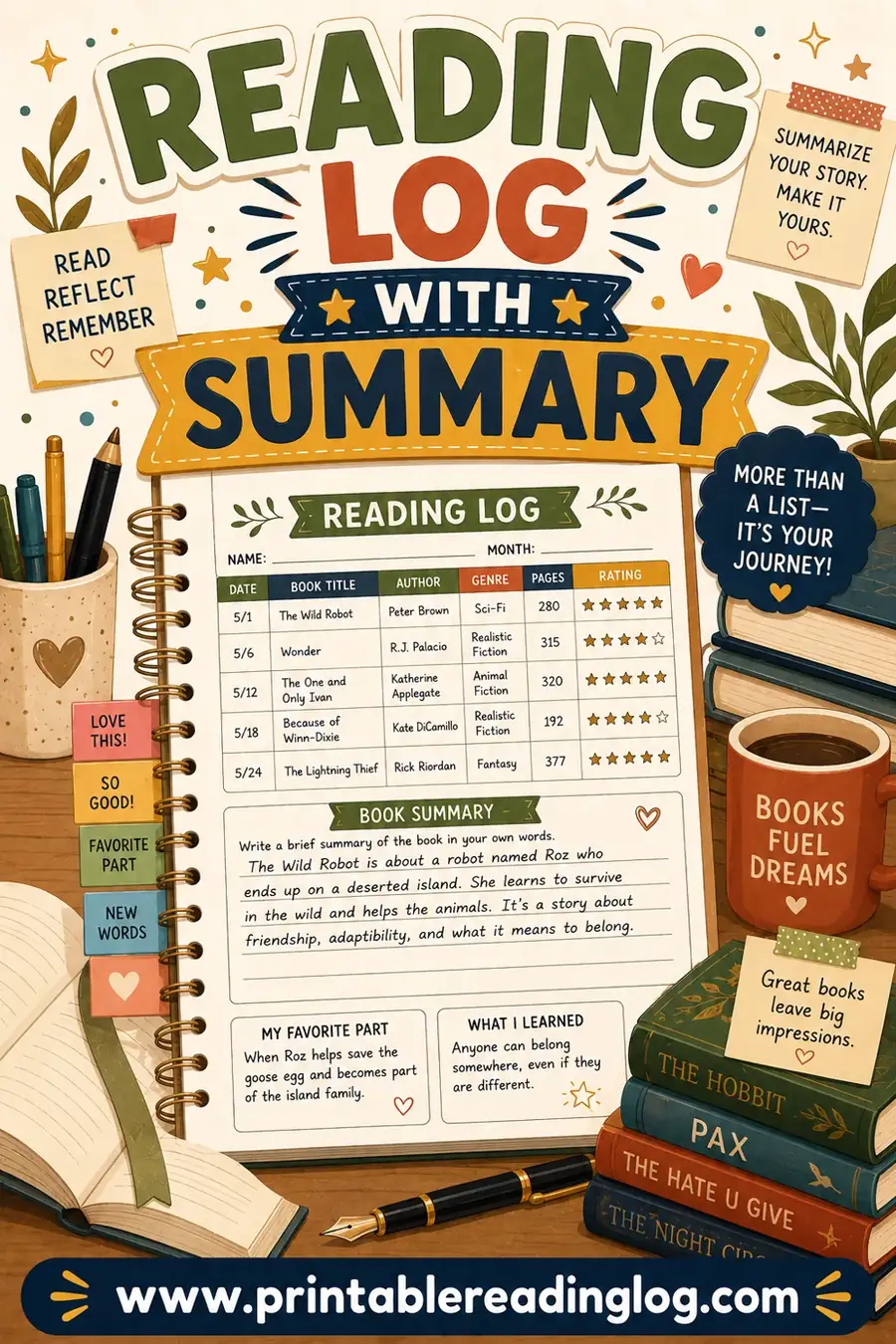
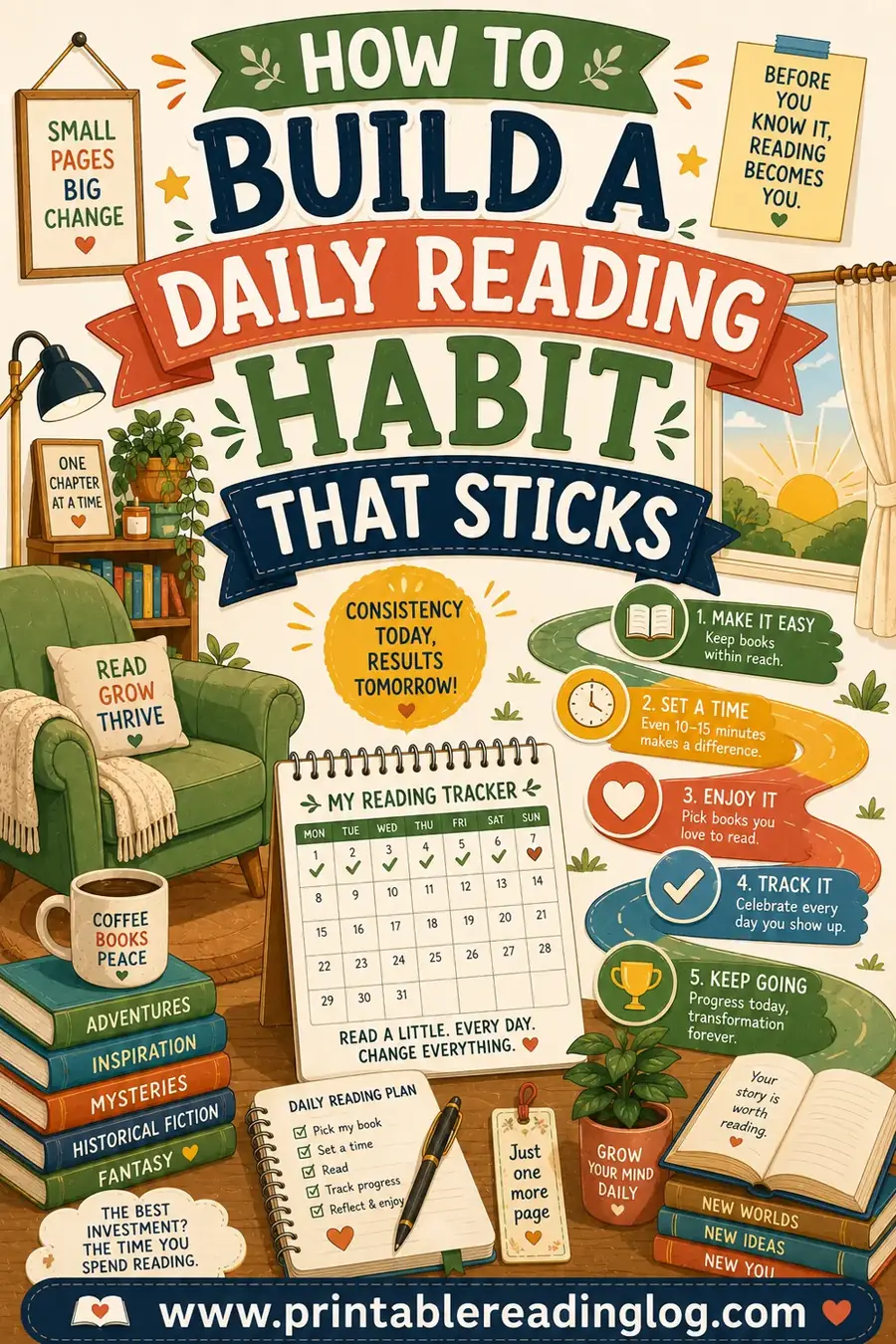
A good reading log for ESL students is simple, encouraging, and built around minutes and new words rather than pressure. Set a 15-minute goal, pick books at the right level, and let the log show the progress. Open the free reading log maker, turn on the columns that fit your learner's level, and print your first log in minutes. Want more layout ideas? Browse our guides on a reading log with summary and how to build a daily reading habit. Happy reading — in any language.