Reading Log for Adults Building a Habit: Free & Printable
A reading log for adults building a habit is a simple printable tracker that records what you read each day — usually in minutes — so the streak becomes visible and reading turns into a routine you actually keep. The best habit logs are minimal: a date, your minutes, and a box to check, with maybe a small monthly goal at the top. You can make one for free in under a minute with our printable reading log maker: choose "by minutes," set a daily target, and print a clean tracker you'll want to fill in.
Ready to start tonight? Open the free tool, pick a daily or monthly layout, set a small goal like 20 minutes, and print. No sign-up, no app, no cost.
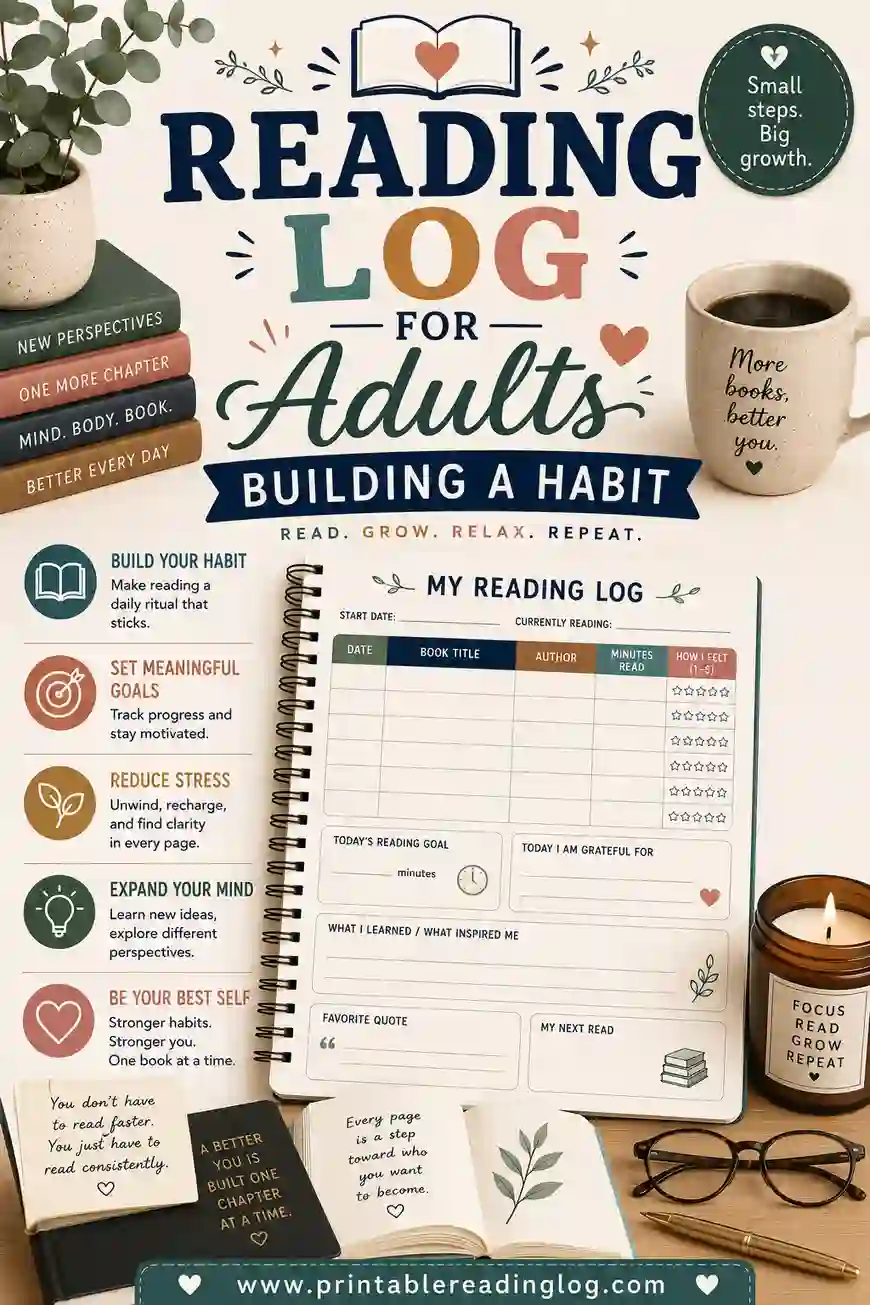
Why a Reading Log Helps Build the Habit
Most adults don't read less because they dislike books. They read less because reading keeps losing to a phone, a screen, or a long day. A reading log quietly tips the balance back toward books.
It works for three reasons rooted in how habits actually form:
- It makes the streak visible. A row of checked boxes is oddly satisfying, and you won't want to break the chain. That visible streak is one of the strongest, simplest motivators there is.
- It lowers the bar. A log focused on minutes, not books, means even 10 minutes counts as a win. Small wins are what keep a habit alive in week three when motivation dips.
- It shows real progress. You rarely feel yourself becoming "a reader." But a month of filled boxes is proof, and proof keeps you going.
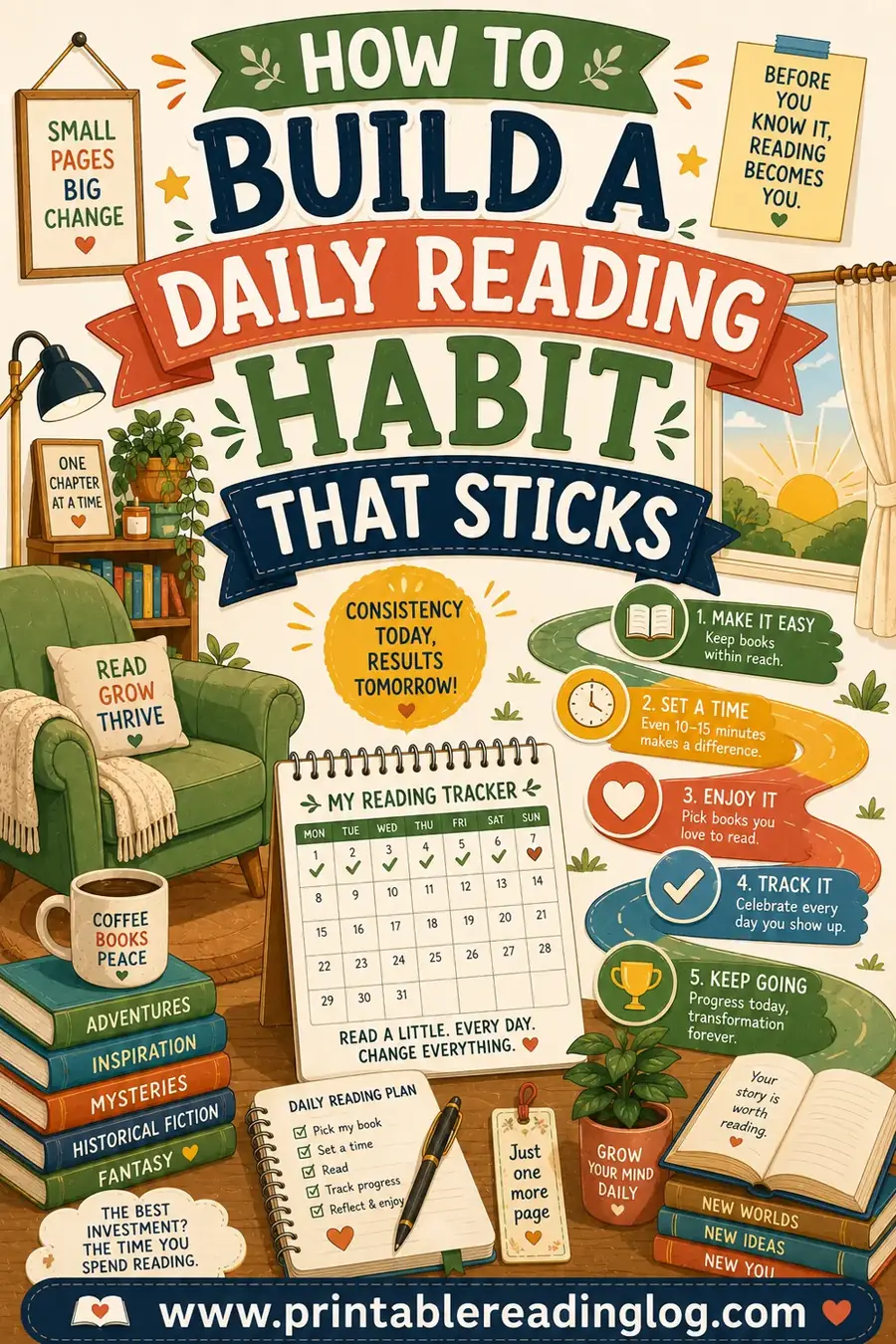
The log isn't homework. It's a gentle structure that makes the easy choice — reading a few pages — slightly easier and a lot more rewarding. For the full method, our how to build a daily reading habit guide goes deeper.
What to Track (Keep It Minimal)
The biggest mistake adults make with a reading log is over-building it. A habit log should take 15 seconds to update, or you'll stop. Less is more here.
Here's what to include and what to leave off:
| Element | Include it? | Why |
|---|---|---|
| Daily checkbox | Yes | The streak is the whole point |
| Minutes | Yes | Lets small sessions count |
| Date / day | Yes | Anchors the streak |
| Book title | Optional | Nice to remember, not essential |
| Monthly goal | Yes | Gives the streak a target |
| Star rating | Optional | Fun, but skip if it slows you |
| Full summary | No | Too much friction for a habit log |
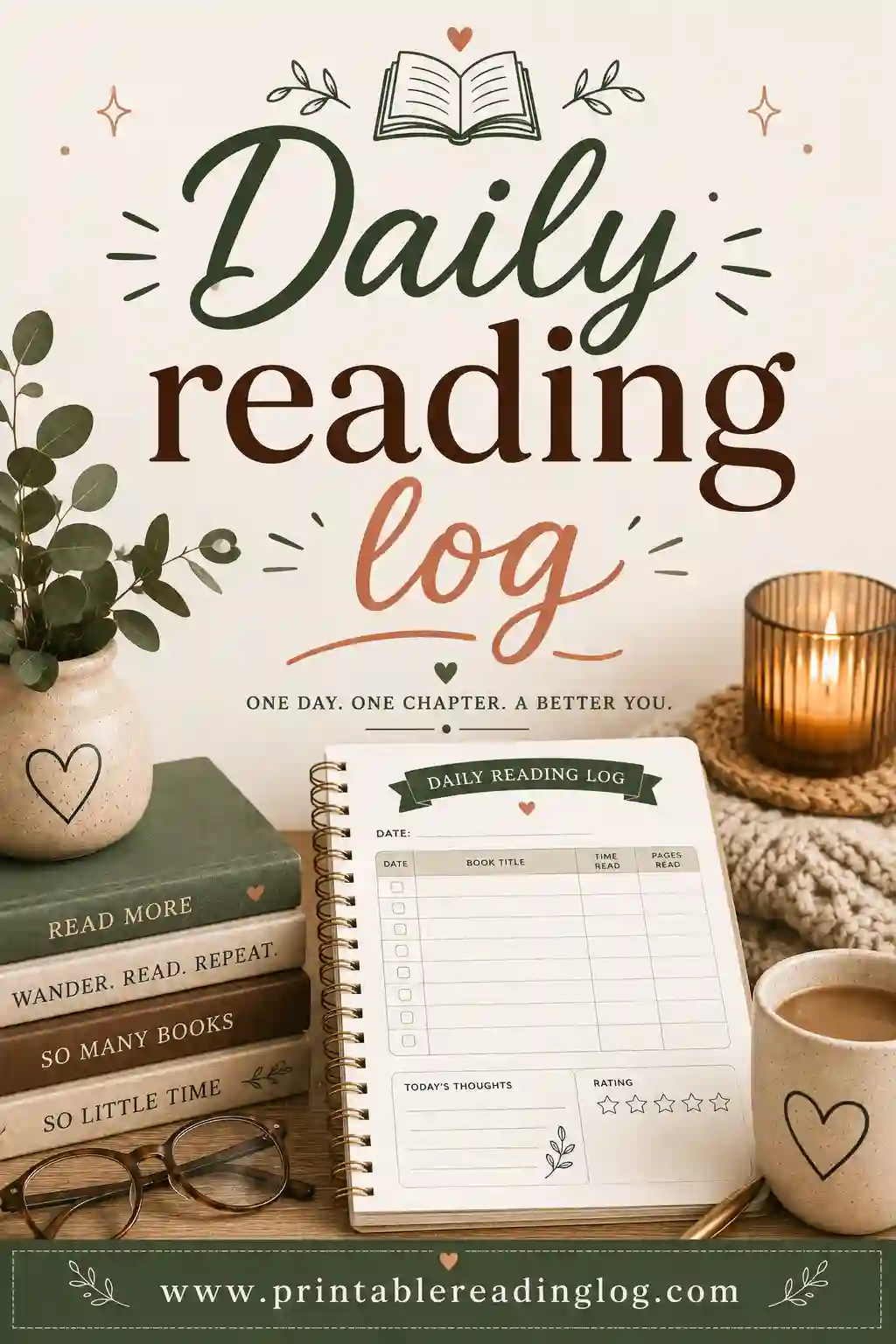
If you want to remember and react to books, that's great — but keep it on a separate page or a second simpler column. Don't let "I should write a thoughtful summary" become the reason you skip logging entirely. The daily reading log format is built exactly for this kind of low-friction tracking.
Setting a Realistic Reading Goal
A goal you can actually hit is worth ten goals that look impressive and crush you by February. Start small, then grow.
Here are sane starting points depending on where you are now:
| If you currently read… | Start with | Build toward |
|---|---|---|
| Almost never | 10 min/day | 20 min/day |
| Occasionally | 20 min/day | 30 min/day |
| Most days | 30 min/day | 45 min/day |
| Daily already | A book-count goal | 1 book/week or 30–50/year |
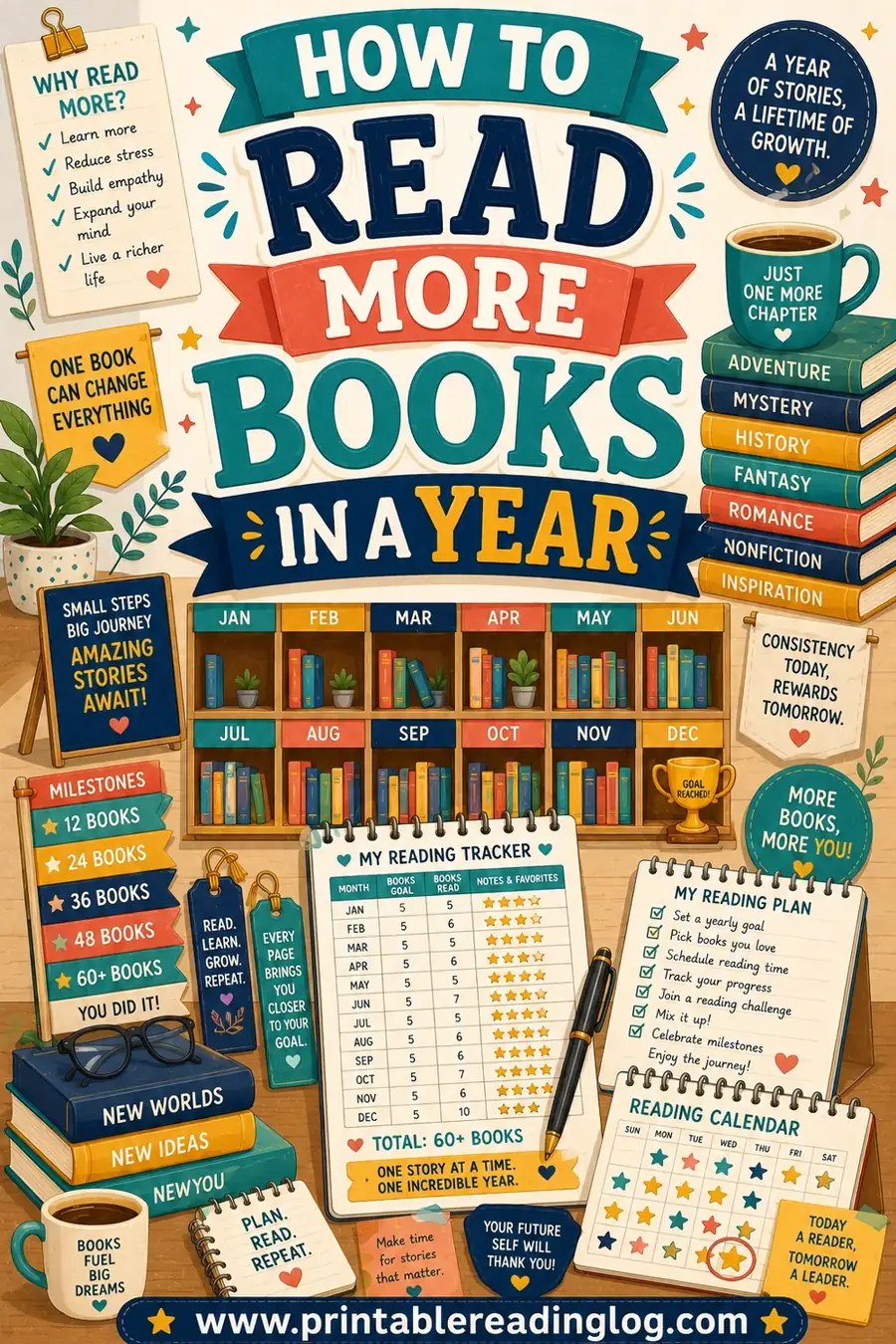
Twenty minutes a day adds up to roughly 15–20 books a year for the average reader — without ever feeling like a grind. The trick is consistency, not intensity. A short read every day beats a marathon session once two weeks. If your aim is a specific number of books, our how to read more books in a year guide does the math.
A Sample Adult Habit Log
Here's how a first week might look for someone starting at 20 minutes a day:
| Day | Read? | Minutes | Book |
|---|---|---|---|
| Mon | ✅ | 22 | "Project Hail Mary" |
| Tue | ✅ | 15 | "Project Hail Mary" |
| Wed | ✅ | 25 | "Project Hail Mary" |
| Thu | ⬜ | 0 | (skipped — long day) |
| Fri | ✅ | 20 | "Project Hail Mary" |
| Sat | ✅ | 40 | "Project Hail Mary" |
| Sun | ✅ | 18 | finished it |
Notice Thursday. One missed day didn't end anything — they picked right back up Friday. That's the real skill: not a perfect streak, but never missing twice in a row. The log makes that bounce-back easy to see and easy to do.
How to Make the Habit Stick
A log gets you started; a few habit tricks keep you going. These are the moves that turn a two-week burst into a year-round routine.
- Anchor reading to something you already do. Read right after your morning coffee, or for 20 minutes before sleep. Attaching the new habit to an existing one is the single most reliable way to make it automatic.
- Keep the book visible. A book on your pillow or beside the coffee maker is a silent reminder. Out of sight really is out of mind.
- Make the bar embarrassingly low. On bad days, read one page. The point is to keep the streak, not hit a number. One page often turns into ten.
- Never miss twice. Skipping a day is fine. Skipping two starts a slide. Treat the second day as non-negotiable.
- Log right after you read. Update the sheet while the session's fresh. A log you fill in "later" is a log you forget.
- Celebrate the month. A full or nearly-full month of boxes is a genuine win. Notice it, maybe reward it with a new book.
Don't let one bad week end it
Everyone has a week where life eats their reading time. The adults who build a lasting habit aren't the ones who never miss — they're the ones who start a fresh row next week without guilt. A log makes restarting painless: new month, new grid, clean slate.
Choosing Books That Keep You Reading
The fastest way to break a brand-new reading habit is to slog through a book you don't enjoy out of some sense of duty. Don't.
A few guidelines for the habit-building phase:
- Read what's fun, not what's impressive. A page-turner you race through builds the habit. A "important" book you dread does the opposite.
- Allow yourself to quit a book. Fifty pages in and bored? Put it down. Life's too short, and a quit book beats a stalled habit.
- Keep a "next up" list. Finishing a book and not knowing what's next is a classic streak-killer. Always have the next one ready.
- Mix formats freely. Audiobooks on a commute, an ebook at lunch, paper at night. It all counts toward the habit.
When reading is genuinely enjoyable, the log almost fills itself. The streak stops being something you force and becomes something you look forward to. Adults wanting a richer tracker beyond pure habit can step up to the fuller reading log for adults layout once the routine is solid.
Finding Time to Read When You're Busy
The most common reason adults give for not reading is time. But a habit log reframes the problem: you don't need a free hour, you need a reliable 15 minutes. Those minutes are hiding in your day already.
Here's where most adults find their reading time:
- The first 15 minutes of the morning. Before email, before the news. Pair it with coffee and it becomes automatic.
- The commute. An audiobook on a drive or a paperback on the train turns dead time into reading time. It counts.
- The lunch break. Ten minutes with a book instead of scrolling is an easy swap that adds up over a week.
- The wind-down before bed. Reading instead of one more screen helps you sleep and reliably banks 20 minutes a night.
- The waiting moments. Lines, waiting rooms, the few minutes before a meeting. An ebook on your phone makes these count.
The log's job is to catch all these scattered minutes and show you they add up. A reader who logs 15 minutes here and 10 there is often shocked to find they've read 20 books in a year — without ever "finding time" in the way they imagined.
Beating the Phone for Your Attention
For most adults, the real competition for reading isn't lack of time — it's the phone. The habit log is a small but genuine counterweight, and a few extra tricks tip the scales further.
What actually helps:
- Charge your phone across the room. If the phone isn't on your nightstand, the book on your pillow wins by default. This one change rescues more reading habits than any other.
- Read on paper or e-ink. A physical book or a dedicated e-reader has no notifications begging for your attention. The fewer pings, the longer you read.
- Make logging the reward. Filling in your box and seeing the streak grow scratches the same "small win" itch your phone does — but it points you toward books.
- Stack it before the scroll. Read your 15 minutes before you allow yourself the phone, not after. "After" almost never comes.
None of this requires willpower heroics. It's about arranging your environment so the easy, default choice is the book. The log keeps score, and the streak gives you a reason to keep choosing reading over the feed.
Frequently Asked Questions
What should an adult reading habit log include?
Keep it minimal: a date or day, a daily checkbox, a minutes column, and a small monthly goal at the top. A book-title column is a nice optional extra. Leave out long summaries — they add friction and are the main reason adults stop logging. The goal is a 15-second update.
How many minutes a day should an adult read to build a habit?
Start with whatever you can keep up. Twenty minutes a day is a great target and adds up to roughly 15–20 books a year, but 10 minutes is a perfectly good beginning. Consistency matters far more than the number — a short daily read beats an occasional long one.
Should I track minutes or books in a habit log?
For building a habit, track minutes. It lets even a short 10-minute session count as a win, which keeps the streak alive on busy days. Once daily reading is automatic, you can switch to a book-count goal like one book a week if you want a bigger target.
What if I miss a day or break my streak?
Missing one day is no big deal — just read the next day. The real rule is "never miss twice," because two skipped days in a row is where habits unravel. If a whole week slips, start a fresh row next week without guilt. A log makes restarting easy.
How does a reading log actually help me read more?
It makes your progress visible, lowers the bar so small sessions count, and gives you a streak you won't want to break. That visible chain of checked boxes is a proven, simple motivator. Pairing it with a fixed reading time makes the habit nearly automatic.
Is this reading log free to print?
Completely free. You build and print it yourself with no sign-up, no watermark, and no app. Make a daily or monthly habit log in a couple of clicks and print as many copies as you need to keep the streak going all year.
Ready to Build Your Reading Habit?
A reading log for adults building a habit works because it's simple, visible, and forgiving — a streak of checked boxes that quietly pulls you back to your book each day. Set a small goal, pick something you actually want to read, and never miss twice. Open the free reading log maker, choose your layout, set your daily target, and print your first tracker tonight. For more, see our guides on how to build a daily reading habit and how to read more books in a year. Here's to the year you finally became a reader.