Reading Log Alternatives Kids Actually Like
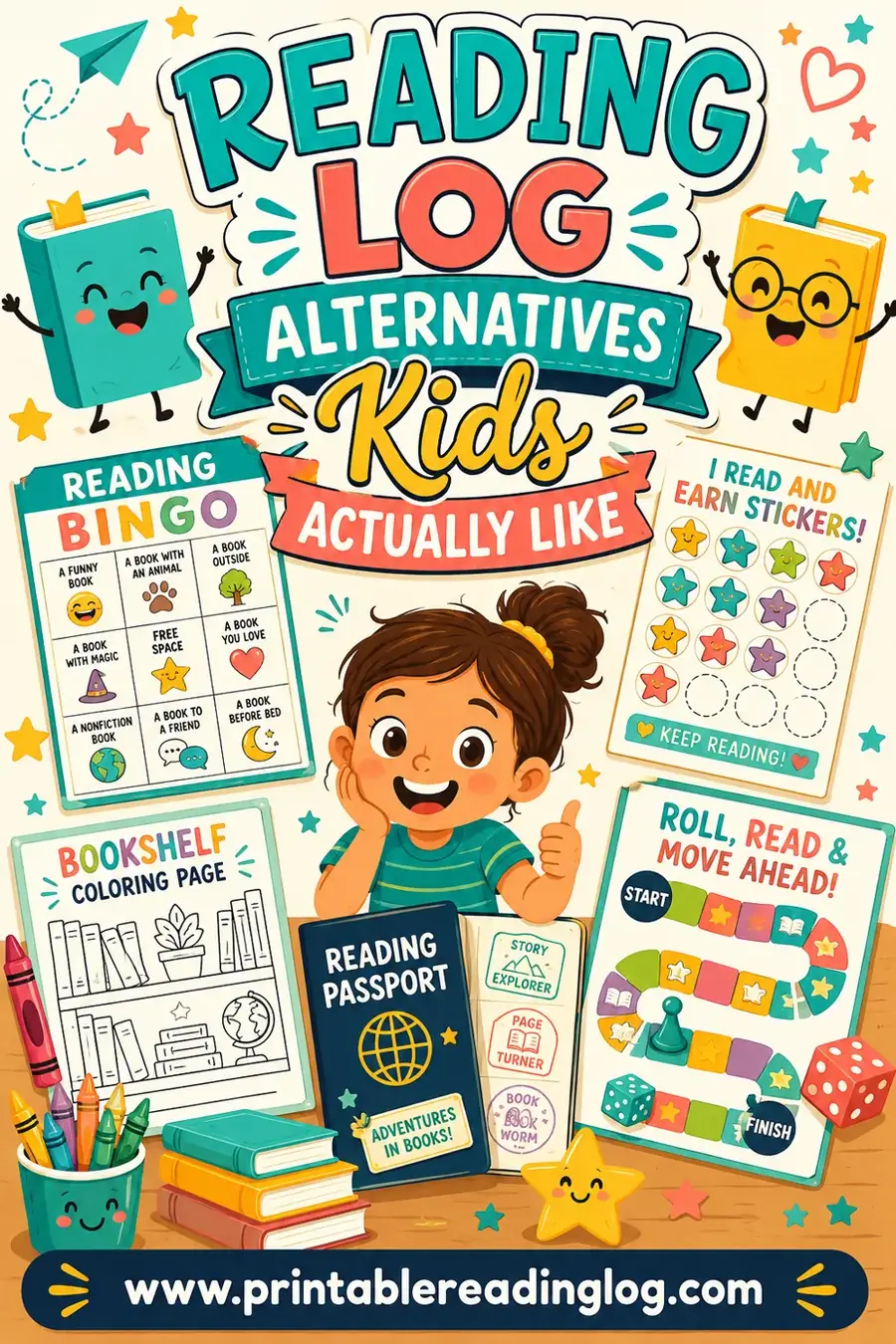
The best reading log alternatives kids actually like swap a boring chart for something playful: a reading bingo board, a sticker chart, a "books read" coloring page, or a reading journal where they draw and rate each book. These keep the tracking, the part teachers and parents want, but wrap it in a game kids look forward to. You can print any of these styles free from a reading log maker and pick whichever one clicks with your reader.
Want to try a kid-friendly version now? Open the free reading log maker, choose a fun layout, and print it in under a minute. No sign-up, no app, no cost.
Why Kids Hate the Standard Reading Log
A plain reading log, write the title, write the minutes, get a parent signature, can feel like homework. And homework is exactly what most kids are trying to escape when they finally sit down with a good book. For a reluctant reader, that boring grid can sour the whole experience.
The good news: the problem isn't tracking, it's the format. Kids don't mind recording what they read. They mind a chart that feels like a chore. Change the format to something playful, and the resistance often melts away. The trick is to keep the accountability while adding a little fun.
So you don't have to ditch logging. You just need a version your kid actually wants to fill in.
Reading Log Alternatives Kids Love
Here are the most popular kid-friendly alternatives, all of which still track reading, just in disguise.
1. Reading bingo
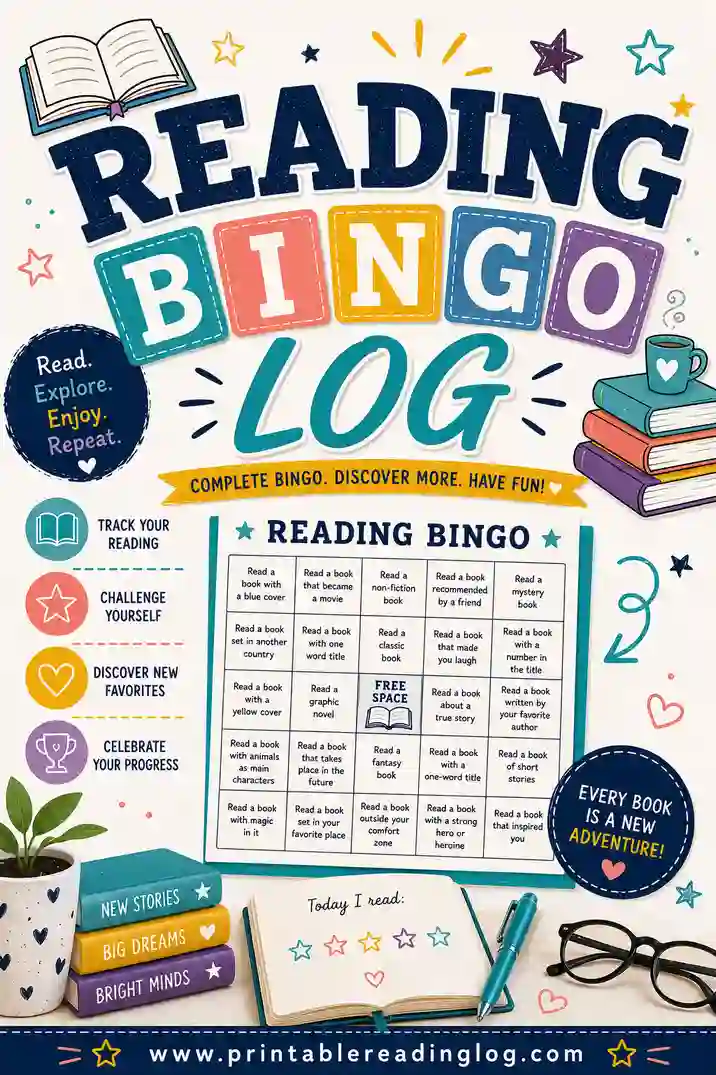
Turn the log into a bingo board where each square is a reading challenge: "a book about animals," "read in a blanket fort," "a book that made you laugh." Kids cross off squares as they go and race for a line or a blackout. It adds variety and a goal beyond just finishing pages. Our reading bingo log is built for exactly this.
2. Sticker chart
Classic for a reason. Each finished book (or each reading session) earns a sticker. The growing line of stickers is its own reward, and little kids find it irresistible. Pair it with a small prize at 10 stickers and you've got real motivation.
3. Coloring tracker
A page with outlined shapes, books on a shelf, a tree to fill with leaves, a path to the treasure, where the child colors one in per book. It blends art with tracking, so it feels like an activity, not a record.
4. Reading journal
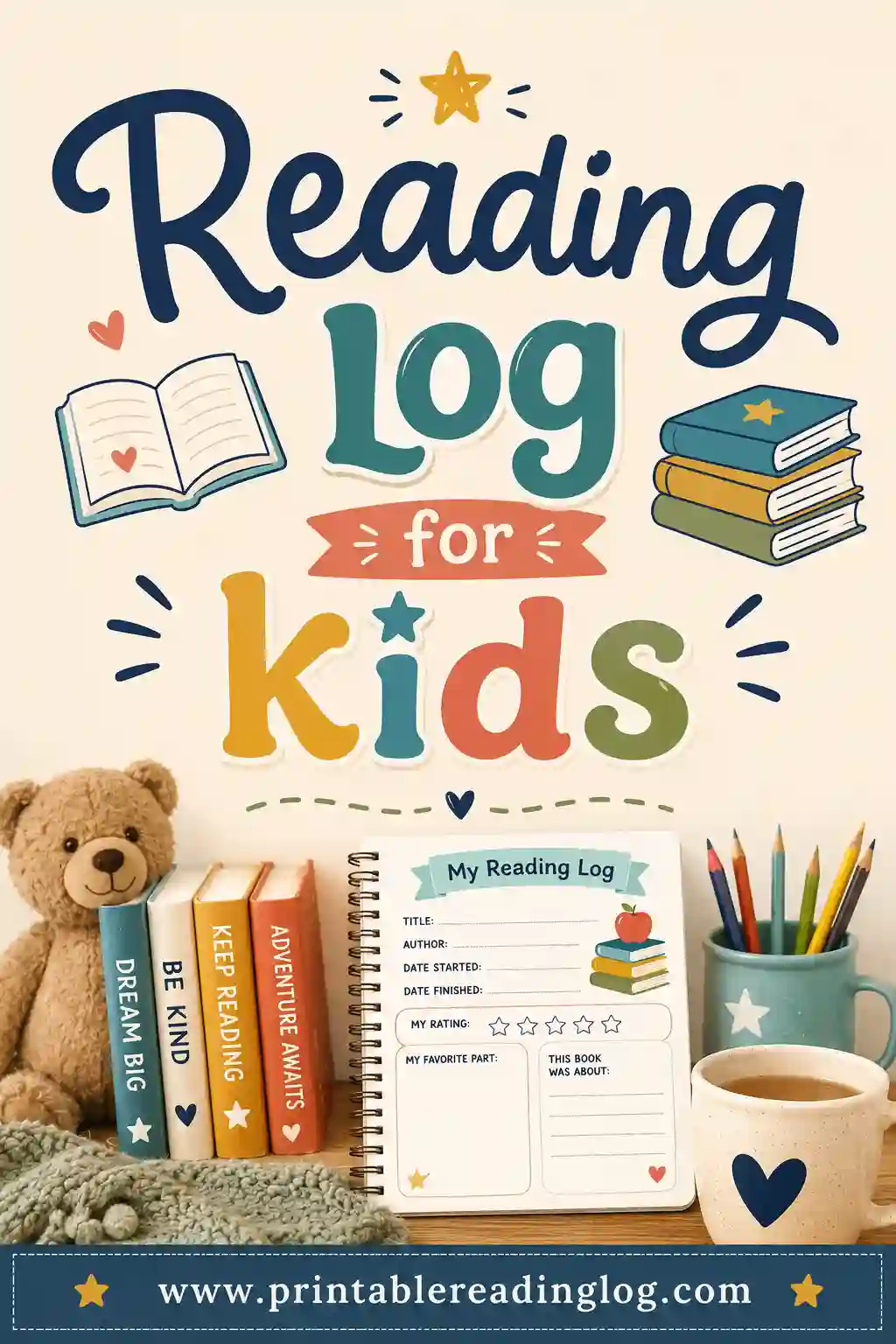
For kids who like to write or draw, a journal page per book lets them sketch a scene, rate it with stars, and jot one thing they liked. It builds reflection and feels personal. An aesthetic reading journal leans into this for older kids and tweens.
5. Book "passport" or map
Each book is a "trip" the child stamps in a passport, or a stop on an adventure map. The story-within-a-story makes reading feel like a journey, which is great for imaginative kids.
6. Reading challenge checklist
A themed list of challenges, "read a book with a blue cover," "read to a pet," "read outside", that kids tick off. It nudges variety and adventure without the rigid grid.
Quick Comparison: Which Alternative Fits Your Kid?
Different kids respond to different hooks. Here's a quick guide.
| Alternative | What kids love | Best for |
|---|---|---|
| Reading bingo | The game and the goal | Kids who like a challenge |
| Sticker chart | Collecting and visible progress | Young kids, ages 4–8 |
| Coloring tracker | The art and the reveal | Creative younger kids |
| Reading journal | Drawing and rating books | Tweens, writers, artists |
| Book passport/map | The story and adventure feel | Imaginative kids |
| Challenge checklist | Variety and ticking boxes | Kids stuck in a reading rut |
There's no wrong pick. The "best" alternative is simply the one your particular kid will reach for. When in doubt, try two and let them choose.
How These Alternatives Still Track Reading
Parents and teachers sometimes worry a "fun" tracker won't do the job. It does, as long as it captures the basics. Every alternative above can quietly record:
- What was read — the title, written or drawn.
- When — the date or the week it was finished.
- How much — a book, a chapter, or a reading session.
- A reaction — a rating, a sticker, or a colored shape.
That's everything a standard log captures, just dressed up. A reading bingo square still proves a book was read. A sticker still marks a session. So you keep the accountability teachers ask for while the kid feels like they're playing. Everybody wins.
Matching the Alternative to Your Kid's Age
Age makes a big difference in what lands. Here's a rough guide.
| Age group | Best alternatives | Why |
|---|---|---|
| Toddlers (2–4) | Sticker chart, coloring tracker | Simple, visual, no reading or writing needed |
| Early readers (5–7) | Sticker chart, reading bingo | Big wins, easy challenges, lots of stickers |
| Kids (8–10) | Reading bingo, book passport, challenge checklist | They like goals, variety, and adventure |
| Tweens (11–13) | Reading journal, challenge checklist | Reflection and ownership matter more |
For very young kids, lean on visuals and stickers, no writing required. As kids grow, they enjoy more agency: choosing challenges, rating books, journaling. A reading log for kids can be printed in any of these styles to match the age.
Tips to Make Any Tracker Kid-Approved
The format helps, but a few extra touches make any tracker something kids actually like.
- Let them decorate it. A tracker the child colored or named feels like theirs. Ownership boosts buy-in.
- Keep goals small and visible. "Three books and you earn a movie night" beats a vague, far-off target.
- Celebrate every win. A high-five, a sticker, a small prize, mark each milestone out loud.
- Never use it as punishment. The second it becomes a threat, the magic dies. Keep it positive.
- Read with them. Your interest is the biggest motivator there is. Track your own books alongside theirs.
- Offer choice. Let the kid pick the next book or the next challenge. Agency fuels enthusiasm.
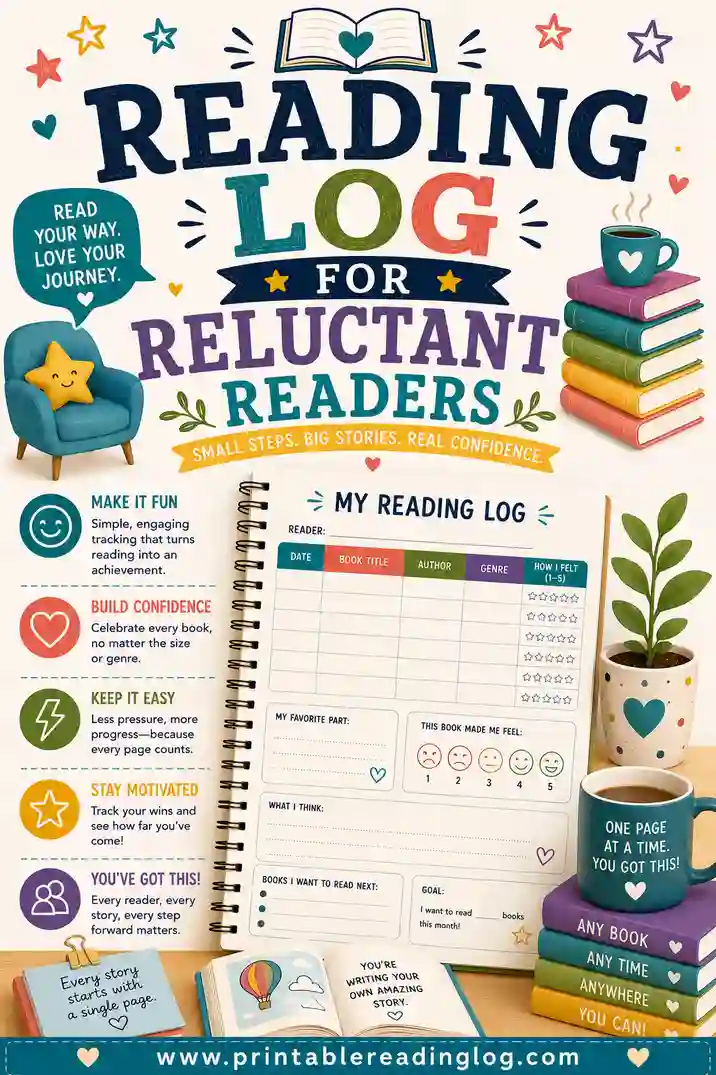
These work especially well for kids who've already decided they "hate reading." For more on that, our reading log for reluctant readers digs into gentle, no-pressure tactics.
A Sample Reading Bingo Board
To make it concrete, here's what a kid-friendly reading bingo board might look like. Each square is a mini-challenge the child completes by reading.
| A book about animals | Read in a fort | A funny book |
| Read to a pet | FREE SPACE | A book with pictures |
| A book about space | Read outside | A book a friend likes |
Cross off a line for a small prize, or fill the whole board for a bigger one. Notice how each square nudges the child toward a different kind of book or reading spot, that variety is what keeps it fresh. You can print a board like this and let your kid help fill in the challenges.
Frequently Asked Questions
What can I use instead of a boring reading log?
Try a reading bingo board, a sticker chart, a coloring tracker, a reading journal, or a book "passport." Each one still records what your child read, but wraps it in a game or activity kids actually enjoy. Pick the style that matches your kid's personality, some love challenges, others love stickers or drawing.
Do fun reading trackers still satisfy school requirements?
Usually, yes, as long as they capture the title, date, and amount read, which all these alternatives can. A reading bingo square or a sticker still proves a book was read. If your school needs a parent signature, just add a signature line to whatever fun format you choose.
What's the best reading tracker for a reluctant reader?
Reading bingo and sticker charts work especially well because they shift the focus from "finish this book" to "complete one small, fun task." That smaller ask is far less intimidating. Keep it positive, celebrate every win, and never use the tracker as a punishment.
How do I get my kid to actually use a reading tracker?
Let them decorate and own it, keep goals small and visible, and celebrate every milestone. Offering a choice, of the next book or the next challenge, gives kids a sense of control that fuels enthusiasm. Reading alongside them is the single biggest motivator.
What reading tracker works for kids who can't read yet?
Sticker charts and coloring trackers are perfect for pre-readers because they need no writing. A parent reads aloud, and the child adds a sticker or colors a shape for each book. It builds the tracking habit early, in a way that's pure fun.
Can I mix and match these reading log alternatives?
Absolutely. Many families rotate, a sticker chart one month, a bingo board the next, to keep things fresh. You can also combine ideas, like a coloring tracker with a few bingo-style challenges. The free maker lets you print different styles whenever the current one gets stale.
Print a Reading Tracker Your Kid Will Love
The secret to a tracker kids actually like is simple: keep the tracking, lose the boredom. Whether it's bingo, stickers, coloring, or a journal, the right format turns a chore into a game your child looks forward to. Open the free reading log maker, pick a fun, kid-friendly layout, and print it today. It's free, there's no sign-up, and your young reader's next adventure is one page away.