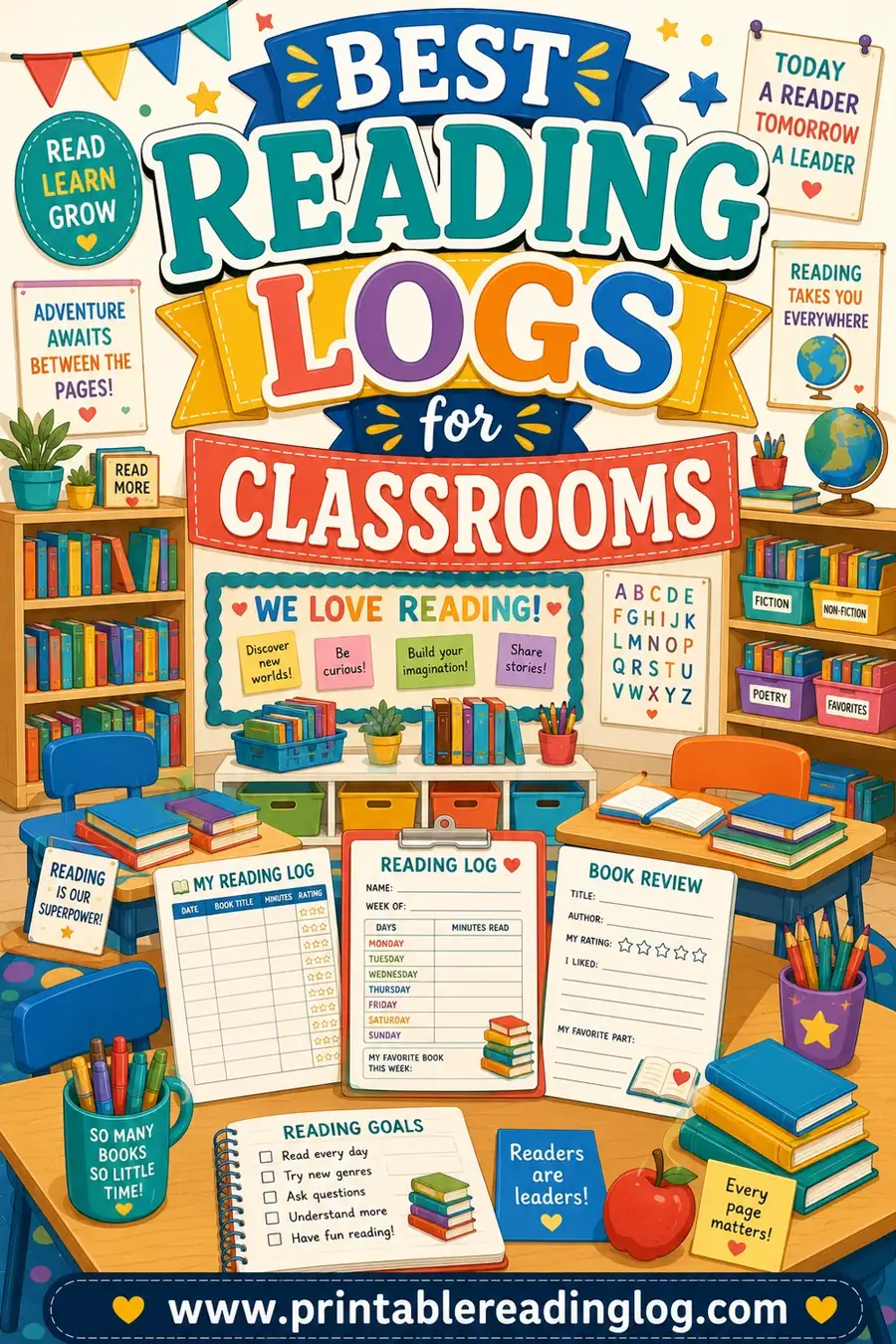
Best Reading Logs for Classrooms (Free & Printable)
The best reading log for a classroom is one you can print as a full class set, customize for your grade level, and have students fill out in under a minute a day. A good classroom log tracks the date, title, minutes or pages, and a parent or teacher initial — simple enough that thirty kids can keep up with it. The fastest way to make one is a free reading log maker where you set your columns, print a stack, and hand them out the same day.
Short on time? Open the free reading log maker, pick a grade-appropriate layout, and print a class set in minutes. No sign-up, no cost, nothing to install.
What Makes a Reading Log Work in a Classroom
A classroom log has a tough job. It has to be simple enough for the youngest hand in the room, quick to check at a glance, and printable in bulk without draining the supply budget. The fanciest log on the internet is useless if you can't run off thirty copies for free.
When we compared options for teachers, we weighed five things:
- Bulk printing. Can you make a whole class set cheaply (ideally free)?
- Grade fit. Does it adjust for kindergarten versus fifth grade?
- Quick to check. Can you scan a log in five seconds during a busy morning?
- Parent buy-in. Is there a clean spot for a parent initial or note?
- Durability. Will it survive a backpack for a month?
A log that nails those is worth more than any feature-packed app you'll never have time to set up.
The Best Classroom Reading Logs, Compared
Here's how the common options stack up. We list the free printable maker first because it scales to a class set and adjusts per grade, but each option fits a different classroom.
| Option | Cost | Customizable | Best for | Catch |
|---|---|---|---|---|
| Free printable reading log maker | Free | High — set your columns | Any grade, full class sets | You print the set |
| Generic printable PDF template | Free | Low — fixed layout | One-size, simple needs | Can't adjust per grade |
| School-licensed reading app | $$ | Medium | Tech-forward, 1:1 device schools | Cost, screens, logins |
| Store-bought log booklets | $ | None | Teachers who want it pre-made | Recurring cost, fixed design |
| Composition notebook | Cheap | Manual | Older grades | No structure, slow to check |
| Printable reading calendar | Free | Medium | Pure minutes-a-day habits | Less room for titles |
Why a printable maker leads for classrooms
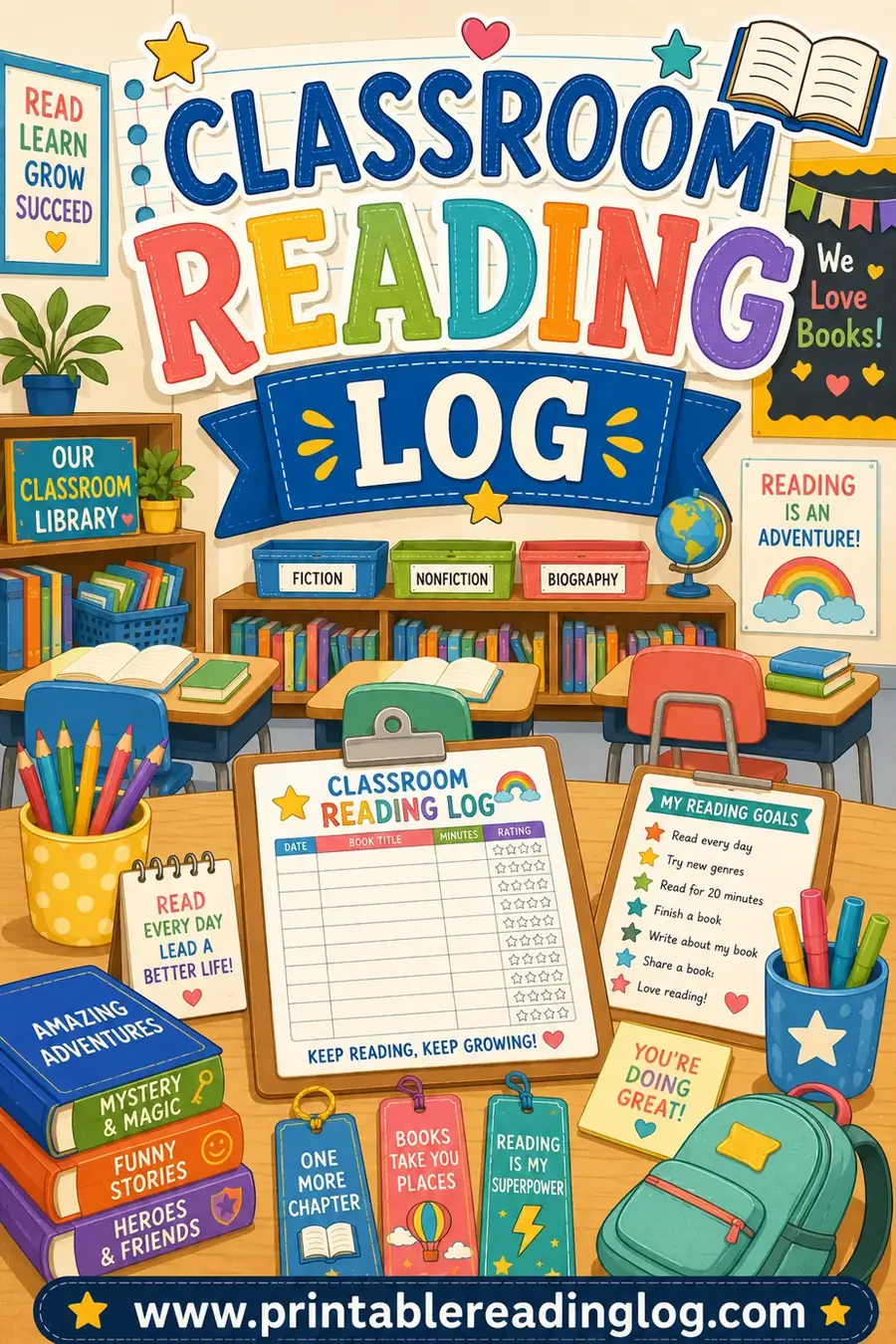
The win for teachers is a free class set tuned to your grade. With a reading log maker you build a picture-friendly log for kindergarten, a minutes log for second grade, or a title-and-summary log for fifth, then print thirty copies at no cost. Need a fresh month? Print again. It also gives you a clean parent-initial column so home reading actually gets verified. For a ready classroom layout, start from the classroom reading log style.
What to Track on a Classroom Reading Log
Keep it lean. The best classroom logs track just enough to prove the reading happened and spark a quick check-in.
Core columns that work across grades:
- Date — when they read.
- Title — what they read.
- Minutes or pages — pick one school-wide so totals compare.
- Parent initial — verifies home reading.
- A quick reaction — a smiley or star keeps young kids engaged.
For upper grades, swap the smiley for a one-line summary so the log doubles as light comprehension practice. Keep the daily entry under a minute or compliance drops fast.
Sample classroom reading log
Here's a filled-in week to show the format. Yours can be simpler for the youngest grades.
| Date | Title | Min | Parent | Rating |
|---|---|---|---|---|
| Mon | Pete the Cat | 15 | JM | ⭐⭐⭐ |
| Tue | Pete the Cat | 20 | JM | ⭐⭐⭐⭐ |
| Wed | Elephant & Piggie | 15 | JM | ⭐⭐⭐⭐⭐ |
| Thu | Frog and Toad | 20 | JM | ⭐⭐⭐⭐ |
| Fri | Library pick | 25 | JM | ⭐⭐⭐ |
You can verify a whole week of home reading in one glance. That's exactly what a busy teacher needs.
Classroom Reading Logs by Grade
Because each grade reads differently, here's how to shape the log. The same free maker handles every level.
Kindergarten and first grade
Use a picture-based log with big rows and a "read to me" checkbox, since most kids are emergent readers. A spot to color a star each day turns logging into a reward. Keep it to one page a week.
Second and third grade
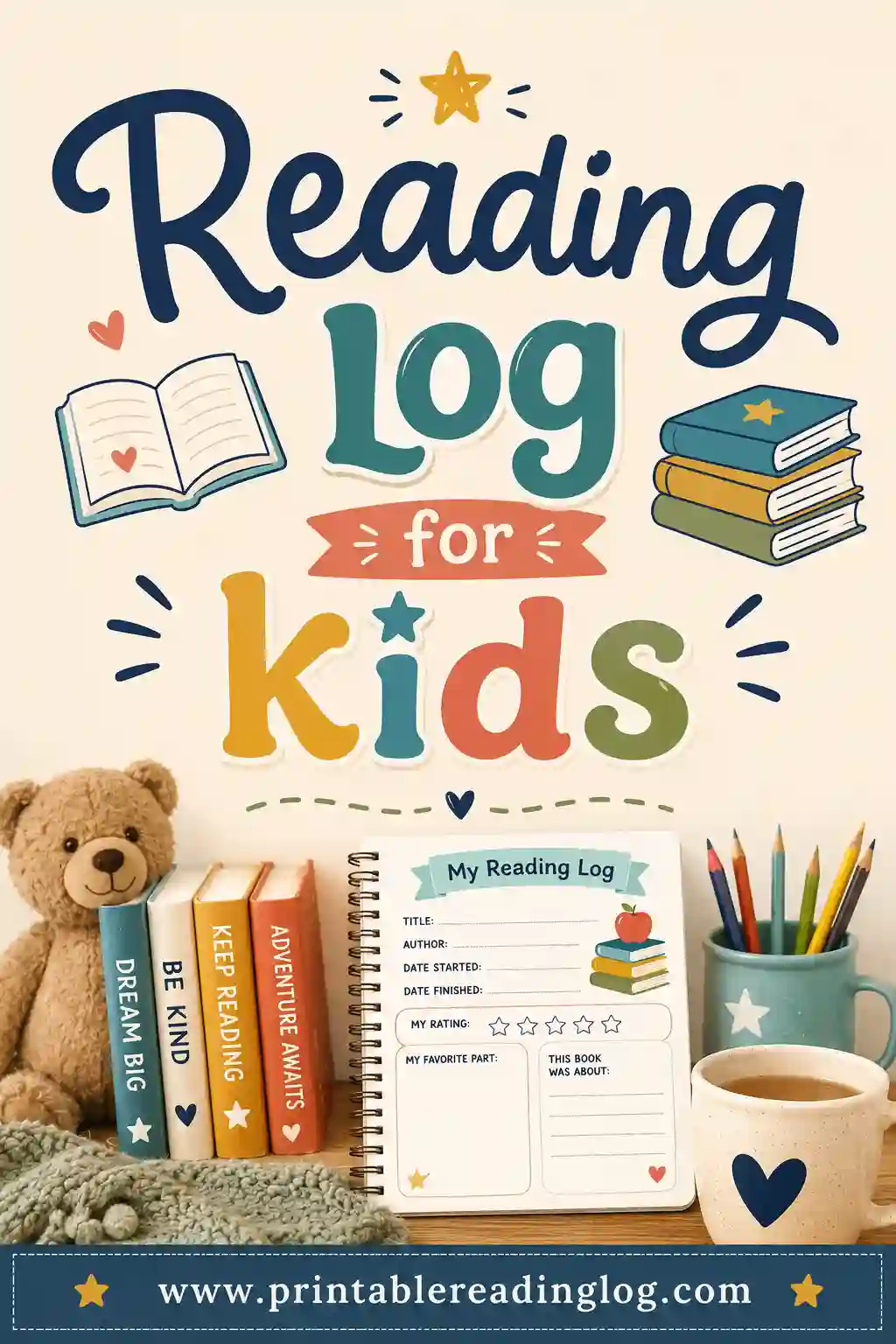
This is the classic title-plus-minutes log. Kids can write titles themselves and add up their weekly minutes. A small weekly total lets them race their own record. A reading log for kids layout fits perfectly here.
Fourth and fifth grade
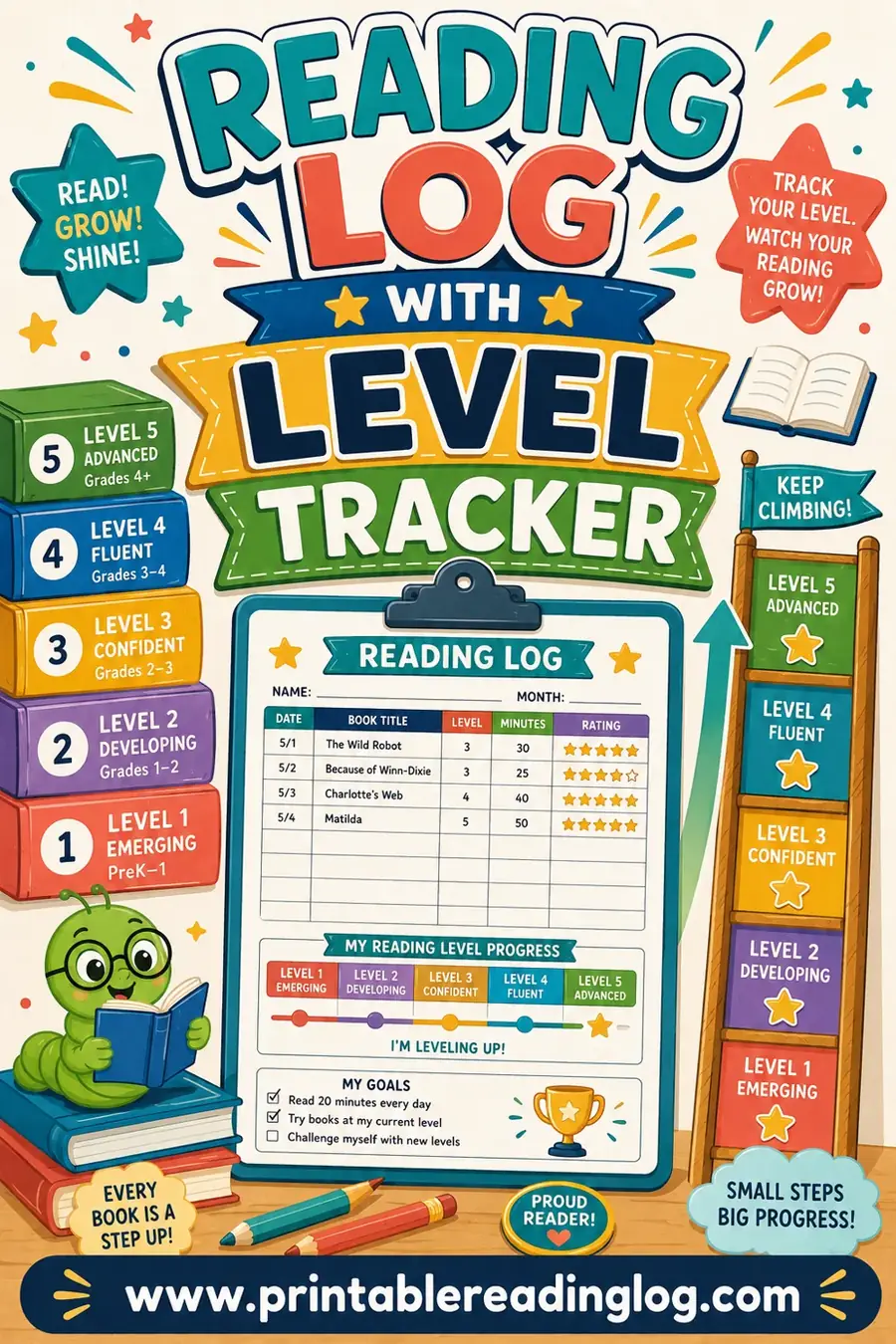
Add a one-line summary or "favorite part" column so the log builds comprehension. A reading log with a level tracker helps if your school uses leveled or AR-style reading.
Middle and high school
Older students do well with a title, page count, and a short reflection. It's less about supervision and more about building independent reading habits and a record they can be proud of.
How to Make a Class Set in 4 Steps
You can print thirty logs before the morning bell.
- Open the free maker. Go to the reading log maker — no account.
- Pick your columns. Date, title, minutes or pages, parent initial, and a rating. Drop what you don't need.
- Set the layout. Weekly is the classroom favorite — it matches a school week and fits in a folder.
- Print a class set. Run off one per student, plus a few spares for new arrivals.
To make logs last a month in backpacks, print on cardstock or send them home in a plastic sleeve.
Tips to Boost Reading-Log Compliance
The hardest part isn't making the log — it's getting it filled in. These habits help.
- Make it routine. A two-minute log check during morning work sets the expectation.
- Keep entries tiny. Five quick fields, not fifteen. Speed drives compliance.
- Loop in parents early. A short note home explaining the log and the nightly goal lifts return rates.
- Celebrate together. A class minutes goal with a reward (extra recess, a read-in day) builds momentum.
- Don't punish gaps. A kid who missed two nights but read four still wins. Praise the reading, not perfect logs.
Common classroom-log mistakes
- Too many columns. A busy log slows thirty kids down and tanks compliance. Trim ruthlessly.
- Mixing minutes and pages. Pick one school-wide so totals are comparable across the class.
- No parent verification. Without a parent initial, home reading is on the honor system. The initial column matters.
Free Printable vs. Reading Apps for Classrooms
Reading apps can be powerful, but they assume time, devices, and logins most classrooms don't have to spare. A free printable log works on day one, for every student, with zero setup and zero cost. It also doesn't depend on a district license you might lose next budget cycle.
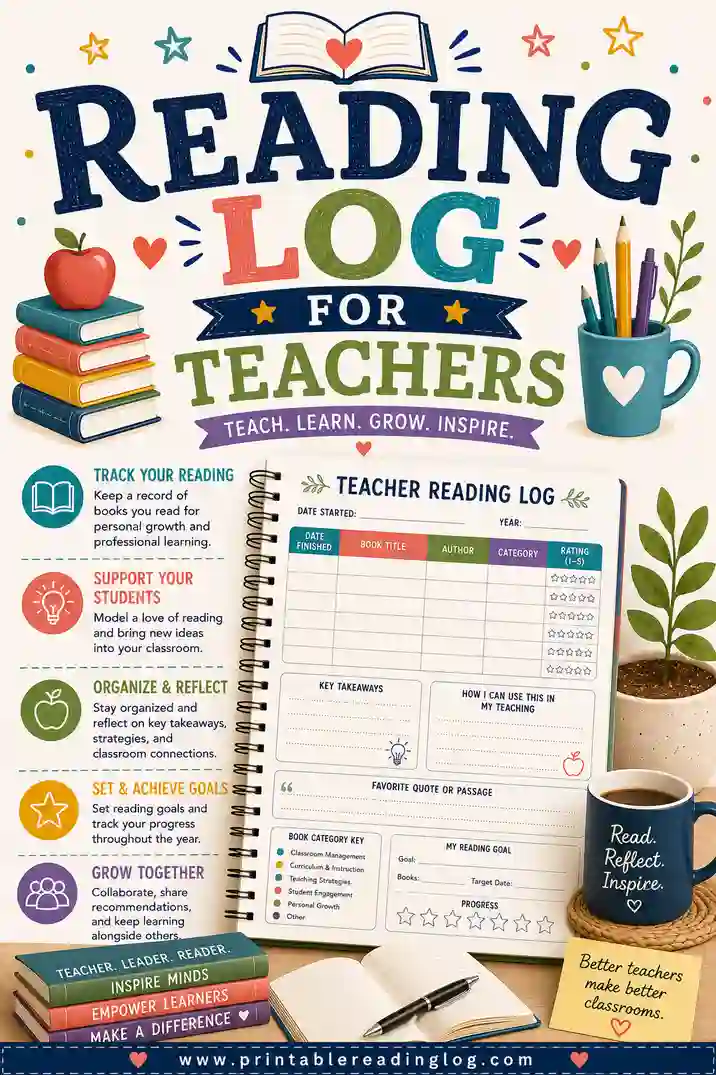
For a 1:1 device school with a love of data, an app can complement paper. But for the vast majority of classrooms, a free printable set is the most reliable, lowest-friction choice. Need logs tailored to your prep style? A reading log for teachers covers planning and home-reading verification in one.
Storing and Collecting Logs Without the Chaos
Making the logs is the easy part. The piece that quietly sinks a classroom reading program is the paper handling — thirty sheets a week is a recipe for a crumpled mess on your desk unless you have a system. A little structure here pays off all year.
A few approaches that hold up in real classrooms:
- One pocket folder per student. The log lives in the folder, the folder lives in their book bin or cubby, and it travels home in the same pocket every night. Nothing to lose because there's a home for it.
- A wall pocket chart. Number 1 to 30, one pocket per student. Kids drop their log in their numbered slot each morning, and you can see at a glance who's missing one.
- Monthly stapled packets. Print four weekly sheets, staple them into a little booklet, and you only collect and redistribute once a month instead of every week.
- A "turn-in basket" routine. Logs go in the basket during morning work; you initial them at your prep and they go right back. Same spot, same time, every day.
Whichever you pick, the secret is making it the same every single day. A routine the kids run themselves means you're not chasing paper during your busiest minutes.
Keeping a record without grading every sheet
You don't have to grade reading logs to make them count, and grading them often backfires by turning reading into a stress point. Instead, keep a simple class roster and add a quick check or tally for a returned, mostly-filled log. That gives you a record for conferences and report cards without red-penning a child's home reading. A glance down the roster also flags the kids who've quietly stopped reading at home, so you can check in before a week turns into a month.
Adapting One Log for Special Situations
The same free maker stretches to cover the cases that a store-bought booklet never anticipates.
- English language learners. Add a "language read in" column or let students log books in their home language too. Reading counts in any language, and honoring it keeps ELL students engaged.
- Co-teaching and intervention groups. Print a version with a small box for a reading-specialist initial alongside the parent one, so home and intervention reading both show up on a single sheet.
- Long breaks. A summer or winter-break log keeps reading alive over time off. Print a month-long version, send it home with a small challenge, and collect it when school resumes.
- Mixed-grade or multi-age rooms. Run two or three layouts off the same tool — picture rows for the youngest, summary lines for the oldest — so every reader in the room has a log that fits.
The point isn't to have one perfect log. It's to have a free tool flexible enough to print whatever this particular class, this particular month, actually needs.
Frequently Asked Questions
What's the best free reading log for a classroom?
A customizable printable log, because you can match it to your grade and print a full class set for free. Build a picture log for kindergarten or a minutes log for upper grades with the free reading log maker, then run off one per student.
Are these classroom reading logs really free?
Yes. The printable maker is free to use and print, with no sign-up and no watermark. Print a class set, then reprint a fresh batch every month at no cost.
How do I get parents to sign reading logs?
Send a short note home explaining the nightly goal and the parent-initial column, and keep the log quick to fill. Small celebrations for returned logs and a forgiving attitude toward gaps lift compliance.
Should the whole school use minutes or pages?
Pick one school-wide and stick with it so totals are comparable across classes and grades. Minutes are kinder to younger and reluctant readers; pages suit older students reading chapter books.
How many copies should I print?
One per student, plus a handful of spares for new arrivals and lost logs. Since the printable is free, it's easy to reprint a fresh set each week or month.
Can one log work for a mixed-ability class?
You can print two versions from the same free tool — a simpler one for emerging readers and a richer one with a summary column for advanced readers — so everyone has a log that fits.
How do I keep thirty reading logs organized?
Give every student a home for their log — a pocket folder, a numbered wall-chart slot, or a monthly stapled packet — and collect them the same way at the same time each day. A fixed routine the kids run themselves keeps the paper from piling up on your desk.
Should I grade classroom reading logs?
Most teachers don't, and for good reason — grading home reading tends to add pressure and sour kids on books. Track returned, filled-in logs with a quick check on a roster instead. You get a record for conferences without turning a child's reading into a test.
Make Your Free Classroom Reading Log Today
The best classroom reading log is free, quick to fill in, and tuned to your grade. Open the reading log maker, pick your columns, and print a class set in minutes. Hand them out, check them at a glance, and watch your students' reading minutes climb. Happy teaching, and happy reading.