Best Reading Trackers for Kids (Free Printable Pick Included)
The best reading trackers for kids are a free printable reading log for everyday nightly reading, Beanstack for school challenges, Reading Eggs for early learners, and Epic for in-app book reading. For most families and classrooms, though, a simple printable minutes log with big rows and a sticker spot beats every app, because it needs no screen, no login, and no subscription.
Want the easiest one right now? Open the free reading log maker, pick a colorful kid layout, and print a sheet your child can fill in tonight. No sign-up, no fee, no device required.
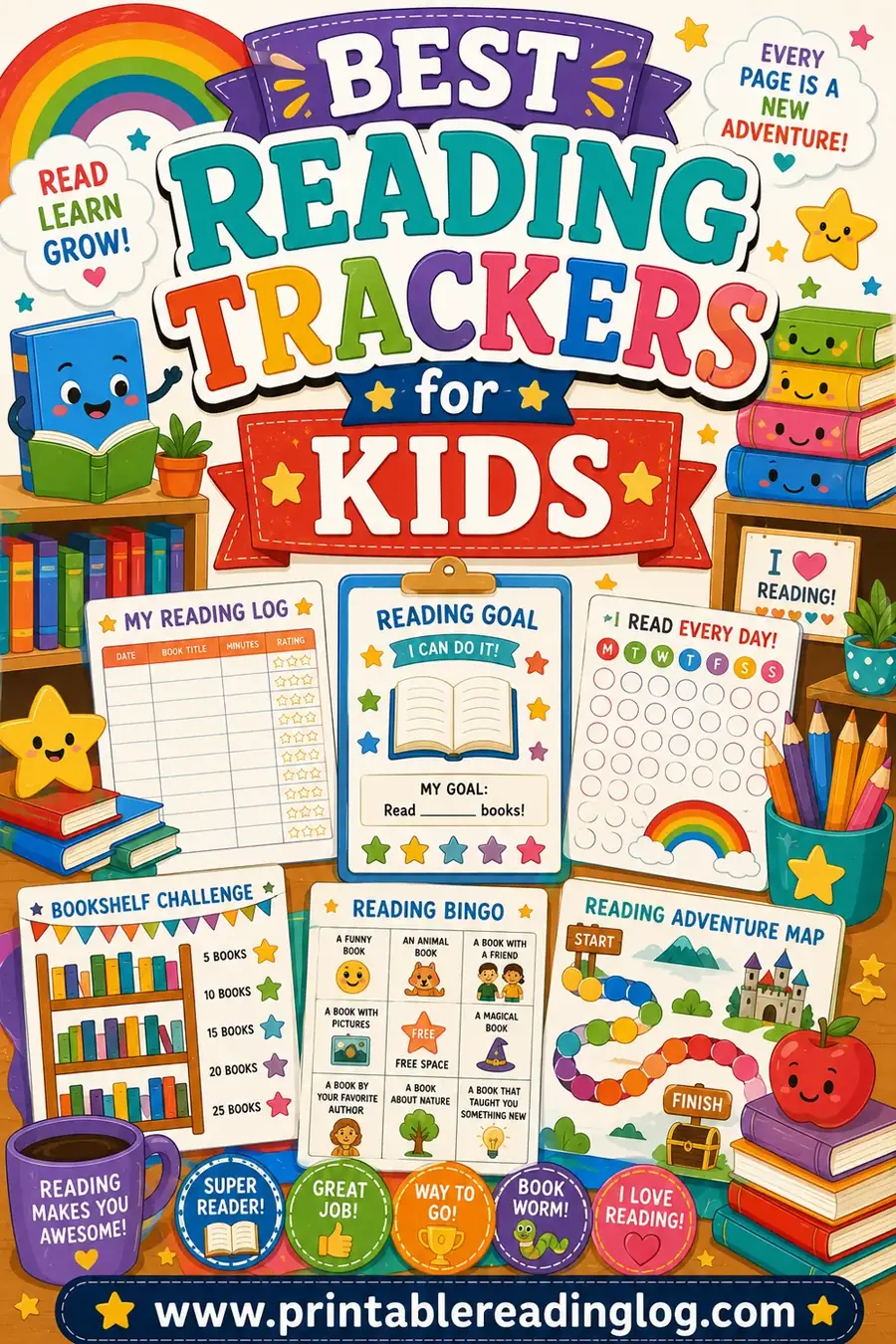
What Makes a Good Reading Tracker for Kids?
A kid's reading tracker has one job: make reading feel like a win they want to repeat. The best ones share a few traits, and knowing them helps you skip the duds.
- Dead simple to fill in. A young child should be able to log a session in seconds, ideally by adding a sticker or coloring a star.
- Visible progress. A row of filled-in stars or a climbing bar is the reward that keeps kids coming back.
- A clear, fair goal. "Read for 15 minutes" works for every reading level, unlike a page count.
- Room for grown-ups. A spot for a parent or teacher signature keeps everyone involved.
- Low or no screen time. Many parents specifically want a tracker that isn't another app.
A tracker that nails these turns nightly reading from a battle into a habit. Keep them in mind as you weigh the options below.
The Best Reading Trackers for Kids, Compared
Here's an honest look at the top tools for 2026 and who each one fits.
| Tracker | Best for | Cost | Screen-free? |
|---|---|---|---|
| Printable reading log | Nightly home reading, any age | Free | Yes |
| Beanstack | School and library challenges | Paid (via school) | No |
| Reading Eggs | Learning to read (ages 2-7) | Paid | No |
| Epic | In-app book library | Free / paid | No |
| Sticker chart / wall grid | Preschool and K-2 | Free | Yes |
| Goodreads (teens) | Older kids and teens | Free | No |
The printable log leads for one big reason: it's free, screen-free, and works for every age from preschool to teen. The apps add features like leveled books or automatic badges, which some families love, but for the daily habit of "read 15 minutes and log it," paper is faster and friendlier.
Printable reading log
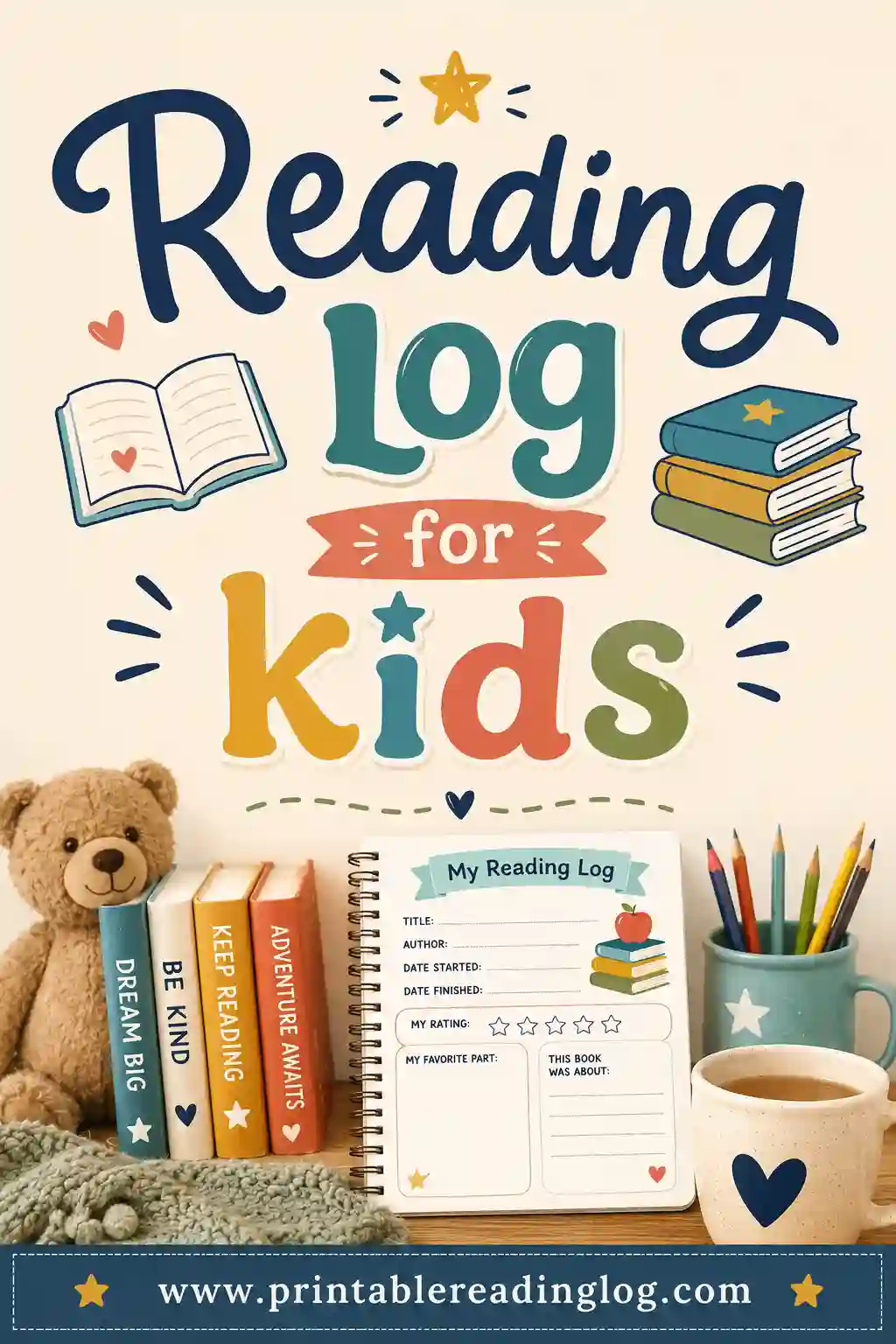
A printable reading log for kids is the everyday workhorse. Big rows, a minutes column, a signature line, and a spot to draw or add a sticker. It satisfies the nightly-reading homework most teachers assign, costs nothing, and keeps reading off a screen. For the majority of families, this is all you need.
Beanstack
Beanstack runs reading challenges for whole schools and libraries, with badges and dashboards. It's well made but it's a paid platform your school provides, not something you'd buy for one child, and logging happens on a device.
Reading Eggs
Reading Eggs is a learn-to-read program for ages 2 to 7, gamifying phonics and early books. It's more about teaching reading than tracking it, but its built-in rewards motivate young learners. It's a paid subscription.
Epic
Epic is a digital library of thousands of kids' books with reading inside the app. It tracks what your child reads automatically, which is handy, though it does mean more screen time. There's a free tier and a paid one.
Why a Free Printable Tracker Often Wins for Kids
For most families and classrooms, a printable reading log is the best reading tracker for kids, full stop. Here's why.
- No screen. Plenty of parents are trying to reduce screen time, not add another app. Paper keeps reading offline.
- It works for non-readers. A toddler can add a sticker or color a star long before they can navigate an app.
- It's free and unlimited. Print one per child, per week, forever, at no cost.
- It satisfies homework. Teachers usually want a signed paper log of nightly minutes. A printable sheet is exactly that.
- You customize it. Add a drawing box, a star rating, a "favorite part" line, whatever motivates your kid.
The honest trade-off: paper won't read books aloud or quiz comprehension like some apps. But for building the daily reading habit, the thing that actually makes kids better readers, a simple log they fill in themselves is hard to beat, and it's free.
Make logging feel like a reward
The trick with kids is to make the logging part of the fun. Let them choose a sticker, color in a star, or stamp the box every time they finish a session. That tiny ritual is what turns a chore into something they look forward to. A wall chart that fills up over the month makes the progress impossible to miss.
A Sample Kid's Reading Log
Here's a layout that works beautifully for elementary-age readers. Print one per week and stick it on the fridge.
| Day | Book | Minutes | Sticker | Grown-up |
|---|---|---|---|---|
| Mon | Pete the Cat | 15 | ⭐ | Mom |
| Tue | Pete the Cat | 20 | ⭐ | Dad |
| Wed | Elephant & Piggie | 15 | ⭐ | Mom |
| Thu | Elephant & Piggie | 10 | ⭐ | Mom |
| Fri | Dog Man | 25 | ⭐ | Dad |
The "Sticker" and "Grown-up" columns are what make it click for kids. The sticker is the reward; the signature keeps a parent reading along and turns it into shared time, which is the real magic.
Choosing the Right Tracker by Age
Different ages need different tools. Here's a quick guide.
| Age / stage | Best tracker |
|---|---|
| Toddler (2-4) | Printable sticker grid, pictures over words |
| Pre-reader / K (4-6) | Printable minutes log with a drawing box |
| Early elementary (6-9) | Printable minutes log with signature line |
| Tween (9-12) | Printable books-finished list or minutes log |
| Teen (13+) | Goodreads, StoryGraph, or a printable list |
| Whole-class challenge | Printable classroom log or Beanstack |
For nearly every age under thirteen, a printable option fits best, not because apps are bad, but because young readers thrive with something simple, tactile, and screen-free.
Tips to Keep Your Kid Logging
A tracker only works if your child keeps using it. A few simple moves:
- Keep the goal small. "15 minutes" is plenty. A goal that's too big leads to blank rows and a quit habit.
- Log right after reading. Do it together at bedtime so it becomes part of the routine.
- Celebrate streaks, not perfection. Missing a day is fine. Five days in a row deserves a high five.
- Put it where they'll see it. The fridge or their bedroom door, not a drawer.
- Tie it to a small reward. A full week of stars earns a trip to the library or to pick the next book.
Setting Up a Printable Reading Tracker for Your Child
Getting a paper tracker going takes about five minutes, and a few small choices up front make it something your child will actually want to fill in. Here's the whole setup.
- Pick a layout that matches their age. A toddler needs a picture-based sticker grid; a second-grader can handle a minutes log with a signature line; a tween can track books finished. Match the sheet to where they are.
- Set one small, fair goal. "Read 15 minutes" works for any reading level because it doesn't punish slower readers the way a page count does. Write it big at the top.
- Choose a reward they help pick. Let your child choose the sticker style or the prize for a full week. Buy-in matters more than the prize itself.
- Hang it where they'll see it. The fridge, the bedroom door, anywhere the filling-up grid is impossible to ignore. Visibility is half the motivation.
- Log it together, right after reading. Make adding the sticker the closing ritual of story time. Doing it together is what turns it from homework into shared time.
The whole thing costs nothing but the paper, and you can reprint a fresh sheet every week. For a ready-made kid layout, the reading log for kids gives you big rows, a sticker spot, and a grown-up line already built in.
Should you track minutes or books?
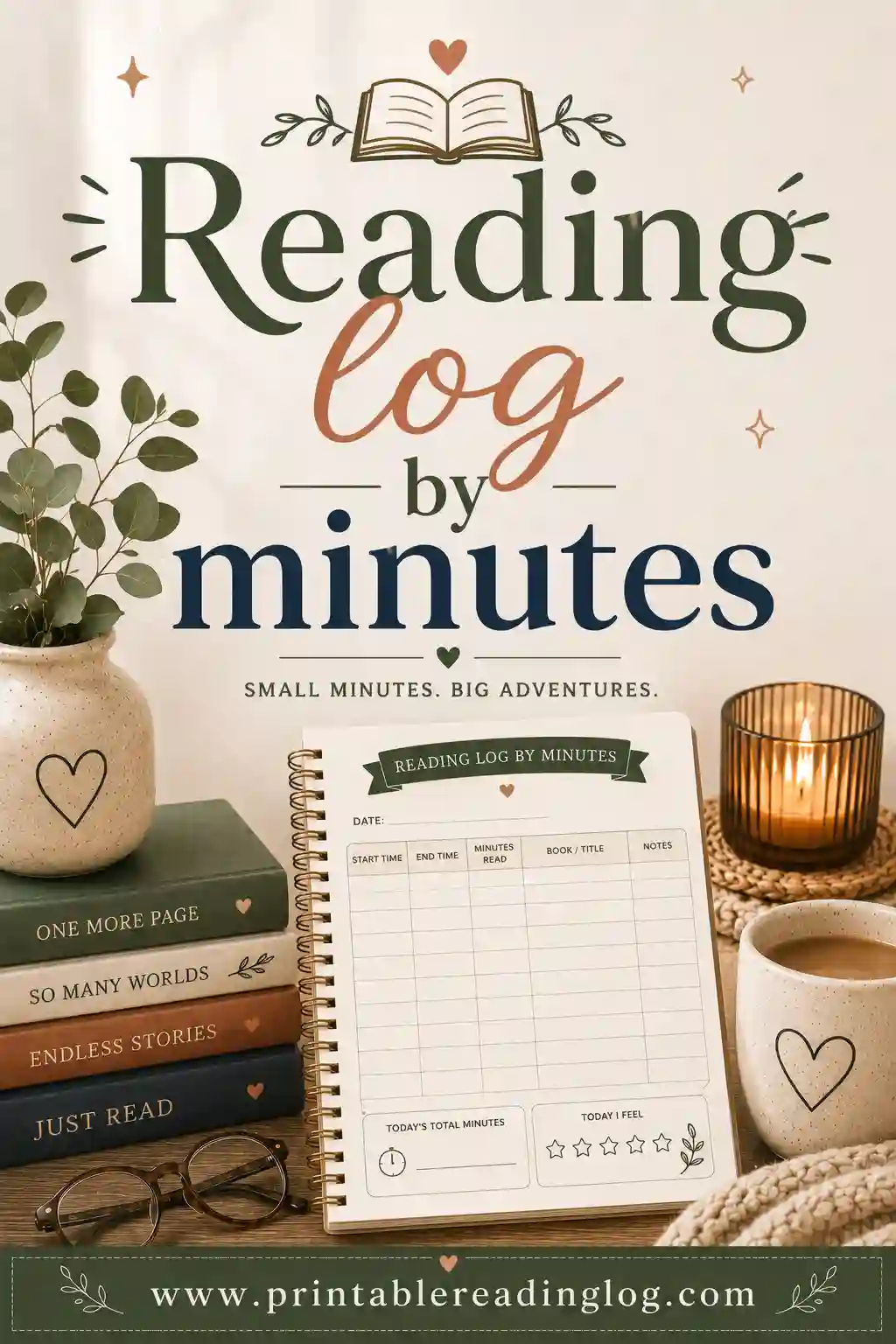
For young kids, minutes almost always beats books. A page or book count quietly punishes a child working through a hard chapter book, while "read 15 minutes" rewards effort no matter the level. A reading log by minutes keeps the goal fair and the streak achievable for every reader in the family. Save book-counting for older kids and teens who like the satisfaction of a finished-books list and can pick reads at their own pace.
How Reading Trackers Change as Kids Grow
A tracker that delights a four-year-old will bore a twelve-year-old, and one built for a teen makes no sense for a preschooler. The trick is to evolve the tracker as your child does, keeping it just challenging and rewarding enough for their stage.
- Toddlers and preschoolers. Keep it purely visual: a grid where they stick a sticker or color a star after a shared book. No words, no minutes, just the satisfaction of filling a square. The goal is to make books feel like a happy daily event.
- Early elementary. Now they can write a book title and a minutes number themselves. Add a signature line so a parent signs off, which also satisfies the nightly-reading homework most teachers assign. The sticker still matters, it's the reward that keeps the habit alive.
- Upper elementary and tweens. Independence is the motivator here. Let them run their own log, maybe a books-finished list they're proud to grow, or a minutes log they track without prompting. A monthly goal they set themselves builds ownership.
- Teens. Many graduate to a books-finished list or an app like Goodreads or StoryGraph, where they can rate books and see a year's reading add up. A printable list still works beautifully for teens who prefer to stay off social apps.
The through-line at every age is the same: a clear goal, a way to log it, and visible progress they're proud of. Only the format changes. Starting with a simple printable sheet in the preschool years makes the habit feel natural long before any app enters the picture.
Frequently Asked Questions
What is the best reading tracker for kids?
For most families, a free printable reading log is the best reading tracker for kids. It's screen-free, works for any age, satisfies nightly-reading homework, and costs nothing. Apps like Beanstack or Epic add features, but paper is the simplest way to build a daily habit.
Is there a free reading tracker for kids?
Yes. A printable reading log is completely free, with no sign-up and no limit on copies. You print a colorful kid layout, your child logs their minutes, and you can print a fresh sheet every week at no cost.
What is the best screen-free reading tracker?
A printable reading log is the best screen-free option. Many parents want a tracker that isn't another app, and paper delivers: big rows, a sticker spot, and a signature line, all offline. It keeps the whole reading ritual away from screens.
How do I get my kid to use a reading tracker?
Keep the goal small (15 minutes), log it together at bedtime, and make it rewarding with stickers or a colored-in star. Put the sheet somewhere visible like the fridge, and celebrate streaks. The ritual of logging is what makes it stick.
What reading tracker is best for a classroom?
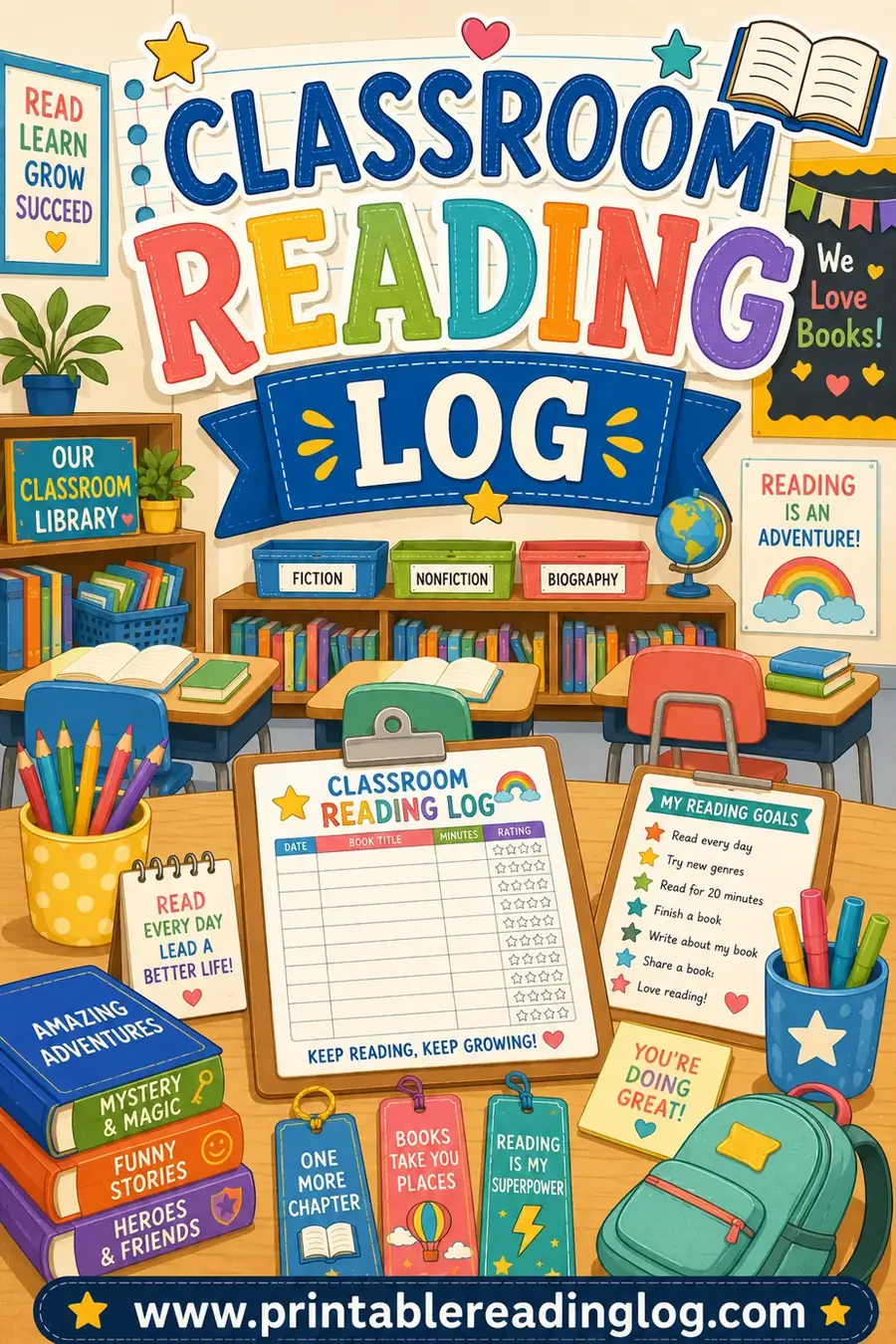
A printable classroom reading log works for any class with no logins, or a school-provided platform like Beanstack for a full challenge. The printable version is free, works for every reading level, and lets parents sign off at home.
Is a printable kids' reading log really free?
Yes. You print it yourself at no cost, with no sign-up or watermark, and as many copies as you need, so a whole family or classroom can use a single design.
Should my child track minutes or number of books?
For most kids, minutes is the fairer goal. "Read 15 minutes" rewards effort at any reading level, while a book or page count quietly penalizes a child working through a harder book. Save the books-finished list for older kids and teens who enjoy watching a finished-books list grow.
What's the best reading tracker for a toddler who can't read yet?
A printable sticker grid with pictures instead of words. After a shared book, your toddler adds a sticker or colors a star, no reading or writing required. It builds the daily book habit years before they can navigate an app, and it keeps the whole thing screen-free.
Ready to Build Your Kid's Reading Tracker?
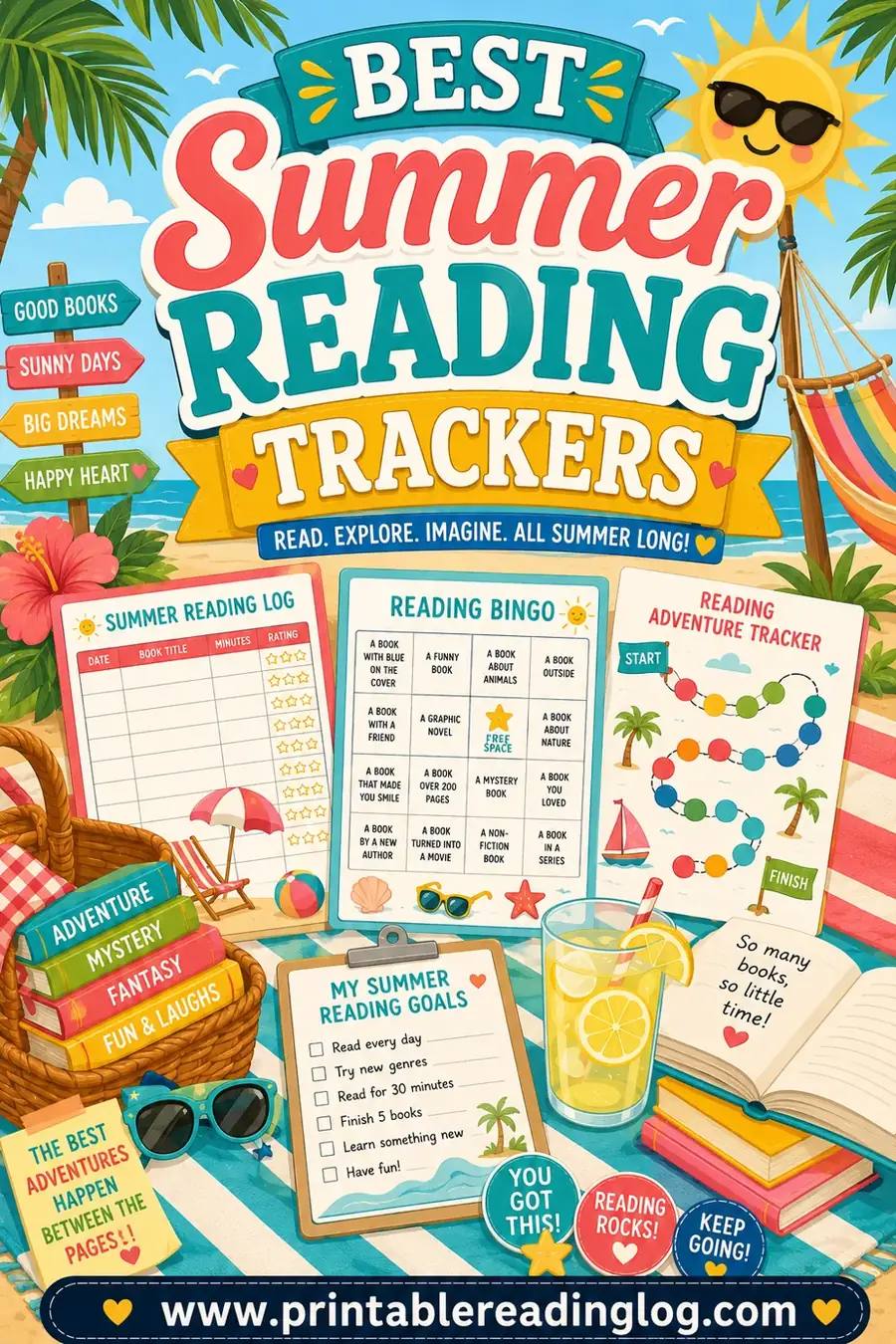
The best tracker is the one your child will actually use, and for most kids that's a simple, colorful sheet they fill in with a sticker each night. Open the free reading log maker, pick a kid layout, and print one tonight. For more ideas, see our reading log for kids, reading log by minutes, and summer reading log guides. Set a 15-minute goal and start their first star tonight.