Best Reading Log for Teachers: Free Printable Options
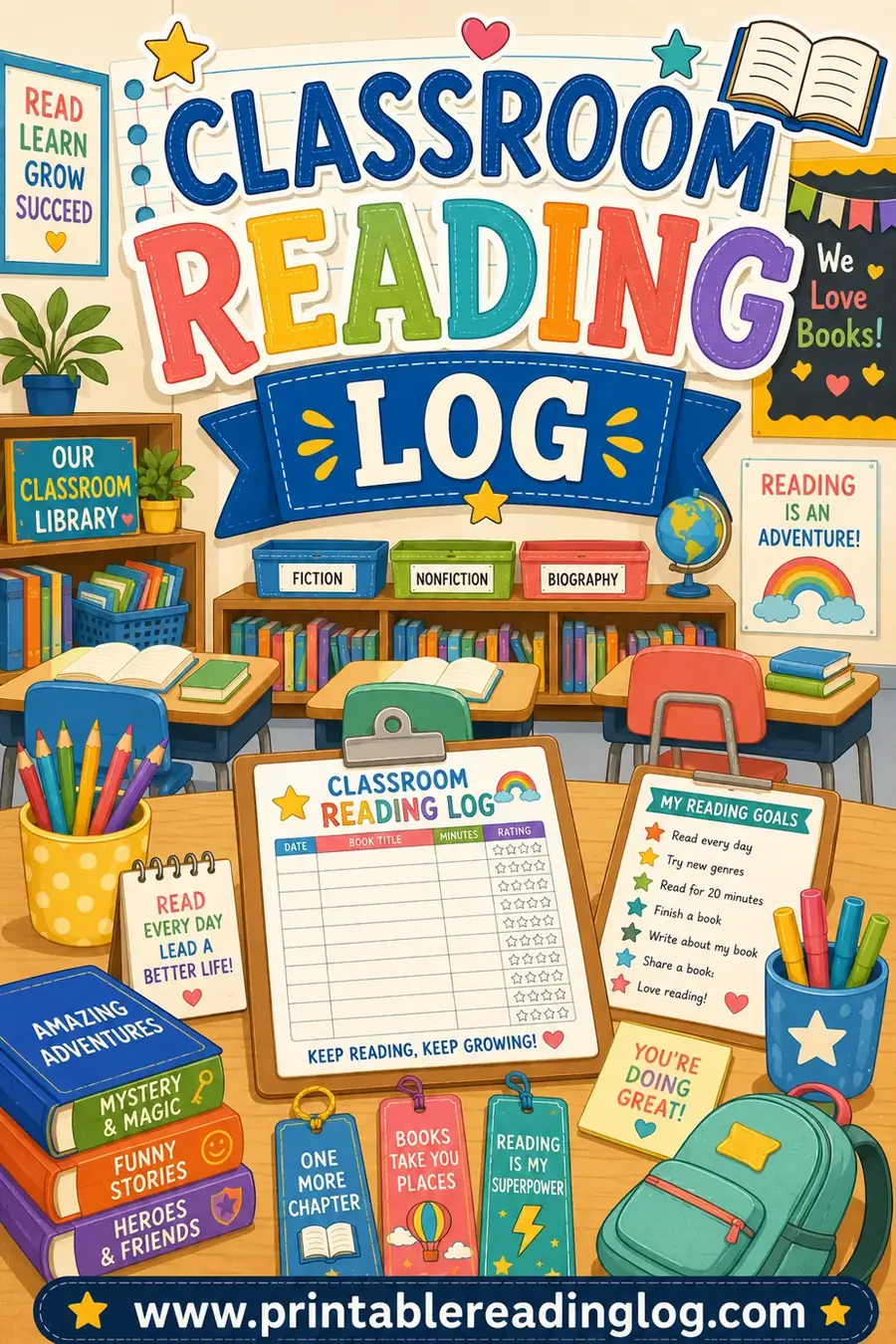
The best reading log for teachers is a simple, printable sheet you can hand to a whole class, that students fill in at home, and that a parent can sign at a glance. The strongest options track minutes or books read, leave room for a title and a parent signature, and print cleanly in black and white. For most classrooms, a free printable reading log you can customize beats any app, because every student can use it with zero setup.
Need a class set today? Open the free reading log maker, pick the columns you want, and print one sheet per student. No accounts, no logins, no per-seat fees.
What Teachers Actually Need From a Reading Log
A reading log for a classroom has a different job than one for a single reader at home. It has to scale to 25 or 30 kids, work for a range of reading levels, and be easy for busy parents to fill in and sign. The best one keeps it simple.
Here's what matters most in a classroom log:
- Easy to hand out. One printable you can copy for the whole class.
- Parent-friendly. A clear spot for a signature or initials so you can confirm reading happened.
- Right-sized columns. Title, date, minutes or pages, and maybe a quick note. No clutter.
- Black-and-white printing. Color ink runs out fast on a class set.
- Flexible by level. Younger kids track minutes; older kids track books or pages.
A printable log checks every box. Apps add login friction that a kindergartner, and plenty of parents, won't get past. That's why paper still rules the classroom.
The Best Reading Log Options for Teachers, Compared
Here's a side-by-side of the main choices teachers reach for, including the free printable option. Find your shortlist, then read the notes.
| Option | Best for | What it tracks | Cost | Setup |
|---|---|---|---|---|
| Free printable reading log | Most classrooms | Anything you choose | Free | Under a minute |
| Photocopied template | Quick handouts | Minutes or books | Free | Fast |
| Reading app (class account) | Tech-ready rooms | Minutes, quizzes | Free to paid | Accounts per student |
| Reading challenge chart | Motivation | Books toward a goal | Free | Fast |
| Spreadsheet log | Record-keeping | Anything | Free | Some setup |
No single option wins every column, but for sheer simplicity and reach, the free printable log is the safe default. Let's look at when each one shines.
Free printable reading log
This is the flexible all-rounder. You choose the columns, print one per student, and you're done. It works for any grade because you control what's tracked: minutes for the little ones, pages or books for older students. A classroom reading log format with a parent-signature column is the most-used setup, and it's free.
A reading app with a class account
If your room is tech-ready and your school already uses devices, an app can automate minute-counting and even add comprehension quizzes. The trade-off is real: every student needs a login, parents may need to install something, and the best features often cost money. For younger grades, this is usually more friction than it's worth.
A reading challenge chart
When motivation is the goal, a printable challenge chart is gold. Students color a square or sticker a book for each title finished, racing toward a class target. Pair it with a small reward and reluctant readers light up. It's less about precise records and more about momentum.
A spreadsheet log
For teachers who love data, a shared spreadsheet keeps everything sortable and searchable. It's great for your records, but it's not something a young student fills in themselves. Most teachers use a printable log for the kids and a spreadsheet for their own tracking.
Why a Printable Log Wins for Most Classrooms
When you weigh it all up, the printable log is the lowest-effort choice that still works for everyone. Here's the case in plain terms.
- It works for every kid. No logins, no devices, no setup. A first grader and a fifth grader can both use it.
- Parents get it instantly. A paper sheet with a signature line needs no explanation.
- It's free at any class size. No per-seat licensing. Print 30 copies, print 300, same cost: nothing.
- You control the layout. Tracking minutes this term and books next term? Just reprint with new columns.
- It prints clean in black and white. Easy on the copier and the ink budget.
The honest trade-off is that you tally results by hand. But for confirming kids are reading at home, a signed sheet does the job an app does, without the setup headache.
A sample classroom reading log
Here's a layout you can build in the free tool and copy for the whole class:
| Date | Book title | Minutes | Parent initials |
|---|---|---|---|
| Mon | Frog and Toad | 15 | ___ |
| Tue | Frog and Toad | 20 | ___ |
| Wed | The Snowy Day | 15 | ___ |
| Thu | _______ | ___ | ___ |
| Fri | _______ | ___ | ___ |
Swap "Minutes" for "Pages" or "Books" depending on the grade. For older students, a minute-based log or a page tracker works better than counting whole books.
Matching the Log to the Grade
The best log changes as students grow. A quick guide to what works at each level.
| Grade | Track this | Tip |
|---|---|---|
| K–1 | Minutes or read-alouds | Big boxes, picture cues, parent signs |
| 2–3 | Minutes or book titles | Add a "favorite part" line |
| 4–5 | Pages or books | Add a star rating and a short note |
| Middle school | Books or pages | Let students pick their own goals |
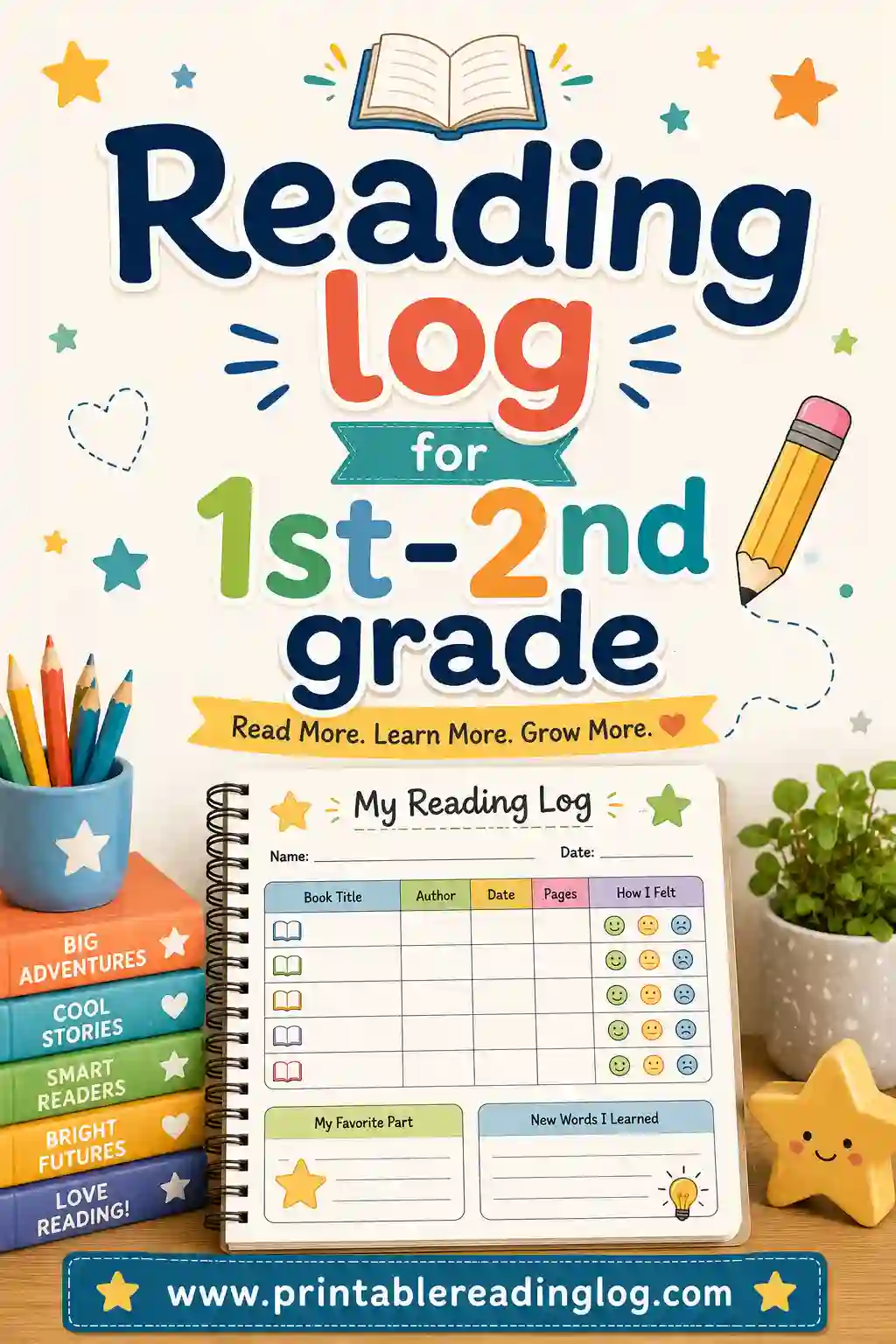
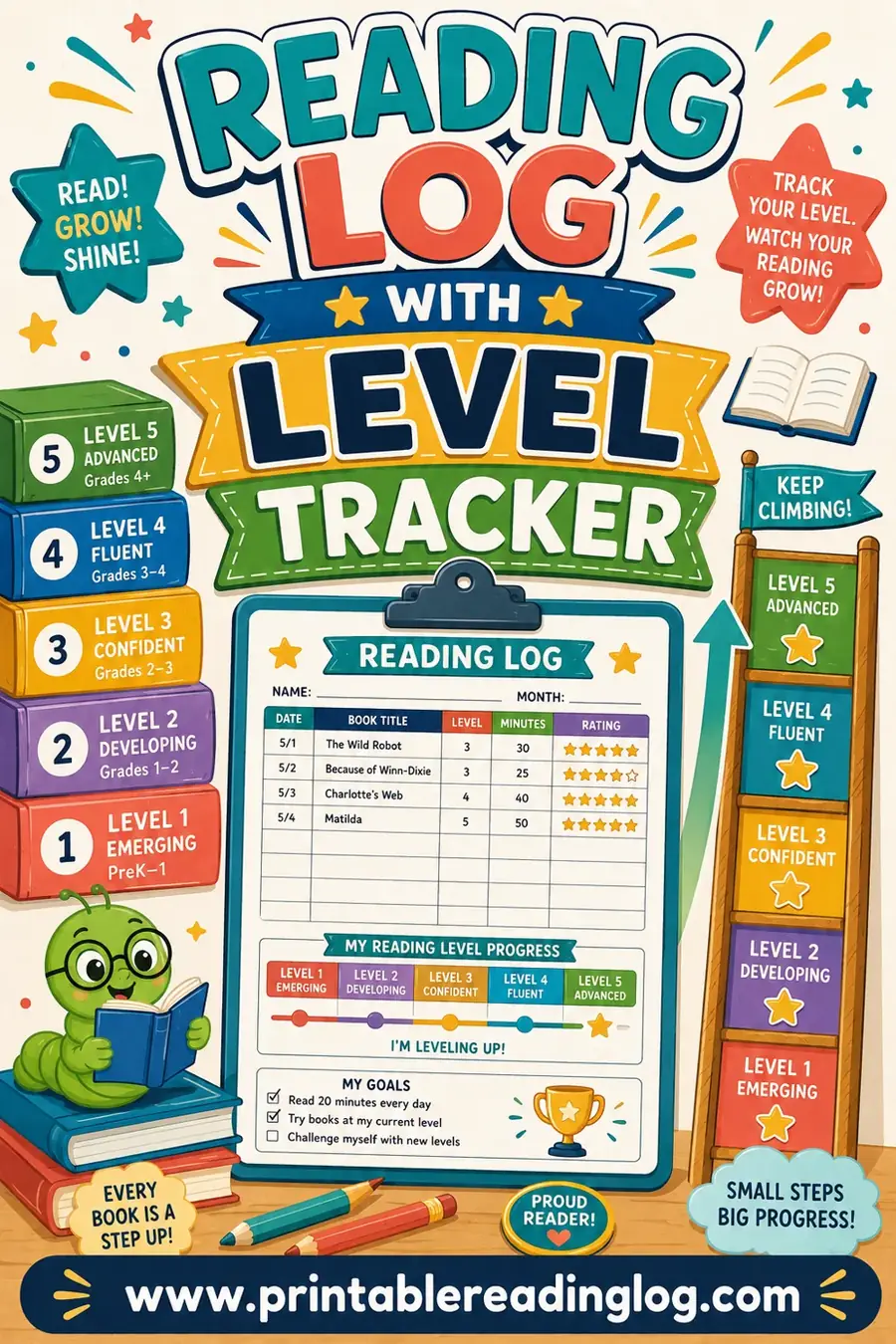
For early readers, keep it visual and short. A reading log for 1st and 2nd grade leans on minutes and a parent signature. As students get older, a level tracker helps you nudge them toward harder books.
Tips for running a class reading log smoothly
- Send it home Monday, collect it Friday. A weekly rhythm is easy to manage.
- Keep the expectation small. Fifteen to twenty minutes a night beats an unrealistic hour.
- Make signing easy. A single initial per night is enough, busy parents will thank you.
- Celebrate progress. A class total or a small reward keeps momentum up.
- Print spares. Logs get lost. Keep a stack ready to reissue.
Setting Up Your Class Log in Minutes
Ready to make one? The whole process takes about a minute.
- Open the reading log maker. No account, no fee.
- Pick your columns. Date, title, minutes or pages, and a parent-signature column.
- Set the timeframe. A weekly sheet or a full-month grid.
- Print and copy. Run one master, then photocopy a class set.
Print on regular paper for weekly sheets you'll replace often. Keep the file so you can tweak the columns next term without starting over.
Reading Log Formats Teachers Reach For
Once you've decided paper beats an app, the next question is which paper. The right format depends on what you're trying to get out of the log, and most teachers end up rotating through a few across the year. Here's how the common layouts compare in practice.
| Format | What it looks like | Strongest use | Watch out for |
|---|---|---|---|
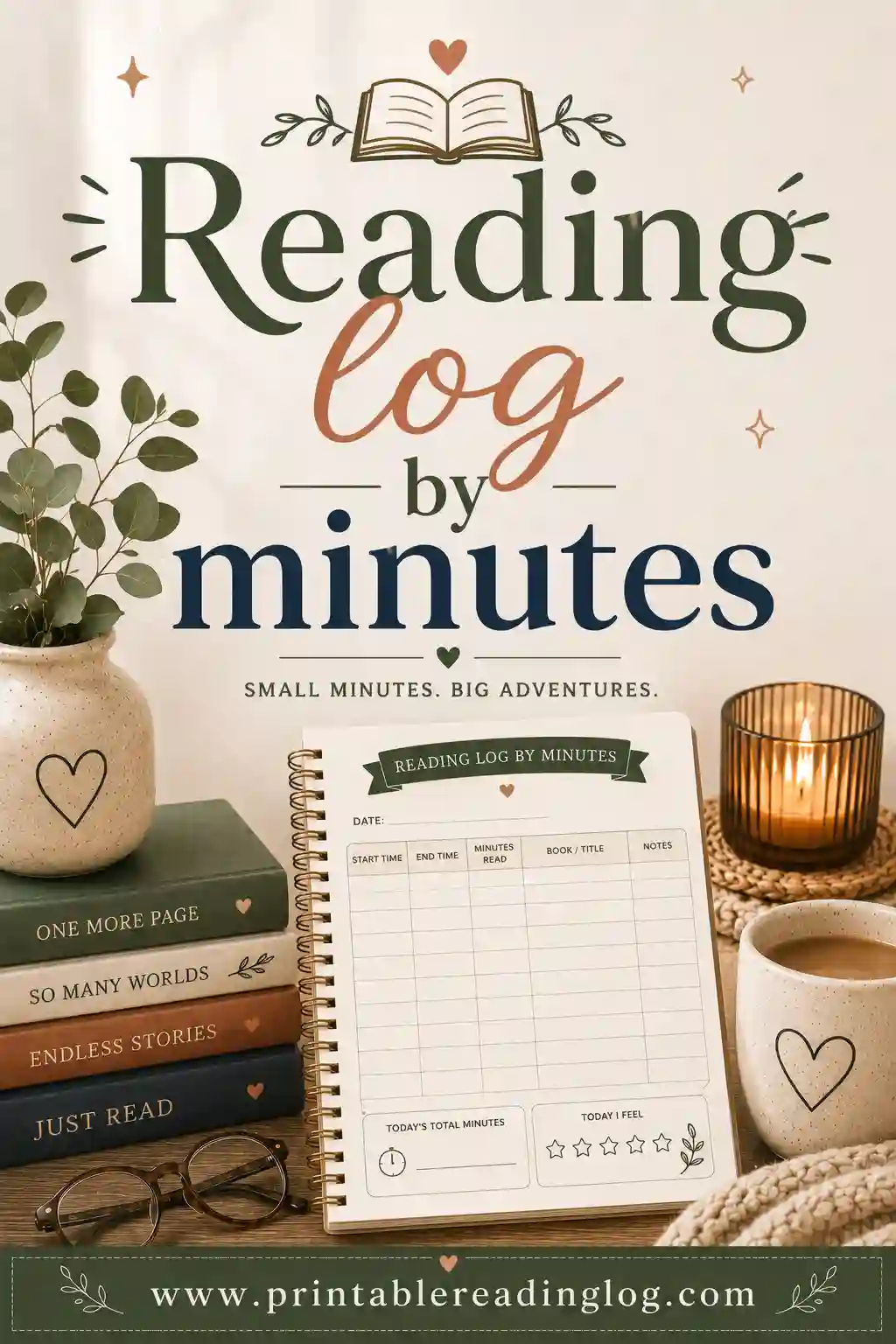
| Weekly minutes grid | Five rows, Mon–Fri, with a minutes box and a signature line | Daily home-reading habits | Kids may guess minutes; ask parents to round honestly |
| Book-by-book list | One row per finished book, with title and rating | Older students reading chapter books | Slow readers feel behind; track pages too |
| Monthly calendar | A box per day to color or initial | Building a visible streak | Less detail on what was read |
| Goal chart | A bar or row of squares filling toward a target | Motivation and class challenges | Light on records; pair with a real log |
| Genre tracker | A checklist of genres to try | Pushing variety in upper grades | Not a daily tool; use it as a side sheet |
A practical move is to run a weekly minutes grid as your everyday workhorse and bring out a goal chart or genre tracker when momentum dips. Because the free tool lets you swap columns in seconds, you're never locked into one shape for the whole year. Many teachers keep two saved layouts: a plain weekly sheet for the routine, and a "challenge" version for the month before a break when energy runs low.
Handling different reading speeds in one room
Every class has a kid who finishes a chapter book in two nights and another who's still on the same picture book all week. A minutes-based log quietly solves this. Both students can hit "15 minutes a night" regardless of how many pages they cover, so nobody feels behind and nobody's coasting. If you do track books or pages, add a "still reading" row so a slow reader can log progress instead of waiting until they finish to write anything down.
Getting Parents on Board With the Log
A reading log only works if it actually comes back signed, and that depends on parents more than students. A little setup at the start of the year saves you from chasing missing sheets every Friday.
- Explain the why, once. A short note home — "fifteen minutes a night is the single best thing you can do for your child's reading" — turns the log from a chore into a shared goal.
- Make the ask tiny. One initial per night, not a paragraph. The lower the effort, the higher the return rate.
- Offer a low-tech backup. Some families prefer a quick text or a photo of the page. Accept it. The reading matters more than the format.
- Praise returns, not just totals. Thank the family who sent the sheet back, even if the minutes were modest. You're reinforcing the habit of logging.
- Send a fresh sheet automatically. Staple next week's log to this week's graded one so there's always a blank waiting at home.
For families where signing is a real barrier — a parent working nights, a language gap, a kid in two households — keep the bar low. A child who reads and forgets the signature still read. The signature is a nudge, not the point.
A quick note on honesty
Some teachers worry that home logs invite fibbing — a parent initialing minutes that didn't happen. It's worth not over-policing this. The log's real job is to keep reading on the family's radar every night, and even a loosely-filled sheet does that. Tie the log to encouragement rather than grades and you sidestep most of the pressure that tempts anyone to fudge it in the first place.
Frequently Asked Questions
What is the best free reading log for teachers?
A free printable reading log is the best pick for most classrooms because every student can use it with no login or device. You choose the columns, print one per student, and copy a class set. Build one with the free tool in under a minute.
Should a classroom reading log include a parent signature?
Yes, in most cases. A signature or set of initials confirms the reading actually happened at home, which is the whole point of a take-home log. Keep it to a single initial per night so it stays quick for parents.
Do I need an app for a classroom reading log?
No. Apps can automate minute-counting, but they add a login for every student and often cost money. A printable log does the core job, confirming kids read, with zero setup, which is why most teachers stick with paper.
What should a reading log track for young students?
For K–2, track minutes read rather than whole books, since early readers finish short titles fast. Add a parent-signature line and keep the boxes big. A classroom reading log format works well here.
How long should students read each night?
Fifteen to twenty minutes a night is a realistic, research-friendly target for elementary students. It's enough to build a habit without overwhelming families. Older students can aim higher or track pages instead of minutes.
Can I customize a printable reading log for my class?
Yes. That's the big advantage. You pick the columns, the timeframe, and the layout, then reprint anytime your needs change. Track minutes one term and books the next without buying anything new.
How do I get reading logs to come back signed?
Keep the ask tiny and explain the why once at the start of the year. A single parent initial per night returns far more reliably than a sheet that asks for paragraphs. Staple next week's blank log to the graded one so a fresh sheet is always waiting at home, and thank families who return them.
What if some students read much faster than others?
Track minutes instead of books. A "15 minutes a night" target works the same whether a child finishes a chapter book or stays on one picture book all week, so no one feels behind. If you track books or pages, add a "still reading" row so slower readers can log progress before they finish.
Print Your Classroom Reading Log Today
The best reading log for teachers is the one your whole class can use without a single login, and that's a free printable. Pick your columns, add a signature line, and copy a class set in minutes. Open the free reading log maker and build a log that fits your students, your grade, and your routine. It's free, it's fast, and it gets kids reading at home, which is the only result that matters.