Best Reading Log Apps 2026 (Plus a Free Printable Pick)
The best reading log apps in 2026 are Goodreads, StoryGraph, Bookly, Fable, and Beanstack, each strong at a different thing, from social reviews to deep reading stats to school challenges. But the simplest, most flexible tracker isn't an app at all: a free printable reading log you set up in a minute, print, and fill in by hand with zero account and zero subscription.
Want to skip the app-store rabbit hole? Open the free reading log maker, pick whether you track by books, minutes, or pages, and print a clean sheet you'll actually use tonight. No sign-up, no fee, no data to hand over.
What Makes a Reading Log App Worth Using?
Before you download anything, it helps to know what separates a tracker you'll open every day from one you'll forget by week two. The good ones all share a few traits.
- Fast logging. Adding a book or a session should take seconds, not a form full of fields.
- The right stats. Some readers want a yearly count, others want pages-per-day and pace. The best app shows the numbers you care about.
- A goal you can see. A progress bar or a streak is what keeps most people coming back.
- No friction. If it nags you to upgrade or buries logging behind a paywall, it gets deleted.
A reading log, app or paper, has one job: make your reading visible so you do more of it. Keep that in mind and the "best" tool becomes the one you'll actually stick with.
The Best Reading Log Apps in 2026, Compared
Here's an honest rundown of the most popular trackers this year, what each does best, and what it costs. There's no single winner, only the right fit for how you read.
| Tool | Best for | Cost | Offline? |
|---|---|---|---|
| Printable reading log | Total control, kids, no account | Free | Yes |
| Goodreads | Social reviews, huge book database | Free | No |
| StoryGraph | Deep stats, mood and pace tracking | Free / paid plus | Partly |
| Bookly | Session timers and reading speed | Free / paid pro | Partly |
| Fable | Book clubs and curated lists | Free / paid | No |
| Beanstack | Schools and library challenges | Via institution | No |
The free printable option sits at the top for a reason: it works for any age, never needs Wi-Fi, and you own the data because it's literally on your fridge. The apps shine when you want social features or automatic stats. Many readers happily use both.
Goodreads
Goodreads is the giant. Its database is enormous, scanning a barcode pulls up almost any title, and the reviews and friend activity make it feel like a book-lover's social network. The trade-off is a dated interface and ads. If you mostly want a yearly reading challenge and to see what friends are reading, it's still a solid free choice.
StoryGraph
StoryGraph is the stats lover's pick. It charts your moods, pace, page counts, and genre mix in a way Goodreads never has. The free tier is generous, and a low-cost "Plus" tier unlocks deeper analysis. Readers who love a dashboard tend to migrate here.
Bookly
Bookly leans into the session. You start a timer when you sit down, and it tracks minutes, speed, and how close you are to finishing a book. Great if you read in focused blocks and like watching your pace improve. The free version caps your active books; the pro version removes the limit.
Fable
Fable blends reading with community. Curated lists, book clubs, and shared annotations make it feel social and cozy. It's less about hard stats and more about discovering what to read next with other people.
Beanstack
Beanstack isn't something you pick on your own; your school or library provides it to run reading challenges and award badges. It's built for programs, not personal use, which is why a printable log is often the friendlier choice for a single family.
Why a Free Printable Reading Log Beats Most Apps
Apps are great until they aren't. A printable reading log sidesteps the usual app headaches.
- No account, no ads, no upsell. You print it and it's yours. Nothing to subscribe to.
- It works for any age. Hand a phone to a six-year-old? No thanks. A paper log with big rows and a sticker spot is perfect for kids.
- It's offline by design. A sheet on the nightstand never loses signal or runs out of battery.
- You control every column. Want a "favorite quote" box or a star rating? Add it. Apps give you their layout; paper gives you yours.
The honest pitch: apps win on automatic stats and social features. Paper wins on simplicity, privacy, and reliability. If you've abandoned three reading apps already, a printable log is the reset button.
When an app is the better call
Be fair to the apps. Reach for one when you want a barcode scanner so you never type a title, automatic charts of your pace and genres, or a friend feed to see what others are reading. If those features sound fun rather than fussy, an app will serve you well, and you can still print a log for the quick, offline days.
How to Choose the Right Tracker for You
Match the tool to your goal instead of chasing the most-downloaded app.
| Your goal | Best pick |
|---|---|
| Build a daily reading habit | Printable log with a daily grid |
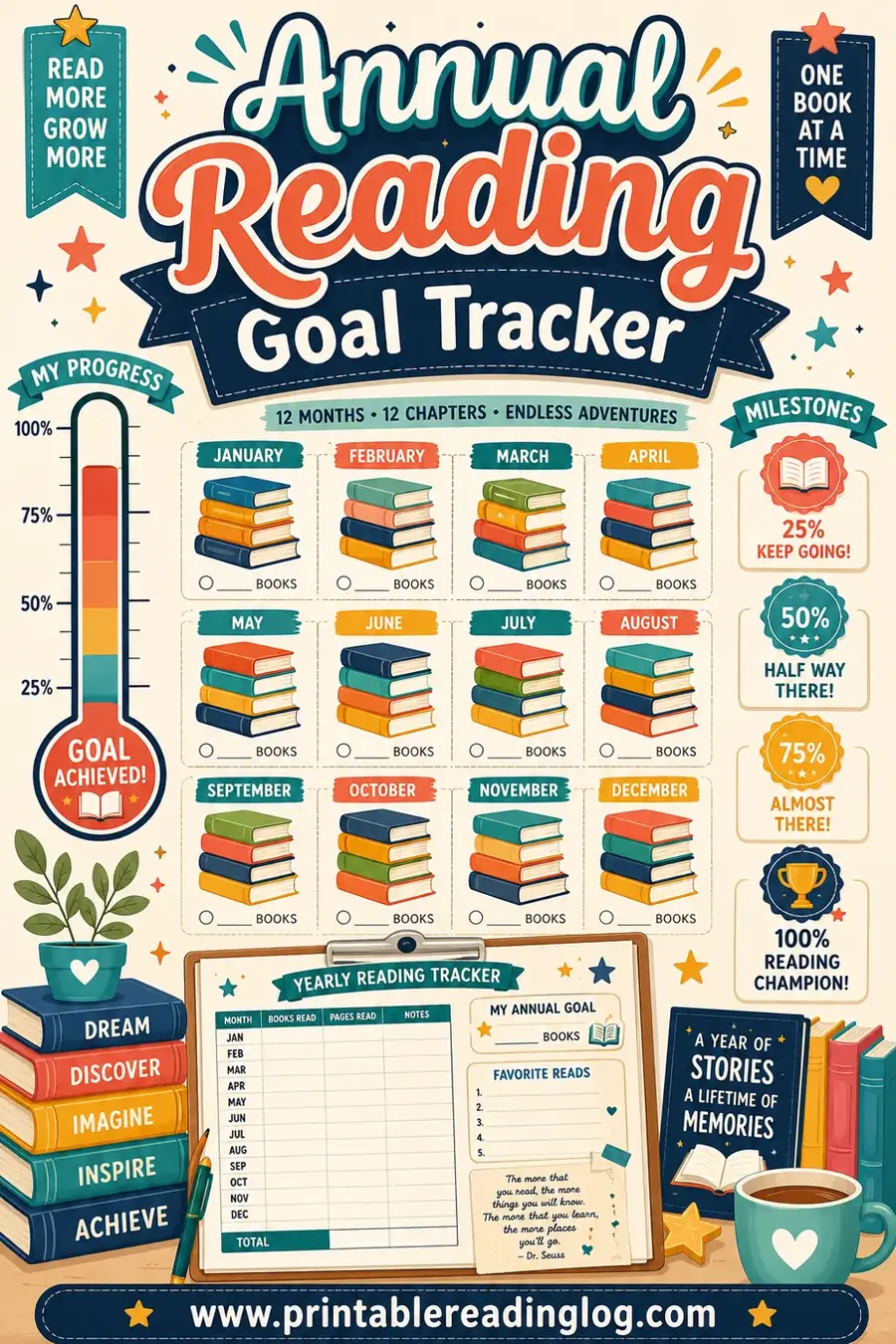
| Hit a yearly book count | Goodreads or a printable books-finished list |
| See pace and stats | StoryGraph or Bookly |
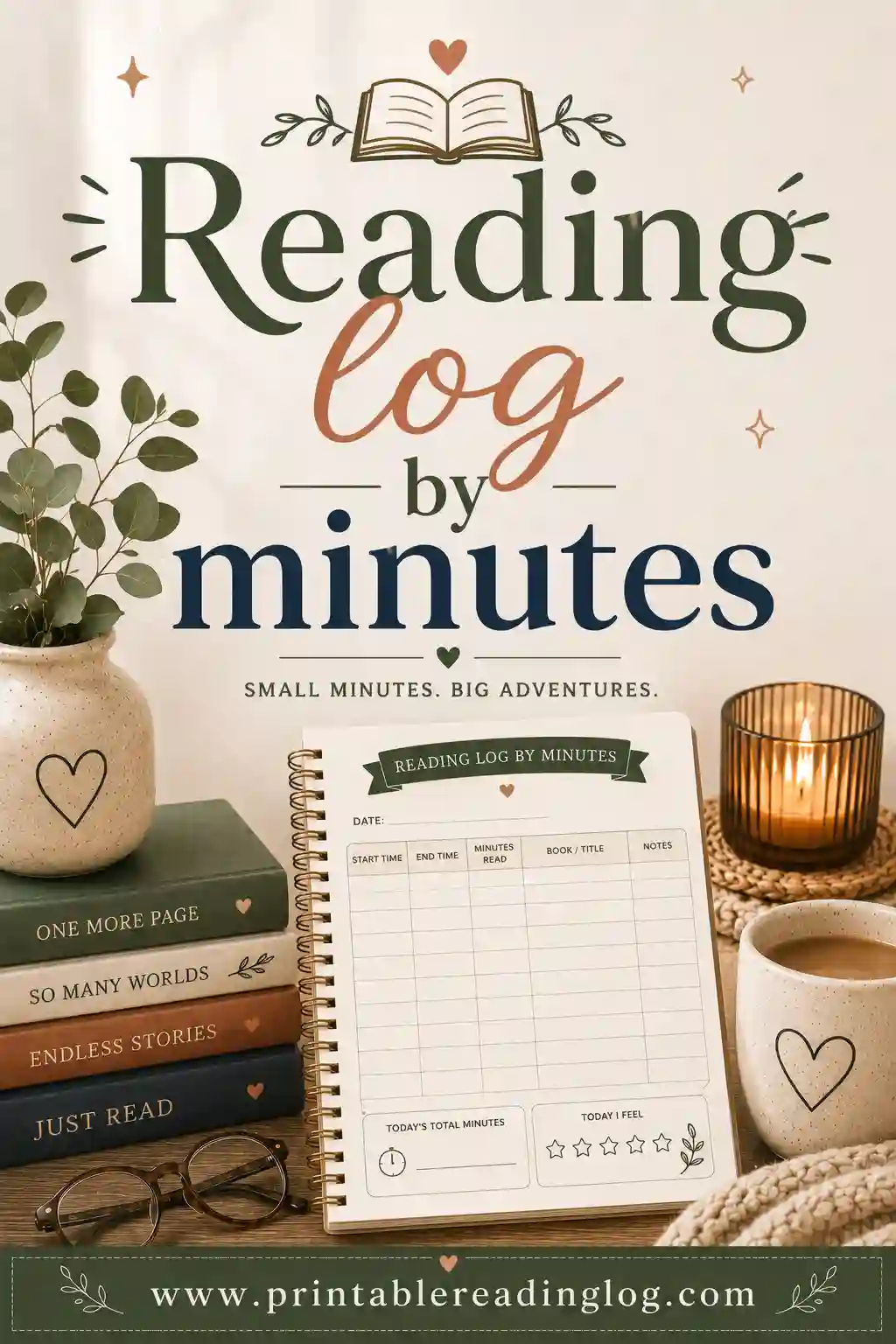
| Track a kid's nightly reading | Printable minutes log |
| Run a classroom challenge | Beanstack or a printable classroom log |
| Join book clubs | Fable |
Notice how often "printable" shows up. That's not a sales pitch, it's because paper flexes to fit almost any goal without locking you into a platform.
Setting Up Your Reading Log in Under Two Minutes
If you go the printable route, here's the whole process. No spreadsheet, no design skills.
- Pick your format. Books, minutes, or pages, depending on your goal.
- Choose a style. A colorful kid layout or a clean adult one.
- Set the length. A week per page, a month per page, or a running list.
- Print. Stick it somewhere you'll see it and fill in your first row tonight.
That's it. Want it reusable? Slip the sheet into a clear sleeve and write with a dry-erase marker, then wipe it clean each week.
Reading Log Apps for Kids vs Adults
The "best" app shifts a lot depending on who's holding the device, so it's worth splitting the field.
Best picks for adult readers
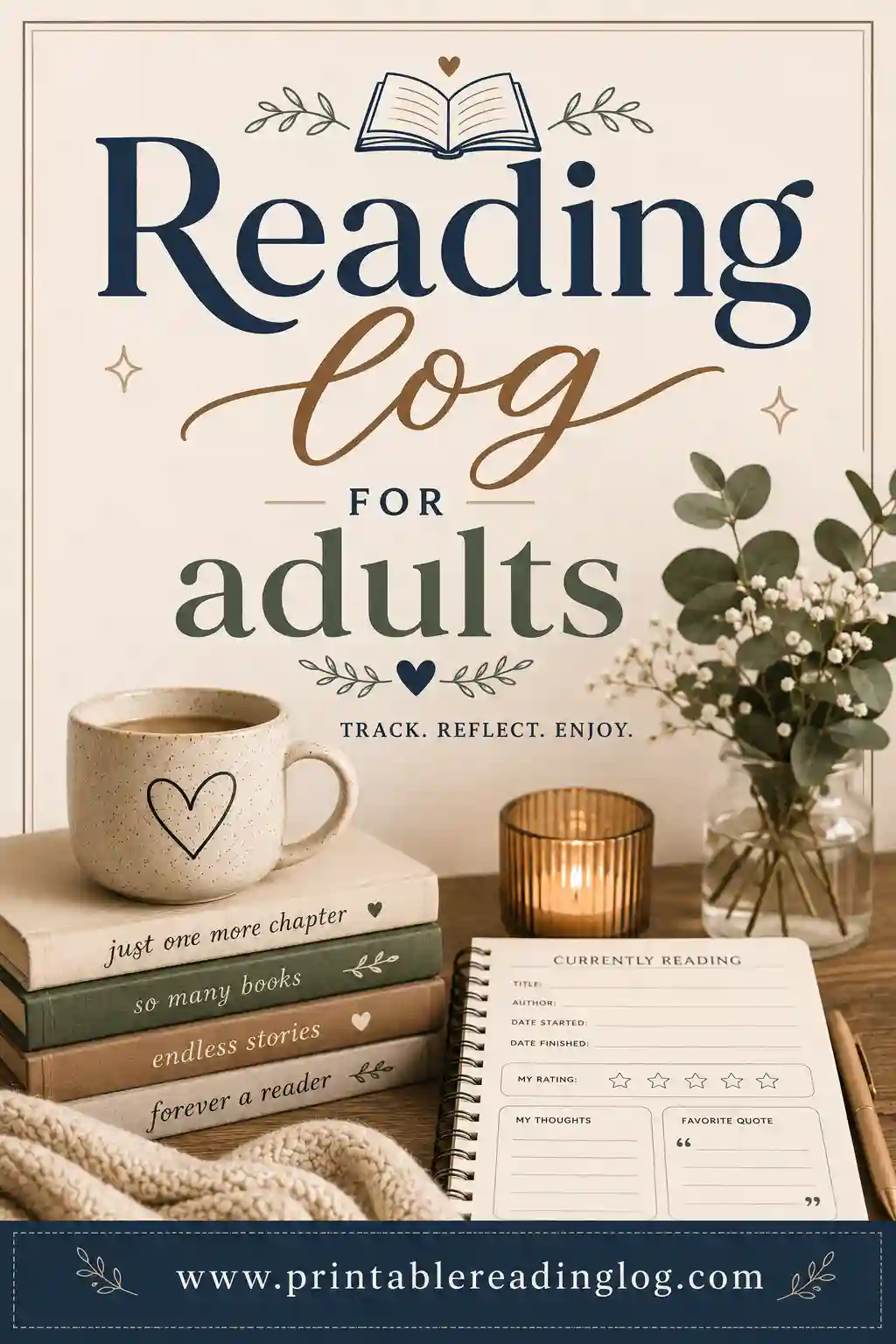
Grown-ups usually want either social discovery or hard stats. Goodreads remains the default for following friends and tracking a yearly challenge, while StoryGraph is the better home for anyone who loves charts of mood, pace, and genre. Bookly suits readers who like timing their sessions and watching their speed climb. If you read across several devices, pick one with solid cloud sync so your library follows you. The catch for adults is the same as for kids: a tracker only helps if you keep opening it, so simpler often beats feature-packed.
Best picks for kids
For children, an app is rarely the right answer. Most reading apps assume an adult-sized phone, an account, and a comfort with menus that young readers don't have. Beanstack shows up in schools because a teacher runs it, not because a six-year-old chose it. For nightly home reading, a printable reading log with big rows, a sticker spot, and a parent-signature line beats any app. Kids can see it on the fridge, fill it in themselves, and feel proud of the growing streak, all without screen time. That's why so many families use apps for their own reading and paper for the kids.
App Costs in 2026: What's Actually Free?
"Free" gets used loosely in the app stores, so here's a clearer breakdown of what each tracker really costs once you dig in.
| Tool | Free tier | What you pay for |
|---|---|---|
| Printable reading log | Fully free, forever | Nothing |
| Goodreads | Fully free | Nothing (ad-supported) |
| StoryGraph | Generous free tier | "Plus" unlocks deeper stats |
| Bookly | Free with a book limit | Pro removes the cap |
| Fable | Free to join clubs | Premium content and features |
| Beanstack | Provided by your school or library | Usually nothing for families |
Notice that the genuinely cost-free, no-strings options are the printable log and Goodreads. Everything else nudges you toward a subscription once you want the good features. There's nothing wrong with paying for a tool you love, but if "free" is non-negotiable, a printable sheet is the only one that's free with zero ads and zero upsell.
A Quick Word on Your Data
Reading apps know what you read, when, and how fast, and that data lives on someone else's servers. For most people that's fine. But if you'd rather your reading life stay private, a printed log keeps everything on paper, in your house, under your control. It's a small thing that some readers really value.
Frequently Asked Questions
What is the best reading log app in 2026?
It depends on your goal. Goodreads is best for social reviews, StoryGraph for stats, Bookly for session pace, and Fable for book clubs. For pure simplicity with no account, a free printable reading log is the easiest pick and works for any age.
Are reading log apps free?
Most have a free tier. Goodreads is fully free, while StoryGraph, Bookly, and Fable offer free plans with paid upgrades for advanced features. A printable reading log is completely free with no upsell, so it's the cheapest route by far.
Do I need an app to track my reading?
No. A printable log does the same core job, recording titles, dates, and minutes or pages, without a download or account. Many readers use a printable sheet for kids or quick logging and an app only when they want automatic stats.
Which reading tracker is best for kids?
A printable minutes log usually beats an app for young readers. It gives them big rows to write in, a spot for a parent signature, and no screen. You can build one free with the reading log maker in about a minute.
Can I use a reading app and a printable log together?
Absolutely. Plenty of people log finished books in an app for the social side and keep a printed daily log on the fridge for the habit. They cover different needs, so using both is common.
Is a printable reading log really free?
Yes. You build and print it yourself at no cost, with no sign-up and no watermark. Print as many copies as you need for a whole family or classroom on a single design.
What is the best reading log app for adults?
For adults, Goodreads is the most popular for social reviews and a yearly challenge, while StoryGraph wins for readers who love detailed stats on mood, pace, and genre. Bookly is great if you like timing your sessions. Pick based on whether you want the social side, the data side, or the timer, and don't overlook a printable log for fast, private, offline tracking.
Which is better, a reading app or a printable log?
Neither is universally better; they suit different needs. Apps win on automatic stats, barcode scanning, and social feeds. A printable log wins on simplicity, privacy, no account, and working for any age offline. Many readers use an app for finished books and a printable sheet for daily habit tracking, getting the best of both.
Ready to Start Tracking Your Reading?
You don't have to download a thing to read more. Open the free reading log maker, choose your format, and print a clean sheet in minutes. It's free, private, and works for every reader in the house. If you want to dig deeper, see our guides on the annual reading goal tracker, tracking your reading log by minutes, and the best reading log for adults. Start your first row tonight.