Best Reading Apps for Tracking (and a Free Printable Pick)
The best reading apps for tracking are the ones that fit how you actually read: a clean way to log books, minutes, or pages, plus a goal you can watch fill up over the year. Popular picks include Goodreads, StoryGraph, Bookly, and Fable, and each one shines for a different kind of reader. But if you want the simplest, most flexible option with zero account and zero ads, a free printable reading log is hard to beat.
Want to skip the app store entirely? Open the free reading log maker, choose the columns you care about, and print a tracker you fully own. No sign-up, no subscription, no data harvesting.
What Makes a Reading Tracker "the Best"?
There's no single best app for everyone. The right pick depends on what you're trying to track and how much fuss you'll tolerate. Before you download anything, it helps to know what separates a great tracker from a so-so one.
Here's what actually matters:
- What it tracks. Some apps count books finished. Others log minutes, pages, or daily streaks. Match the app to your goal.
- Friction. If logging a book takes six taps, you'll stop doing it. The best trackers make logging fast.
- Goals. A yearly reading goal that fills up as you go is the feature most people stick around for.
- Privacy. Some apps are social by design and sell on your data. Others keep it quiet. Decide how public you want your reading to be.
- Cost. Free tiers vary a lot. A few of the nicest features hide behind a subscription.
A printable log nails most of these in one shot: zero friction, total privacy, and no cost. The trade-off is you lose automatic stats. We'll get to where each option wins.
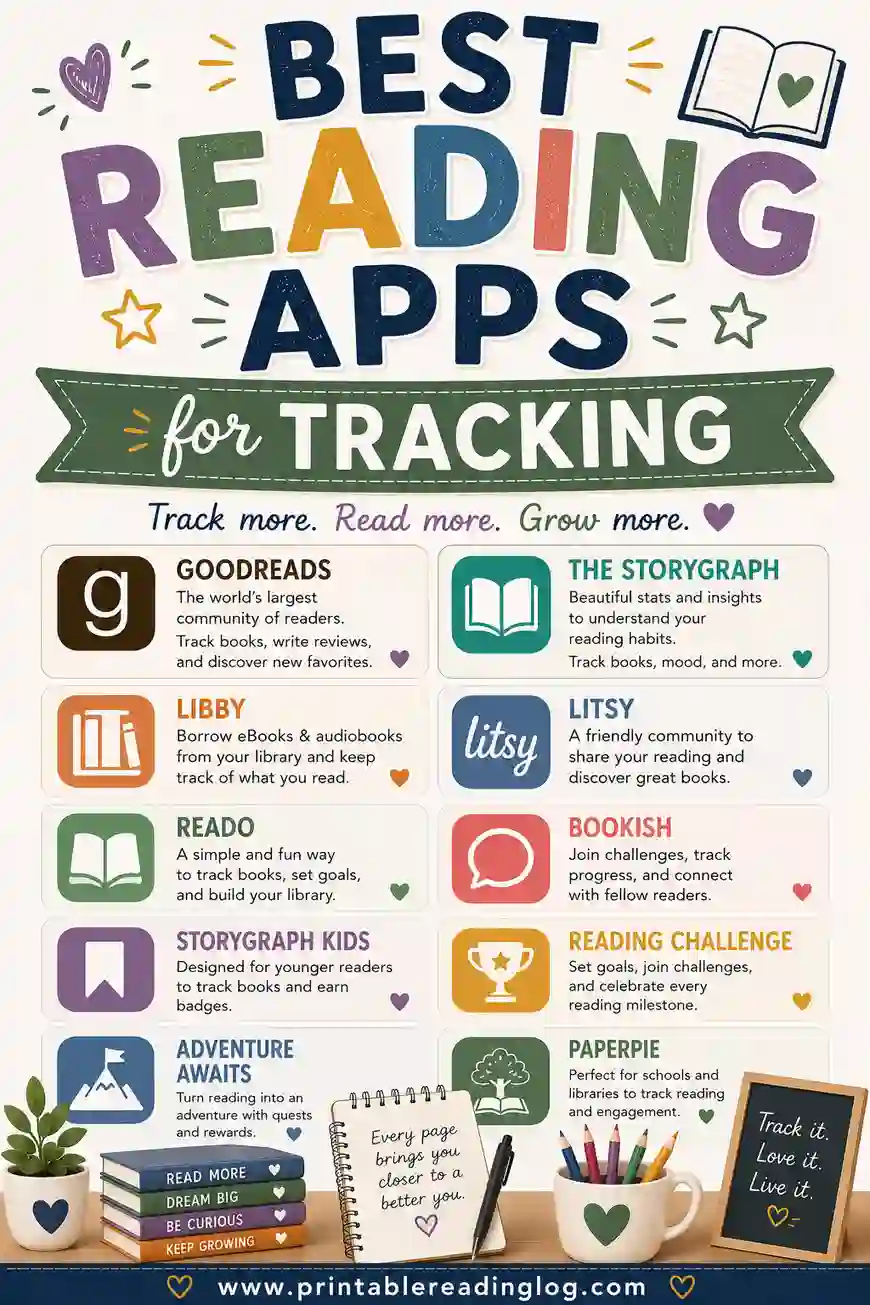
The Best Reading Apps for Tracking, Compared
Here's a quick side-by-side of the most popular trackers, plus the free printable option. Use it to find your shortlist, then read the notes below.
| Tool | Best for | Tracks | Price | Account needed |
|---|---|---|---|---|
| Printable reading log | Privacy, kids, simplicity | Anything you want | Free | No |
| Goodreads | Reviews, big book database | Books, ratings | Free | Yes |
| StoryGraph | Stats, mood-based picks | Books, pages, moods | Free / paid tier | Yes |
| Bookly | Reading sessions, minutes | Minutes, pages, speed | Free / paid tier | Yes |
| Fable | Book clubs, social reading | Books, clubs | Free / paid tier | Yes |
| Libib | Cataloging a home library | Books owned | Free / paid tier | Yes |
No single row wins every column. That's the point. Pick the one whose "best for" line sounds like you.
Goodreads
Goodreads is the giant. Its strength is the database: nearly every book you can name is already in there, with reviews and ratings attached. If you want to see what friends are reading and keep a "want to read" shelf, it's a solid free choice. The downsides are a dated interface and ads, and the fact that it's owned by a major retailer, which not everyone loves.
StoryGraph
StoryGraph is the reader's favorite for stats. It breaks your reading down by mood, pace, page count, and genre, and it suggests books based on how you felt about past reads. The free tier is generous. If you love charts and graphs about your habits, this is the app to try.
Bookly
Bookly is built around the reading session. You start a timer when you sit down, and it tracks your minutes, pages, and reading speed. It's great for people whose goal is "read more often," because it turns time into a number you can grow. The free version limits you to a few books at a time; the paid tier unlocks unlimited tracking.
Fable
Fable leans social. It's built for book clubs and shared reading, with curated lists and group discussions. If your reading is more fun with other people, Fable gives you a built-in community. As a pure tracker it's lighter than StoryGraph or Bookly.
Libib
Libib is less a reading tracker and more a library cataloger. Scan the barcodes of books you own and it builds a tidy catalog. Handy if you have shelves full of books and keep buying duplicates by accident. For tracking what you've read, it's overkill.
Where a Free Printable Reading Log Wins
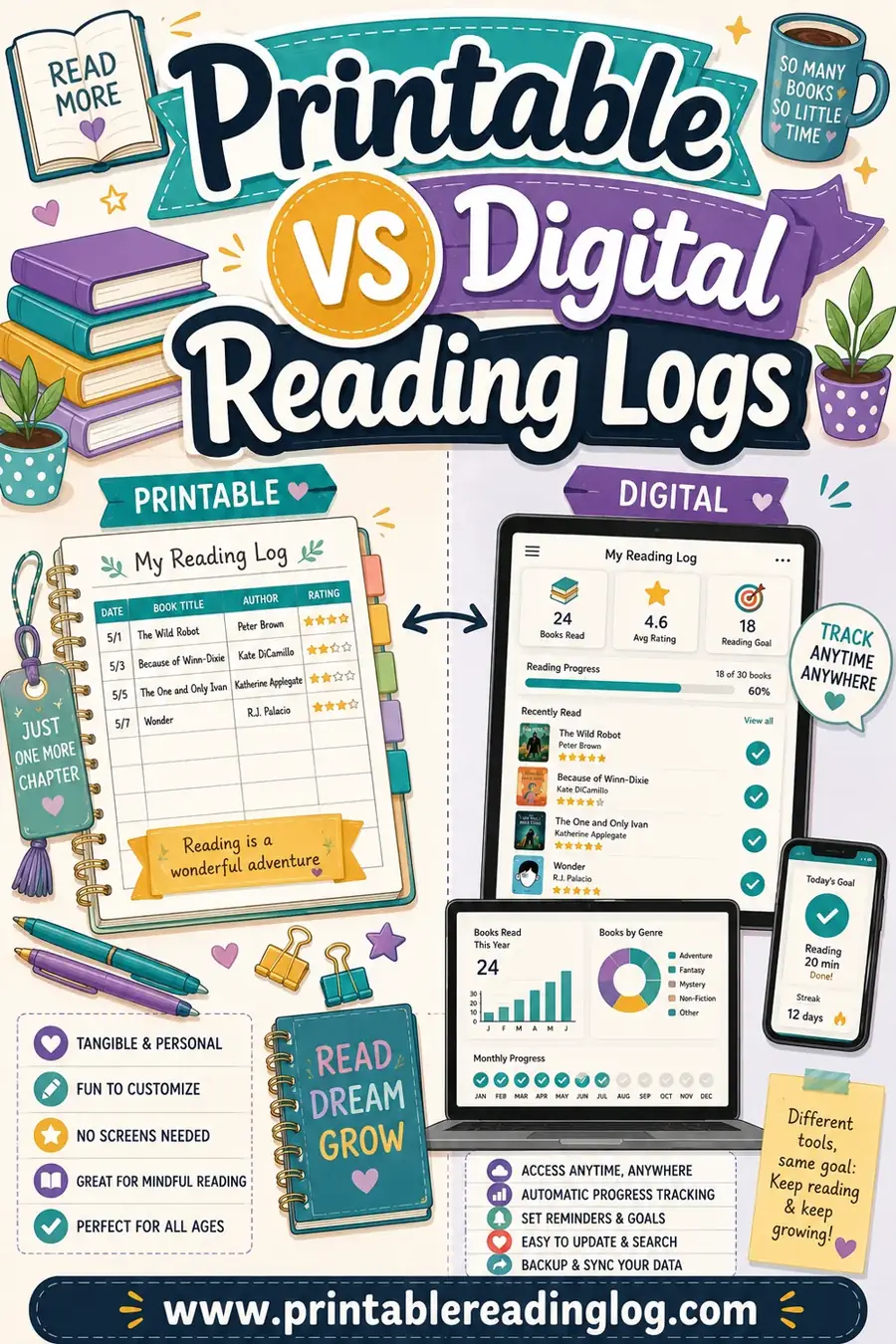
Apps are great until they aren't. A printable reading log fills the gaps the apps leave open, and for a lot of readers it's the only tracker they need.
- No account, no ads, no algorithm. You write a book down and you're done. Nobody's selling your reading history.
- It works for kids. A second grader can't manage a phone app, but they can color in a star or check a box. Paper is the better tool for young readers.
- It's endlessly flexible. Want columns for title, author, minutes, AND a star rating? Add them. The page is yours.
- It survives a dead battery. A log taped to the fridge is always on.
- Printing it makes the goal real. A blank grid you can see fills you with the urge to fill it in. That's a quiet motivator apps can't match.
The trade-off is honest: a printable log won't tally your stats for you. If automatic charts are the whole reason you track, an app wins. If you just want a clean record and a goal to chase, paper is faster and friendlier.
A sample printable log layout
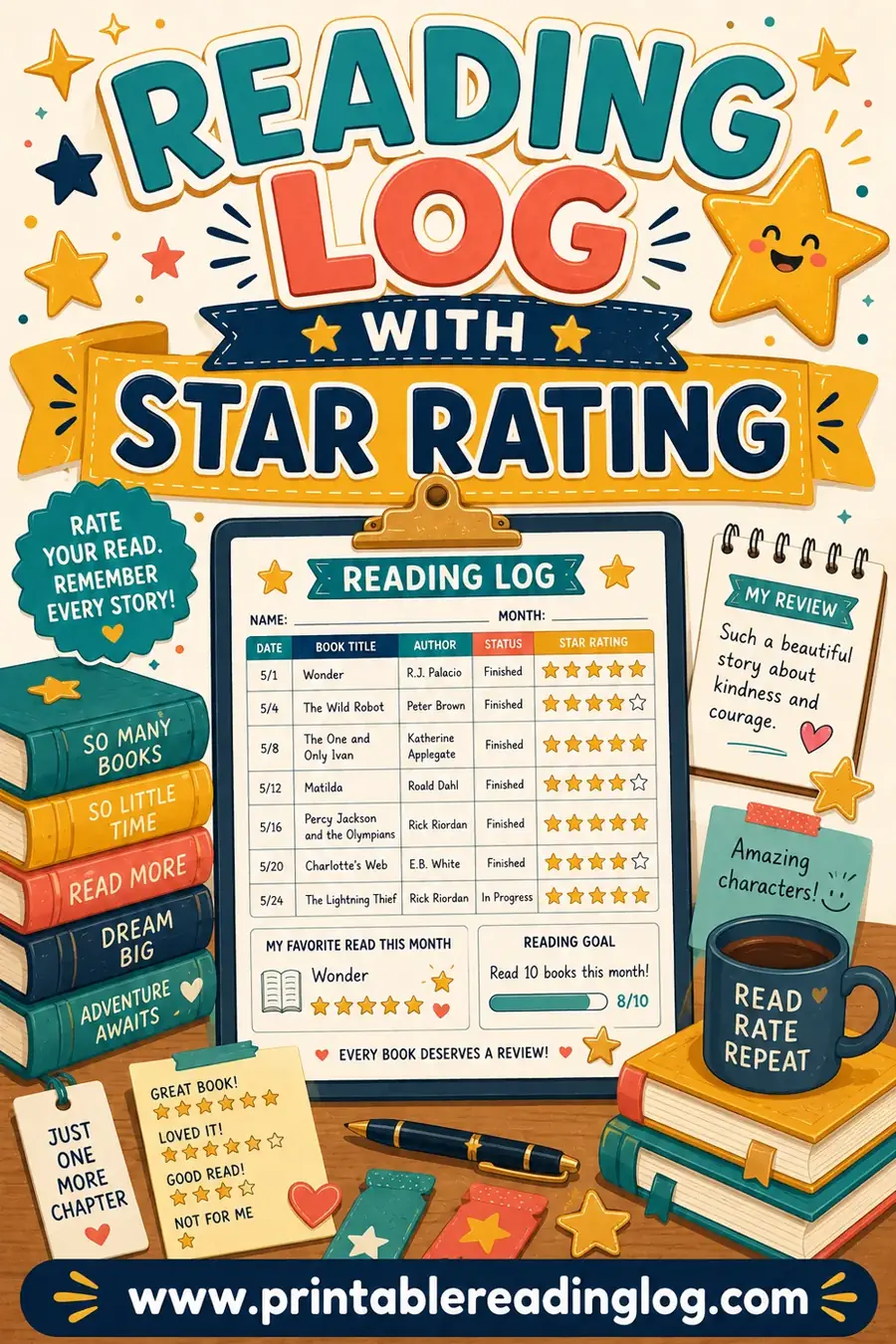
Here's the kind of layout you can build in the free tool in under a minute:
| # | Title | Author | Date finished | Rating |
|---|---|---|---|---|
| 1 | The Hobbit | J.R.R. Tolkien | Jan 14 | ⭐⭐⭐⭐⭐ |
| 2 | Educated | Tara Westover | Feb 02 | ⭐⭐⭐⭐ |
| 3 | Project Hail Mary | Andy Weir | Feb 19 | ⭐⭐⭐⭐⭐ |
| 4 | _______ | _______ | _______ | _______ |
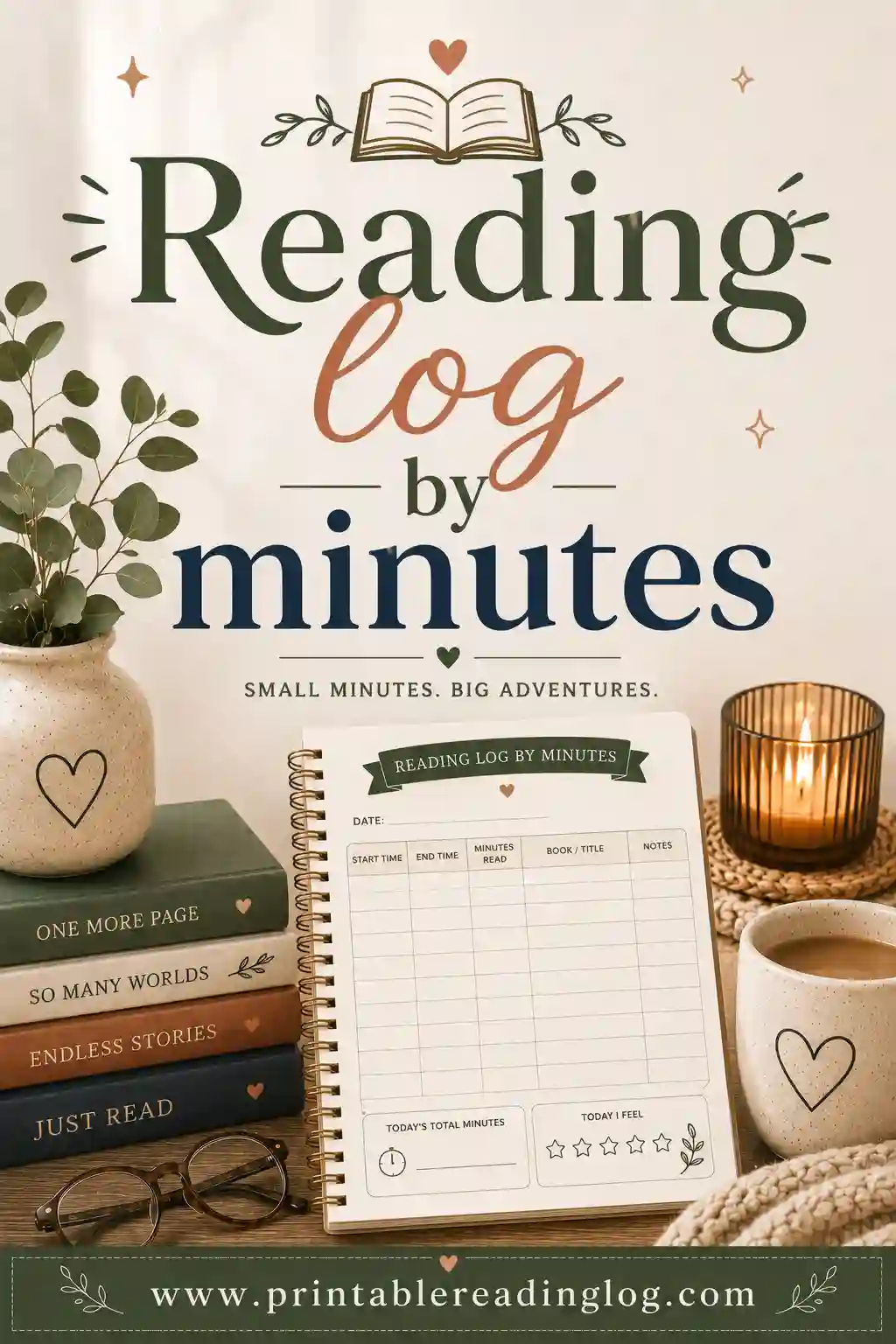
Add or drop columns to taste. Tracking minutes instead of books? Swap "Rating" for "Minutes read" and you've got a minute-based log.
How to Pick the Right Tracker for You
Still on the fence? Match your main goal to the tool. This quick guide cuts through it.
- You want stats and graphs. Go with StoryGraph.
- You want to read more minutes per day. Go with Bookly.
- You read with a group. Go with Fable.
- You want a huge book database and reviews. Go with Goodreads.
- You want privacy, zero cost, or a tracker for kids. Use a printable reading log.
You can also mix and match. Plenty of readers keep a printable log on the desk for the satisfying part and use an app now and then for recommendations. There's no rule that says you pick just one.
Questions to ask before you commit
- Will I actually open this every day, or will it become one more ignored app?
- Do I want my reading to be private or social?
- Am I tracking for a child, for school, or for myself?
- Is a yearly goal the thing that'll keep me going?
Your answers point straight at your best pick. For most casual readers and every classroom, the printable log is the lowest-effort win.
Setting Up Your Free Printable Log in Minutes
If you landed on the printable option, here's the whole process. It's quick.
- Open the reading log maker. No download, no account.
- Pick your columns. Title and author are the basics. Add date, rating, minutes, or pages depending on your goal.
- Choose a length. A single page for a month, or a full sheet for a yearly goal.
- Print it. Stick it on the fridge, in a binder, or inside a reading journal.
Print on cardstock if you want it to last, or slip it in a sleeve and mark it with a dry-erase marker so you can reuse the template.
Frequently Asked Questions
What is the best free reading app for tracking?
For a free app, StoryGraph and Goodreads are the strongest all-rounders. StoryGraph is better for stats; Goodreads is better for reviews and its huge database. If you want a free tracker with no account at all, a printable reading log does the job with zero setup.
Is there a reading tracker that doesn't need an account?
Yes. A printable reading log needs no account, no app, and no internet. You build it once in the free tool, print it, and track on paper. It's the most private option and the easiest one for kids.
What's the best app for tracking reading minutes?
Bookly is built for this. It times your reading sessions and totals your minutes and pages. If you'd rather skip the app, a minute-based reading log lets you jot the same numbers by hand.
Can I track a yearly reading goal without an app?
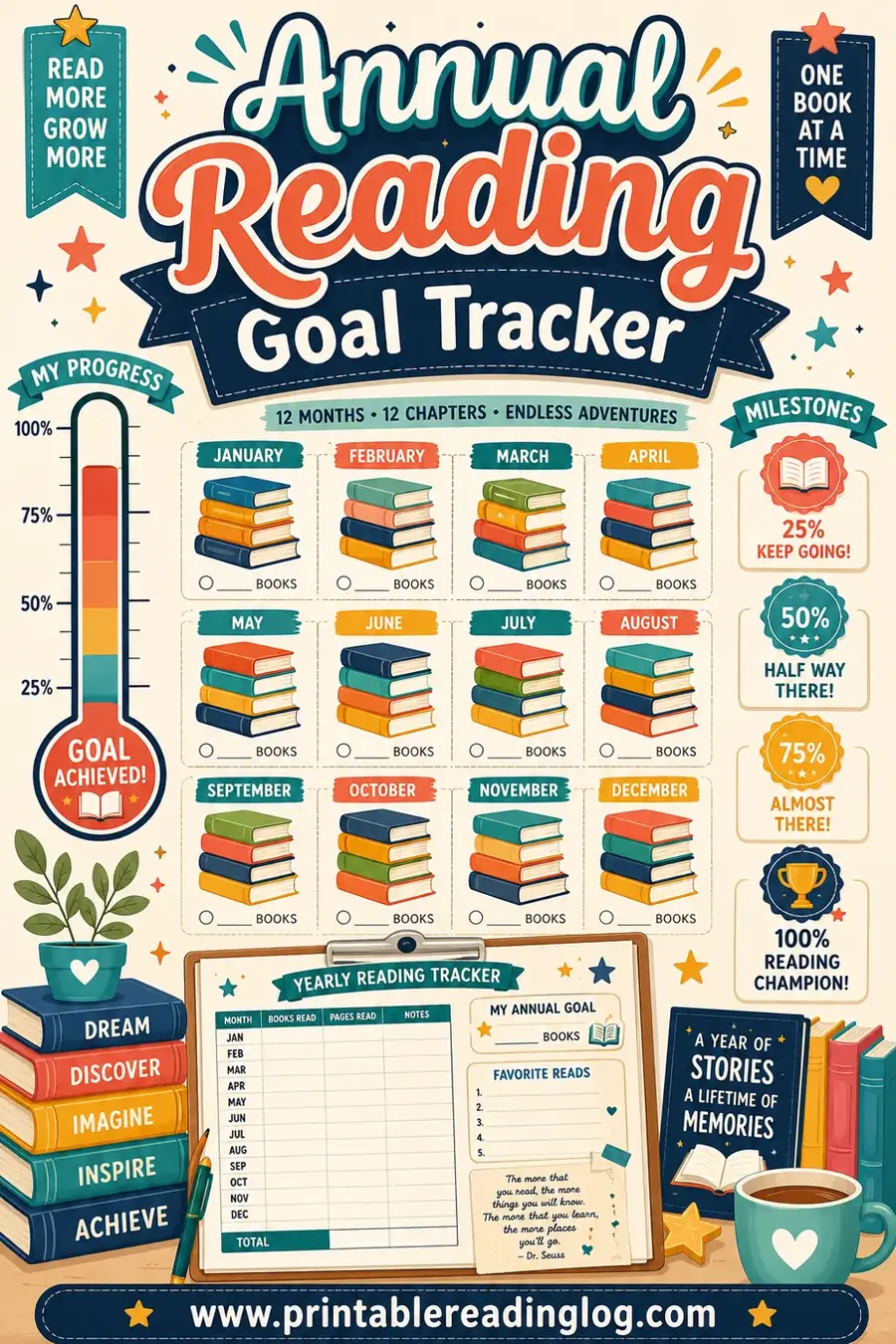
Absolutely. An annual reading goal tracker gives you a printable page where you fill in a box for each book toward your target. Seeing it fill up is a strong motivator, no app required.
Which tracker is best for kids?
A printable log wins for kids by a mile. Young readers can check a box or color a star without needing a phone, screen time, or a login. It's also easy for a parent or teacher to glance at and sign.
Do reading apps cost money?
Most have a free tier and a paid upgrade. The free versions are often enough for casual tracking, but the best stats and unlimited features usually sit behind a subscription. A printable log stays free no matter how much you read.
Start Tracking Your Reading Today
The best reading app for tracking is the one you'll actually keep using. Apps like StoryGraph and Bookly are great if you love data, but if you want a fast, free, private tracker that even a kid can use, a printable log is the friendliest place to start. Open the free reading log maker, pick your columns, and print your tracker in the next two minutes. Then go read something good.