Reading Log for Special Education: Simple & Supportive
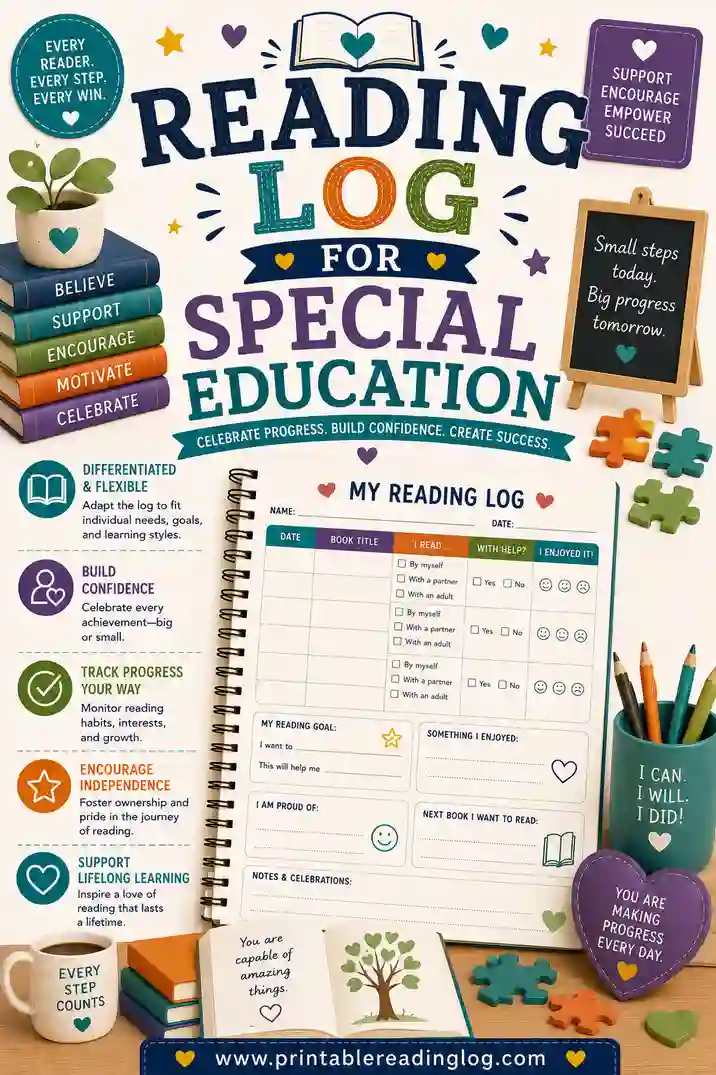
A reading log for special education is a tracking sheet adapted to fit a learner's needs, with simpler layouts, visual cues, smaller goals, and room to celebrate small wins. Instead of a dense grid of columns, it might use picture icons, larger boxes, or a single check-off per session. The easiest way to make one that fits a specific student is to use a free reading log generator, choose a clean kid-style layout, and adjust it for the learner in front of you.
Want to get straight to building it? Open the free tool, pick a simple, low-clutter style, and print. No sign-up, no fee, nothing to install.
What Makes a Special Education Reading Log Different?
A standard reading log assumes a fair bit: that a student can write independently, track several columns, and stay motivated by a number. For many learners in special education, those assumptions don't hold, and a busy sheet becomes a barrier instead of a tool.
A special education reading log strips things down. The goal is the same, building a reading habit and showing progress, but the design meets the learner where they are. That usually means:
- Fewer columns. One or two pieces of information per row, not five.
- Bigger boxes and text. Easier to see, easier to mark, kinder to fine-motor challenges.
- Visual cues. Pictures, icons, or color instead of (or alongside) words.
- Smaller, frequent goals. "Read today" beats "read 30 minutes" for a learner who finds time abstract.
- Room for an adult. A spot for a parent, aide, or teacher to initial or jot a note.
The point isn't a watered-down log. It's a log that actually fits, so the student experiences success instead of frustration.
Why a Supportive Reading Log Matters
For learners who find reading hard, the wrong tracking sheet can quietly send the message "you're behind." The right one does the opposite. It makes effort visible, celebrates the small step, and builds the kind of momentum that turns into confidence.
Here's what a well-designed log does for these readers:
- It rewards effort, not just outcomes. Reading for five minutes, or listening to a read-aloud, counts. The log says so.
- It breaks reading into doable pieces. One short session at a time feels possible. A big goal can feel impossible.
- It gives everyone the same picture. Parents, teachers, and therapists can all see what's happening at a glance, which makes IEP check-ins and home-school communication easier.
- It celebrates wins out loud. A row of stars or stickers is something a child can be proud of.
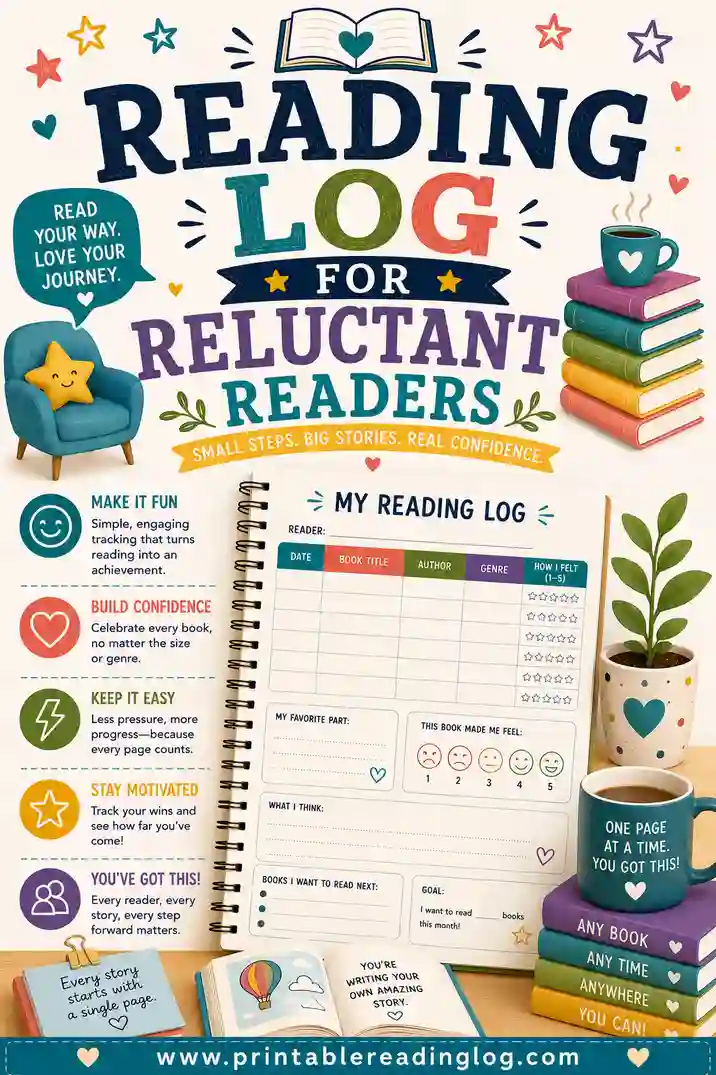
If your learner is a reluctant reader on top of other needs, our reading log for reluctant readers guide has more low-pressure ideas that pair well with this.
Adapting the Log for Different Needs
There's no single "special education" learner, so there's no single right log. The trick is matching the layout to the specific challenge. Here are common adjustments.
For fine-motor or writing challenges
- Use check-off boxes instead of write-in columns.
- Make boxes large, so marking is easy.
- Let the student stamp, sticker, or color a box rather than write.
- Have an adult fill in titles while the student marks completion.
For attention or processing needs
- Keep the sheet short — five or six rows per page, not twenty.
- Use one goal at a time ("read with someone today").
- Add clear visual borders so the eye knows where to look.
- Track in short sessions rather than long ones.
For non-readers and emerging readers
- Track read-alouds and shared reading, not just independent reading.
- Use picture icons for the action (an open book, a pair of eyes, an ear for listening).
- Celebrate "we read together" as the win.
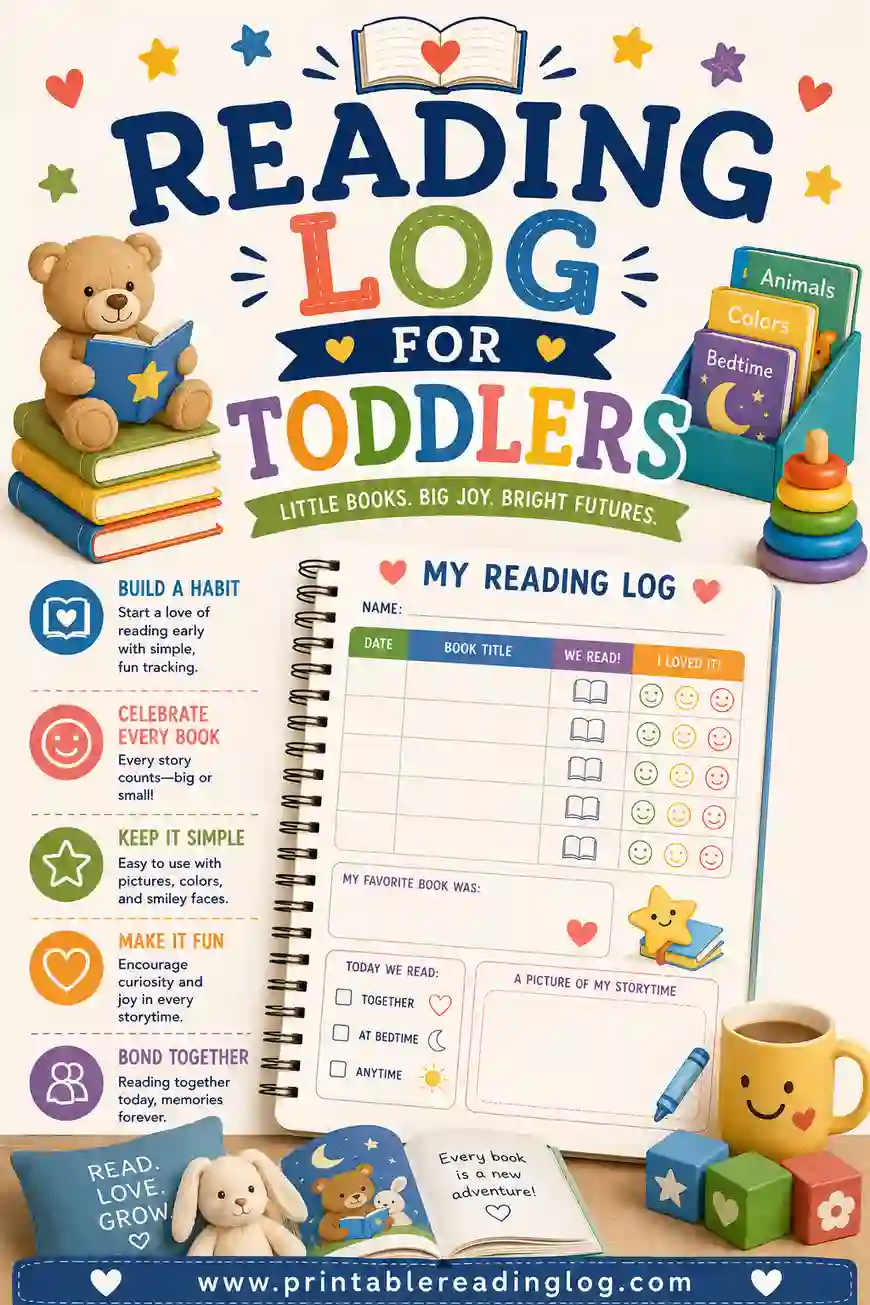
- For very young or early learners, the simpler ideas in our reading log for toddlers guide carry over well.
For English learners with additional needs
- Pair pictures with words so the log itself supports vocabulary.
- Keep instructions visual and minimal.
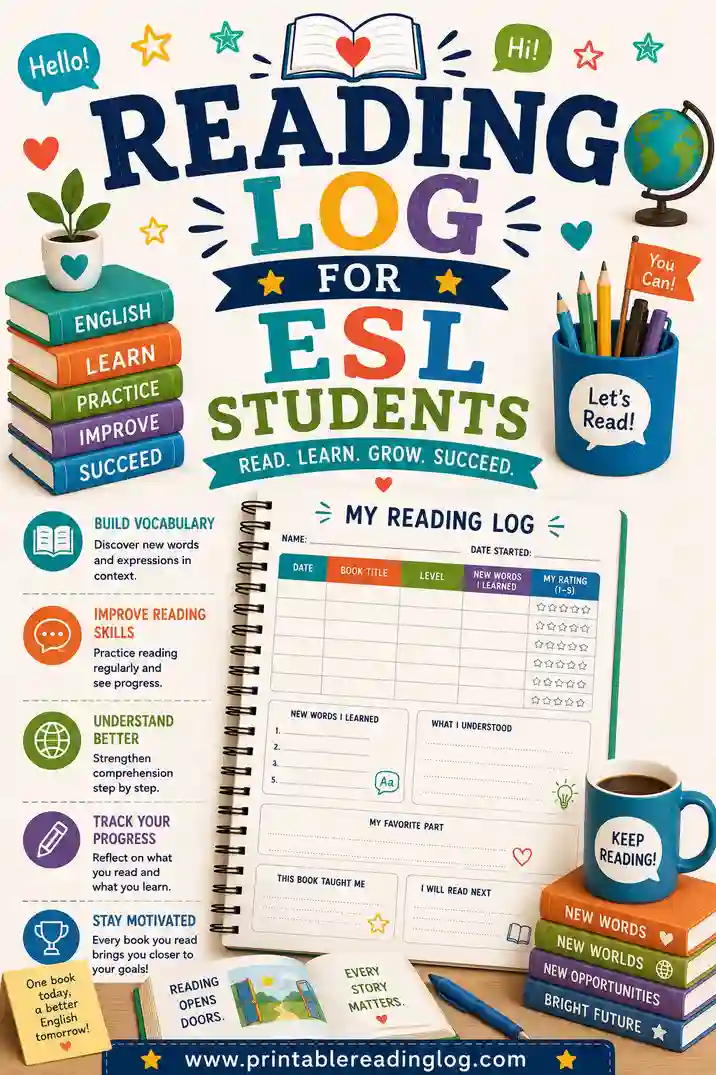
- Our reading log for ESL students guide has more language-friendly touches.
What to Track (and What to Skip)
Less is more. The biggest mistake is loading the log with everything a "complete" log might have. For special education, choose the smallest set of columns that still shows progress.
A good minimal log tracks just:
- Did we read? A simple yes (a check, star, or sticker).
- What we read — filled in by an adult if needed.
- A feeling — an optional smiley face or thumbs-up for how it went.
Skip running totals, point values, ratings, and anything that adds visual clutter without adding motivation. You can always add a column later if the learner is ready for it.
A sample supportive log layout
| Day | We read | Book | How it felt |
|---|---|---|---|
| Mon | ⭐ | Brown Bear (read-aloud) | 😊 |
| Tue | ⭐ | Picture cards | 😊 |
| Wed | — | (rest day) | — |
| Thu | ⭐ | Brown Bear again | 😄 |
| Fri | ⭐ | New picture book | 🙂 |
Four stars in a week is a clear, visible win, and the "how it felt" column tells the team something a number never could.
Goals That Set the Learner Up to Win
Goals in special education work best when they're frequent, small, and almost guaranteed to be reached. A learner who hits a goal builds confidence; a learner who keeps missing one learns to dislike the whole activity.
| Instead of... | Try... |
|---|---|
| Read 30 minutes a day | Read with someone today |
| Finish 5 books this month | Earn 4 stars this week |
| Read independently | Read or listen — both count |
| Quiz on every book | Talk about one thing you liked |
Notice the pattern: every "try" goal is something the learner can almost always succeed at. That's by design. Success is the fuel. You can always raise the bar once the habit is solid, and the reading log tool makes it easy to print a slightly bigger version when the time comes.
Working the Log Into the Routine
A log only helps if it gets used, so make it effortless and consistent.
Anchor it to a fixed time. Right after dinner, or at the same spot in the school day. Predictability helps many learners settle in.
Keep it in one place. A folder, a clipboard, a magnet on the fridge. The student always knows where it lives.
Mark it together at first. Sit with the learner as they add their star. The shared ritual matters as much as the tracking.
Celebrate the row, not the score. "Look at all those stars!" lands better than "you read 22 minutes." Make the visible progress the point.
Share it across the team. Send the sheet (or a photo) home and back so parents, teachers, and any therapists are seeing the same thing. It makes those IEP and progress conversations far easier.
Reading the patterns over time
Once a few weeks of logs pile up, they become more than a motivator, they become useful data. Flip through them and look for patterns. Does the learner read more on certain days, or at a certain time? Do read-alouds get more stars than independent attempts? Are there weeks where everything dropped off, and do you know why? These small observations help the whole team make better choices: maybe reading lands better in the morning, or maybe a particular kind of book sparks more engagement. You don't need fancy charts. A stack of simple star sheets, read with a thoughtful eye, often tells you exactly what's working and what to adjust. That's the quiet power of a log designed to be filled in, not feared.
Making the Log Print-Ready
A few choices make the printed sheet easier for every hand and eye.
- Choose a clean, simple style. Fewer lines, bigger boxes. The free tool has uncluttered kid layouts that work well as a starting point.
- Print large. Bigger boxes help with fine motor and vision. Don't cram.
- Use sturdy paper. Cardstock holds up to stickers, stamps, and daily handling.
- Laminate for repeat use. Then mark with a dry-erase marker and wipe clean, so one sheet lasts a whole unit.
- Add the student's name and a goal at the top. Ownership matters. So does a goal the learner can actually reach.
- Let the student help decorate it. A sheet a learner colored or chose stickers for is a sheet they want to fill in. That small bit of ownership often boosts buy-in more than any feature you could add.
Frequently Asked Questions
How is a special education reading log different from a regular one?
It's simpler and more supportive: fewer columns, bigger boxes, visual cues like pictures and stickers, smaller goals, and room for an adult to help. The aim is to make tracking easy and success frequent, so the learner stays motivated instead of overwhelmed.
Should I track read-alouds and listening?
Yes, absolutely. For emerging and non-readers, shared reading and listening are real reading practice and deserve a spot on the log. Counting "we read together" as a win keeps the experience positive and builds the habit.
What kinds of goals work best?
Small, frequent, and reachable ones. "Read with someone today" or "earn four stars this week" beat big minute or book counts. A goal the learner can almost always hit builds confidence, which is what fuels more reading.
Can I adapt the log for fine-motor challenges?
Yes. Use large check-off boxes the student can mark with a sticker, stamp, or color instead of writing. Have an adult fill in titles. The free tool lets you print a clean, large-box layout that's easy to adapt.
How can the log help with IEP and home-school communication?
A shared sheet gives parents, teachers, and therapists the same clear picture of reading at a glance. It's an easy artifact to bring to IEP meetings and to pass between home and school, so everyone is working from the same information.
Should the goal change over time?
Yes, gently. Start with a goal the learner can almost always reach, and only raise it once the habit feels solid and the wins are steady. Moving from "read with someone today" to "earn five stars this week" is the kind of small step that keeps confidence intact while still asking for a little more.
Is the printable reading log free?
Yes. You build and print it yourself with no fee, no account, and no watermark. Print a fresh, adapted sheet whenever you need one.
Ready to Build a Reading Log That Fits Your Learner?
Choose a simple style, set a small goal the student can actually reach, and open the free reading log generator to print a clean, supportive sheet. It's free, there's no sign-up, and a row of stars a learner is proud of can do more for reading than any grade. Here's to celebrating every step forward.