How to Start a Kids' Book Club: A Step-by-Step Guide
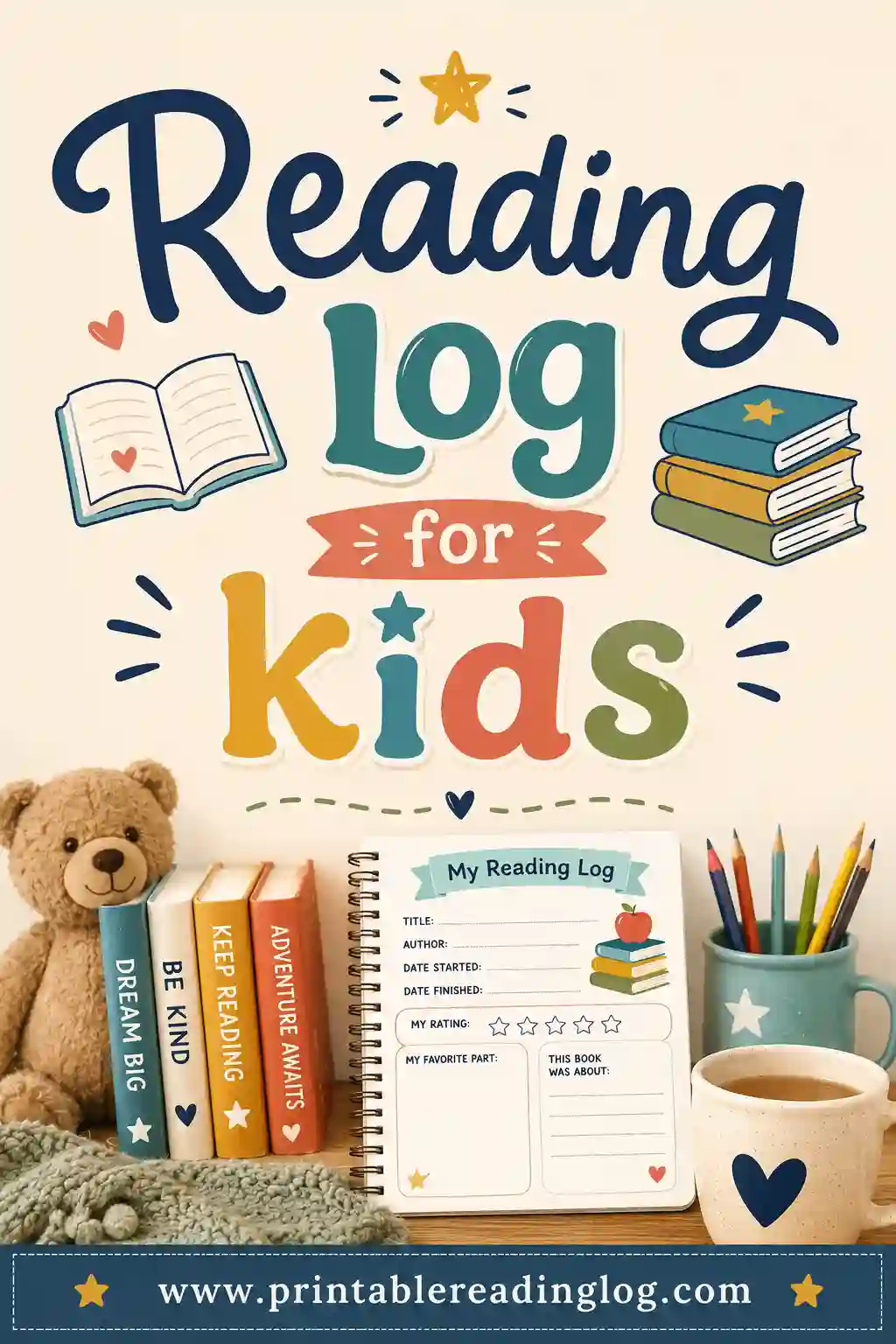
To start a kids' book club, gather a small group of similar-aged readers, pick one short, fun book everyone can finish, set a relaxed meeting time, and plan a few easy questions plus a snack. Keep the first meetings light and low-pressure so kids look forward to coming back. A free printable reading log helps everyone keep track of what they read and what they thought, which makes the discussion run itself.
Want a ready-made sheet for members to fill in before each meeting? Open the free log builder, print a copy for each kid, and have them jot a few notes as they read. No app, no account, no cost.
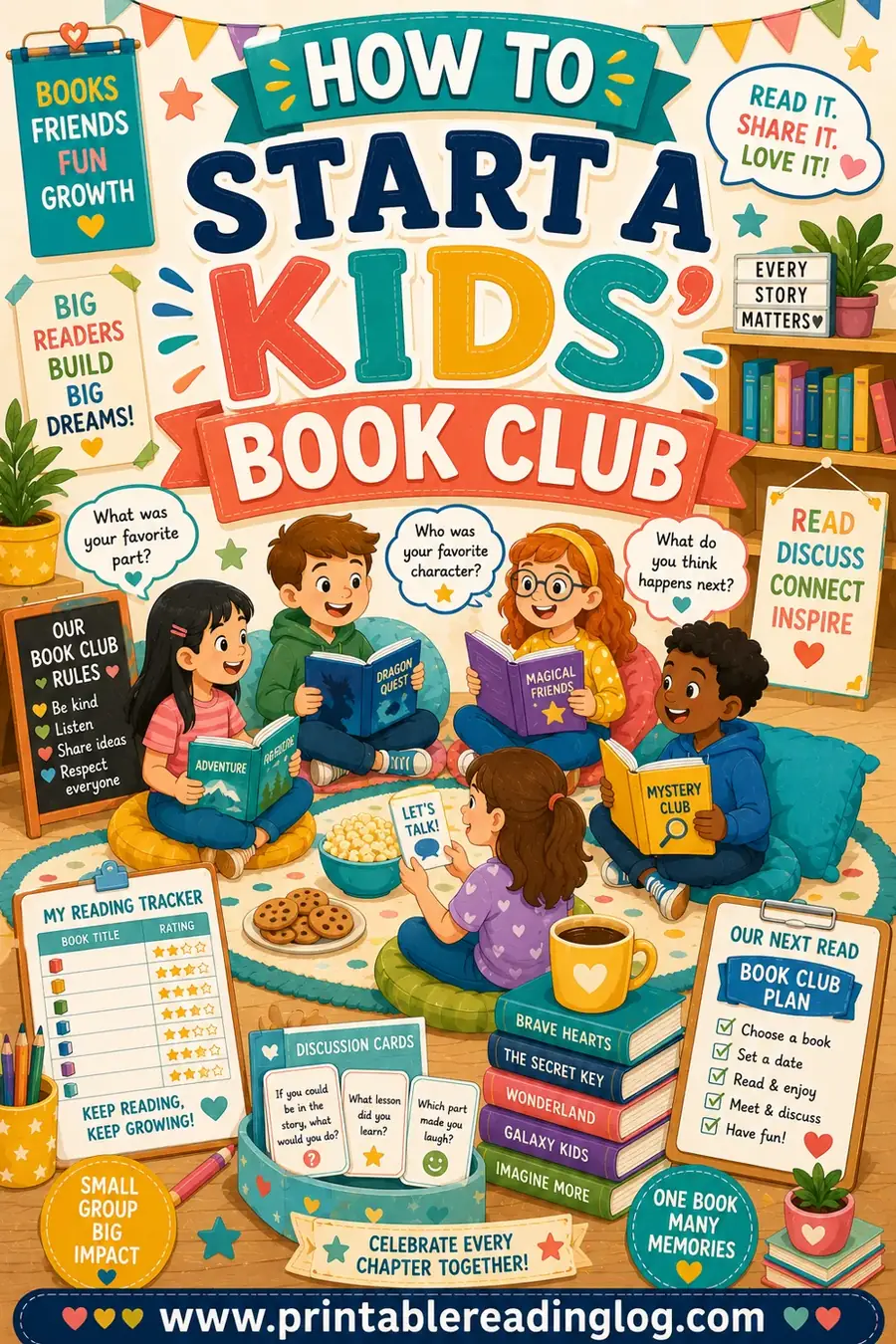
Why Start a Kids' Book Club?
A book club does something a solo reading habit can't: it makes reading social. Kids show up because their friends are there, and the book comes along for the ride. Suddenly a chapter book isn't homework, it's something to talk about.
The benefits stack up fast. Kids practice talking about ideas, hear what their friends thought, and discover books they'd never have picked alone. Shy readers find their voice in a small group. Reluctant readers finish a book because they don't want to be the one who didn't.
And it's genuinely fun. Snacks, friends, a cozy spot, and a story everyone shares. That combination turns reading into something kids ask to do, which is the whole goal.
Step 1: Decide the Basics
Before you invite anyone, sort out a few simple decisions. Getting these right up front saves headaches later.
- Age range. Keep it tight, ideally within a year or two. A six-year-old and an eleven-year-old need very different books.
- Group size. Four to eight kids is the sweet spot. Big enough for discussion, small enough that everyone gets a turn.
- Where it meets. Living rooms, backyards, a library room, or a classroom all work. Pick somewhere comfy with space to sit in a circle.
- How often. Once or twice a month is plenty. Kids need time to read, and you don't want it to feel like a chore.
Don't overthink it. A book club is just kids, a book, and a regular time to meet. Lock in these basics and you're most of the way there.
Step 2: Find Your Members
You don't need a crowd to start. Three or four committed kids is a real book club. Where to find them:
- Your child's friends. The easiest pool. They already like hanging out, so adding a book is a small ask.
- Classmates. Send a note home or ask the teacher to mention it.
- Neighbors and cousins. A built-in group that already gathers anyway.
- The local library. Some libraries help connect kids or even host clubs in a meeting room.
Loop in the parents early. You'll want their help with rides, the meeting rotation, and making sure kids actually read the book. A quick group chat keeps everyone on the same page about dates and the current pick.
Step 3: Choose the Right Books
Book choice can make or break a kids' club. The golden rule: pick books that are short, fun, and a little below the group's top reading level so everyone can finish comfortably. A book nobody finishes is a meeting nobody enjoys.
Good picks for kids' clubs tend to be:
- Short and fast-paced. Aim for books kids can finish in a couple of weeks without dread.
- Funny or exciting. Humor and adventure travel well across a group.
- Series starters. If the club loves book one, you've got a built-in lineup.
- Discussable. A real problem, a choice, or a twist gives kids something to talk about.
Sample book list by age
| Age group | Book ideas | Why it works |
|---|---|---|
| 5–7 | Mercy Watson, Frog and Toad | Short, sweet, easy to finish |
| 7–9 | The Magic Tree House, Dog Man | Fun, fast, beloved series |
| 9–11 | The One and Only Ivan, Wonder | Big heart, great for discussion |
| 10–12 | Percy Jackson, The Wild Robot | Adventure and ideas to chew on |
| 11–13 | Holes, A Wrinkle in Time | Twists and themes worth talking about |
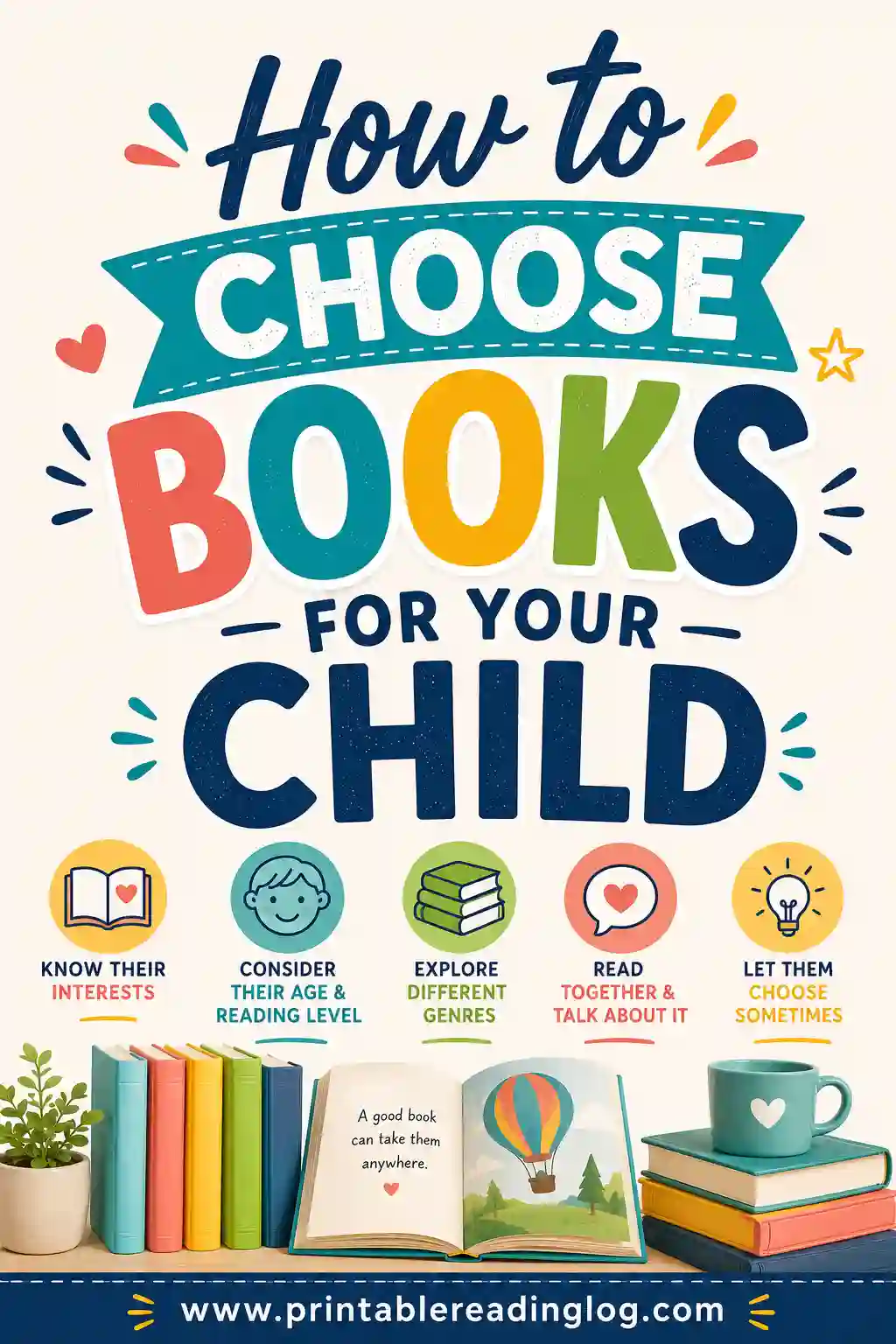
Let the kids vote when you can. Choice drives buy-in, and a book the group picked is a book the group reads. For more on matching books to readers, see our guide on how to choose books for your child.
Step 4: Plan the Meeting
A kids' book club meeting should feel like a hangout, not a class. Keep it short, keep it loose, and always include food. A simple flow works best.
A typical meeting runs about 45 minutes to an hour:
- Snack and settle (10 min). Kids arrive, grab a snack, and chat. The snack is not optional; it's half the appeal.
- Warm-up question (5 min). Something easy like "Did you like it?" or "Who was your favorite character?" Gets everyone talking.
- Discussion (20 min). Three to five questions about the book. Keep it conversational, not a quiz.
- Activity (10 min). Draw a scene, act out a part, or vote on the next book.
- Wrap up (5 min). Set the next book and date, and remind kids to log their reading.
Don't aim for a deep literary analysis. The goal is for kids to enjoy talking about a story together. If they're laughing and chiming in, the meeting is a success.
Step 5: Lead a Great Discussion
You don't need to be an English teacher to lead a good discussion. A handful of open questions does most of the work, because they invite opinions rather than right-or-wrong answers.
Keep these ready for any book:
- What was your favorite part, and why?
- Which character would you want as a friend?
- Was there a part that surprised you?
- What would you have done in the main character's place?
- If you could change the ending, how?
- Rate it out of five. Convince us.
Let kids talk to each other, not just to you. When one shares an opinion, ask, "Does anyone agree or disagree?" That turns a Q&A into a real conversation. And if the room goes quiet, the snack table is always a fine place to regroup.
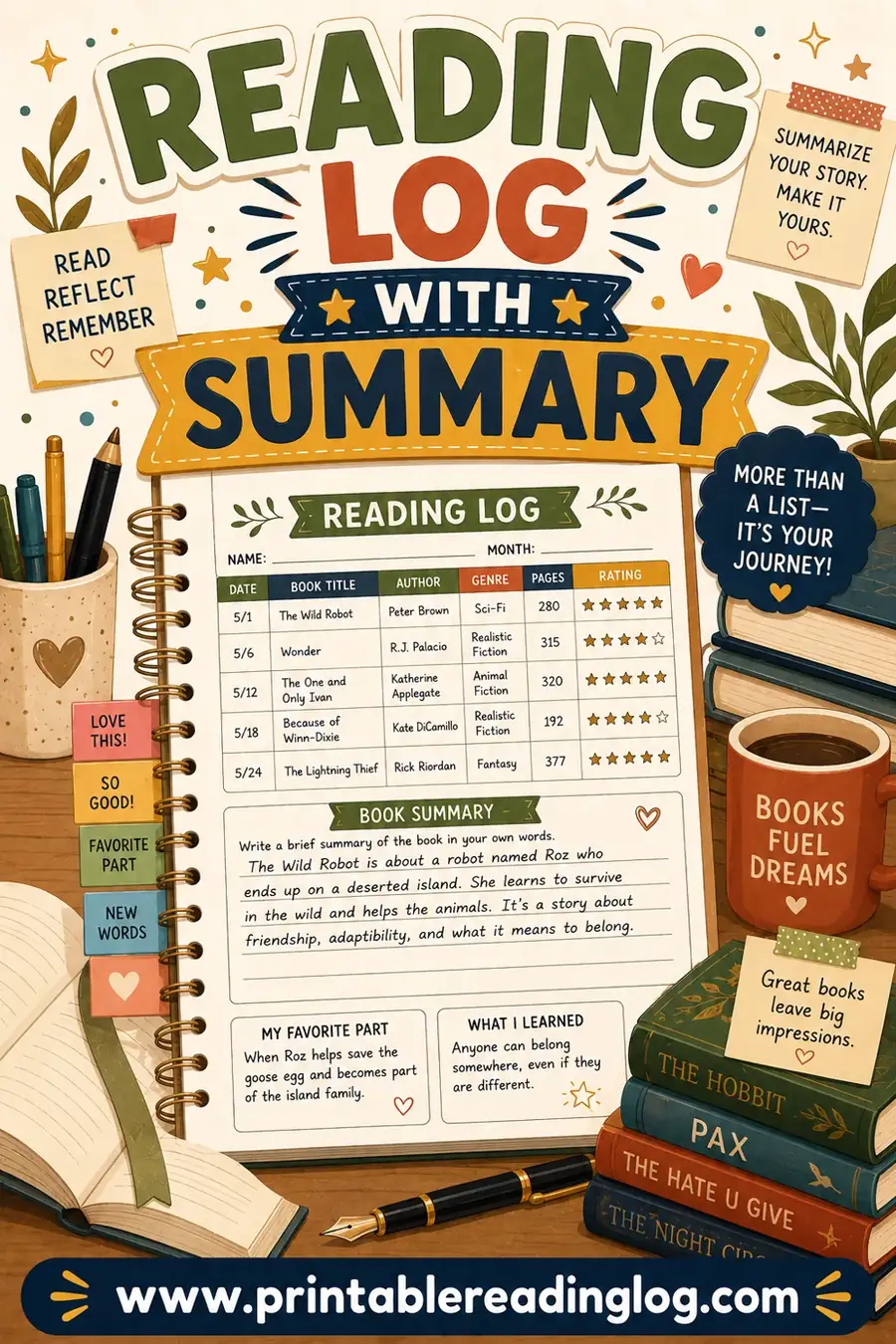
Having members fill in a reading log with a summary before they arrive gives every kid something to say. Even a one-line note about a favorite scene gets a shy reader into the discussion.
Step 6: Track Reading With a Log
A reading log is the quiet engine of a smooth book club. When each member logs the book, a few notes, and a rating before the meeting, two good things happen: kids come prepared, and discussion starts itself.
Give each member a log to record:
- The book title and dates. A running list of everything the club has read.
- A star rating. Instant discussion fuel when ratings differ.
- A favorite part or quote. A ready-made talking point.
- A one-line summary or opinion. Proof they read it, and a way in for shy kids.
Sample book club reading log
| Date | Book | Rating | Favorite part |
|---|---|---|---|
| May 4 | The One and Only Ivan | ⭐⭐⭐⭐⭐ | When Ivan paints |
| May 18 | Dog Man | ⭐⭐⭐⭐ | The whole thing is funny |
| Jun 1 | Wonder | ⭐⭐⭐⭐⭐ | Auggie's first day |
| Jun 15 | The Wild Robot | ⭐⭐⭐⭐ | Roz and the goslings |
| Jun 29 | Holes | ⭐⭐⭐⭐⭐ | The twist at the end |
A free reading log for book clubs gives you a ready sheet to print for every member. Over a few months, the club builds a shared reading history they can be proud of, and you get an easy record of what worked.
Keep the Club Going
Starting is easy; keeping a club alive takes a little care. A few habits keep kids coming back month after month.
- Stay consistent. Same time, same place. Predictability makes it a real part of their month.
- Let kids steer. Let them vote on books and suggest activities. Ownership keeps them invested.
- Mix in variety. Try a graphic novel, a nonfiction book, or a movie-night follow-up after reading the book.
- Celebrate milestones. Mark the fifth or tenth book with a party, a certificate, or a special outing.
- Keep the pressure off. If a kid didn't finish, welcome them anyway. The goal is a love of reading, not perfect attendance.
The clubs that last are the ones where kids genuinely want to be there. Keep it fun, keep it social, and the reading takes care of itself.
Frequently Asked Questions
What age should kids be to start a book club?
Kids as young as five can join a book club with short picture books and parent help. Keep the age range tight, ideally within a year or two, so everyone can read the same books comfortably and discuss them on the same level.
How many kids do you need for a book club?
Three or four is enough to start, and four to eight is the sweet spot. That's big enough for lively discussion but small enough that every child gets a turn to talk. Too many kids and the quieter readers get drowned out.
How often should a kids' book club meet?
Once or twice a month works best. That gives kids enough time to read the book without rushing, and keeps the club feeling special rather than like another obligation. Pick a consistent day so it becomes a reliable part of their month.
What books are best for a kids' book club?
Choose books that are short, fun, and slightly below the group's top reading level so everyone can finish. Funny books, adventures, and series starters all work well. Letting the kids vote on the pick boosts buy-in and makes sure they actually read it.
How do I lead a book club discussion with kids?
Use a few open questions like "What was your favorite part?" or "What would you have done differently?" Let kids respond to each other, not just to you. Keep it conversational and short, and never turn it into a quiz. The goal is fun talk about a shared story.
How does a reading log help a book club?
When each member fills in a reading log before the meeting with the title, a rating, and a favorite part, they arrive prepared and discussion starts itself. The log also builds a shared record of every book the club has read together over time.
Start Your Kids' Book Club Today
You've got the plan: a small group, a fun book, a relaxed meeting, and a snack. The last piece is giving every member a simple way to track their reading. Open the free reading log builder, print a copy for each kid, and watch your club's shared book list grow. It's free, there's no sign-up, and your first meeting could be just a snack and a story away. Happy reading.