Best Reading Goals by Age: A Simple Year-by-Year Guide
The best reading goals by age start small and grow with the reader: a few minutes of shared picture books for toddlers, 15 to 20 minutes of daily reading for elementary kids, and a book-count or page-count target for teens and adults. Good goals are specific, realistic, and tracked, so the reader can see steady progress instead of guessing. The easiest way to keep that progress visible is a simple log everyone fills in together.
Want to set a goal right now? Open the free reading log maker, pick a target that fits the age below, and print a tracker you can stick on the fridge. No sign-up, no app to download, no fee.
What Makes a Good Reading Goal at Any Age
Before we get into numbers, it helps to know what separates a goal that sticks from one that fizzles out by week two. The age changes the target, but the rules stay the same.
A strong reading goal is:
- Specific. "Read more" is a wish. "Read 15 minutes after dinner" is a goal.
- Measurable. You should be able to mark it done or not done. Minutes, pages, and books all work.
- Realistic. Set the bar just above where the reader is now, not where you wish they were.
- Visible. A goal you can see, on a chart or a log, gets met far more often than one living in your head.
- Tied to a routine. "After breakfast" or "before bed" beats "sometime today."
Keep those five things in mind and almost any number you pick below will work.
Reading Goals for Toddlers (Ages 1–3)
At this age, the goal isn't really about the child reading. It's about building a love of books and a daily habit of sitting together. You're planting seeds.
Aim for two short read-aloud sessions a day, even if each one is only a few minutes. Board books, picture books, and the same favorite read for the hundredth time all count. Repetition is a feature, not a bug, for toddlers.
Realistic targets:
- 5 to 10 minutes of shared reading, once or twice a day.
- Let the child turn pages and point at pictures, even if they "read" out of order.
- Don't worry about finishing a book. Stopping when they lose interest keeps reading positive.
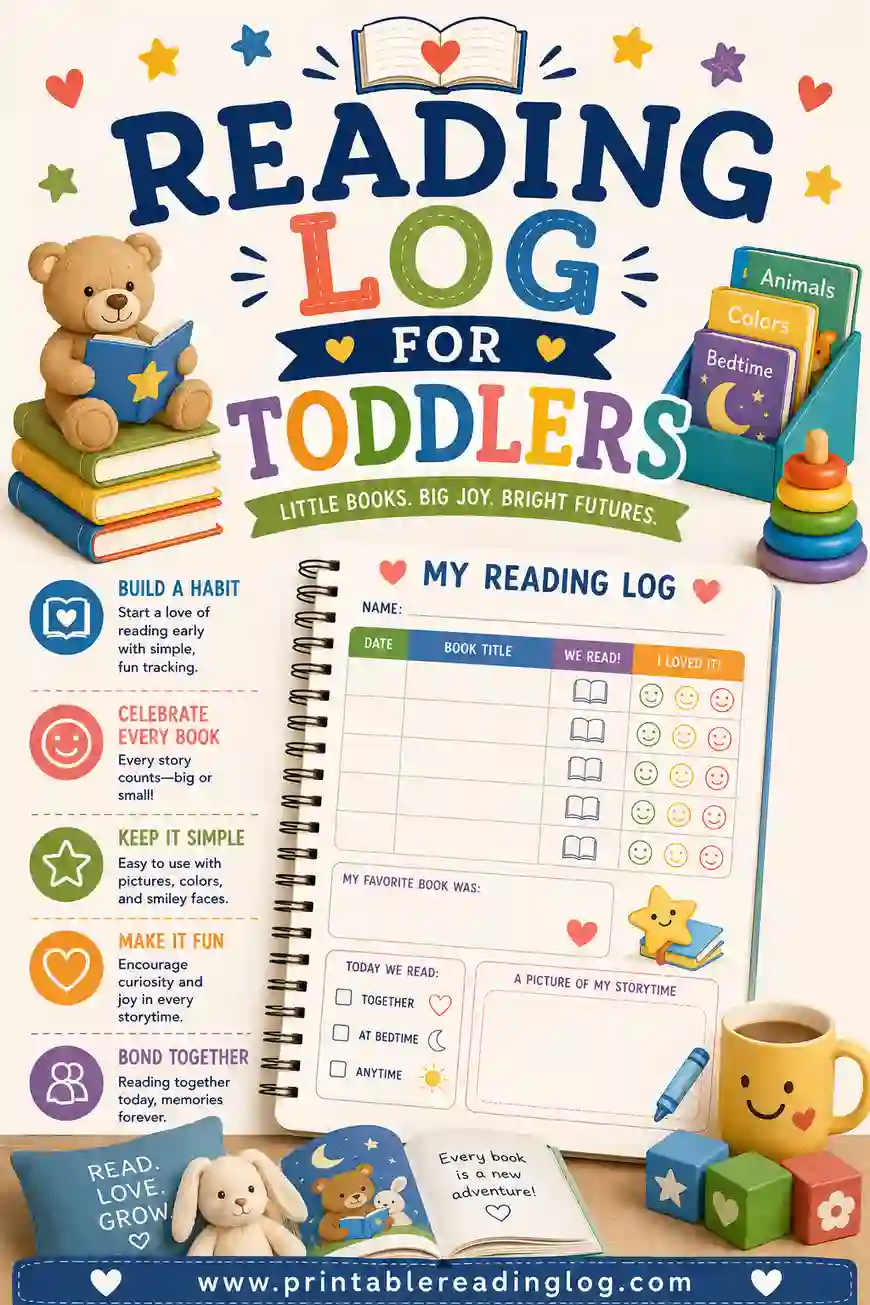
Track it with a simple sticker row rather than minutes. A reading log for toddlers that just asks "Did we read today?" is plenty.
Reading Goals for Preschoolers (Ages 3–5)
Now you can stretch the sessions a little and start pointing out letters and sounds. The goal shifts toward print awareness: that words go left to right, that letters make sounds, that stories have a beginning and end.
Aim for 15 minutes of reading together each day, split however works. Mix in alphabet books and rhyming books, which build the sound skills early readers lean on.
A nice goal for this age is a small monthly book count, like 20 picture books in a month, tracked on a chart the child colors in. Kids this age love coloring a square or adding a sticker, and that little reward keeps the habit going.
Reading Goals for Early Elementary (Ages 5–7)
This is the big leap: kids start reading on their own. Goals should protect the joy of reading while building stamina.
The widely recommended target here is 15 to 20 minutes of reading a day. That can be the child reading to you, you reading to them, or a mix. Both count.
Good early-elementary goals:
- Read aloud 15 minutes a day, five days a week.
- Finish one early-reader or short chapter book a week.
- Reread favorites freely. Rereading builds fluency.
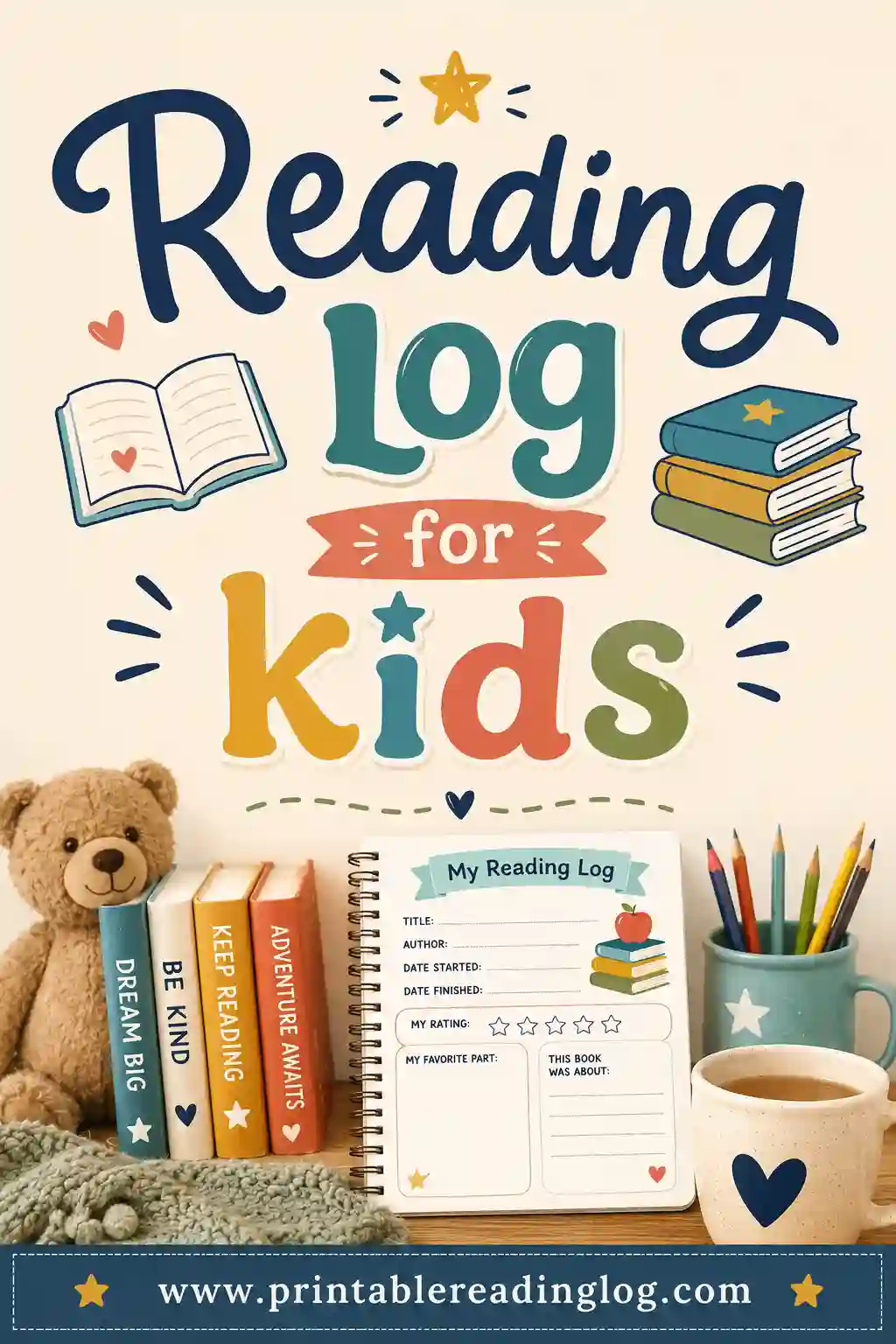
A reading log for kids with a spot for the title and a star rating turns this into something they look forward to. Let them be the one who marks the log. Ownership matters.
Reading Goals for Upper Elementary (Ages 8–10)
By now most kids read independently and can handle longer chapter books. The goal moves from minutes toward books and variety.
Aim for 20 to 30 minutes of independent reading a day, plus a monthly book goal. A common target is one book a week, though a slower pace through a longer book is just as good.
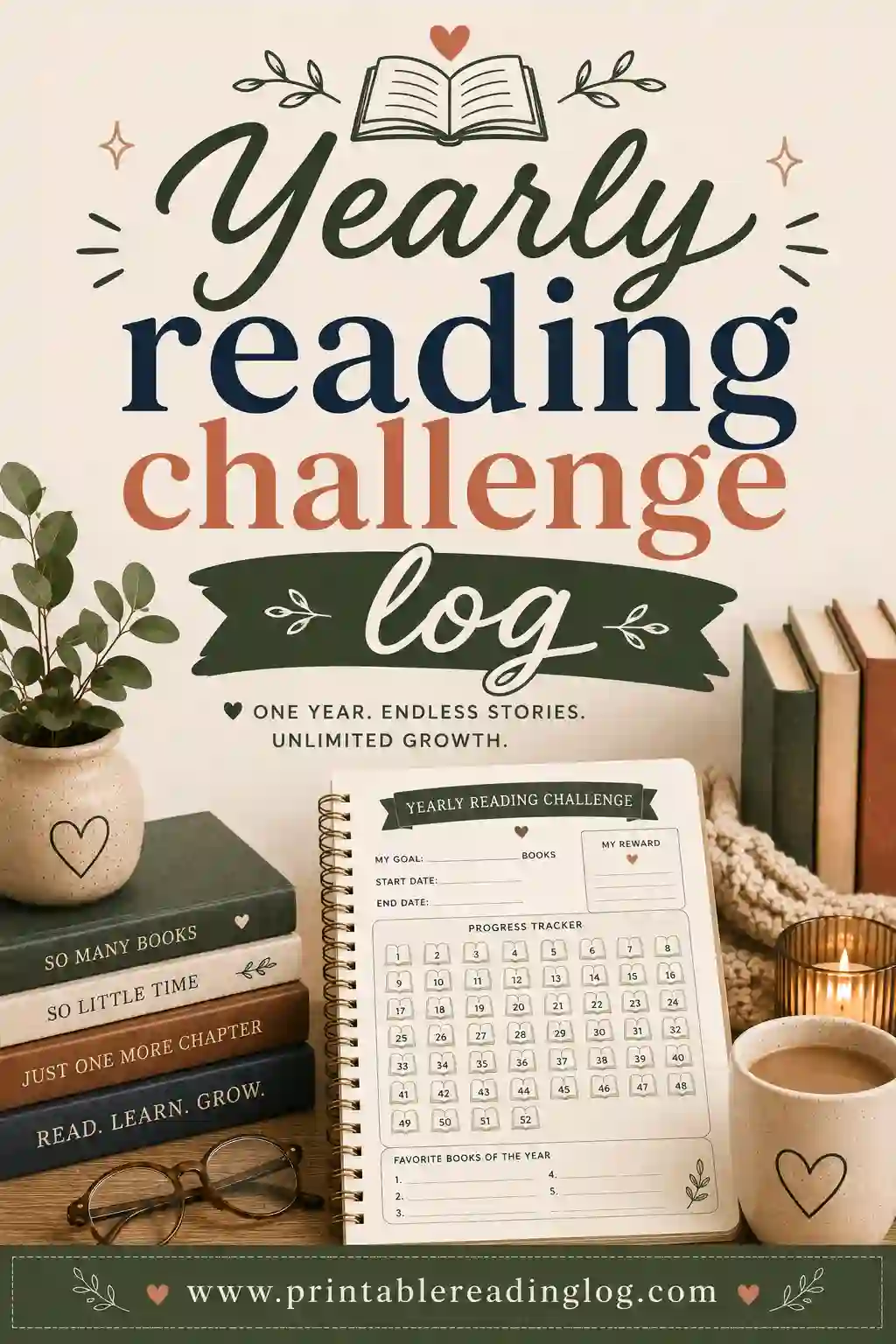
Push gently for variety here. Encourage a mystery, a non-fiction book about a real interest, a graphic novel, and a classic across the year. A yearly challenge log with themed slots is perfect for this. Our yearly reading challenge log gives kids a fun checklist of book types to chase.
Reading Goals for Tweens and Teens (Ages 11–17)
This is where many readers either lock in the habit for life or drift away. Goals should feel like the reader's own, not a chore from a parent.
Let the teen pick the format that motivates them:
- A yearly book count. "Read 12 books this year," one a month, is a classic and easy to track.
- A page goal. Some teens love watching a page count climb. 5,000 or 10,000 pages a year feels like a real achievement.
- A genre or series challenge. Finishing a favorite series or trying five new genres keeps it fresh.
The key with teens is to hand over the steering wheel. Let them choose the books and set the number. Your job is to provide the log and stay out of the way.
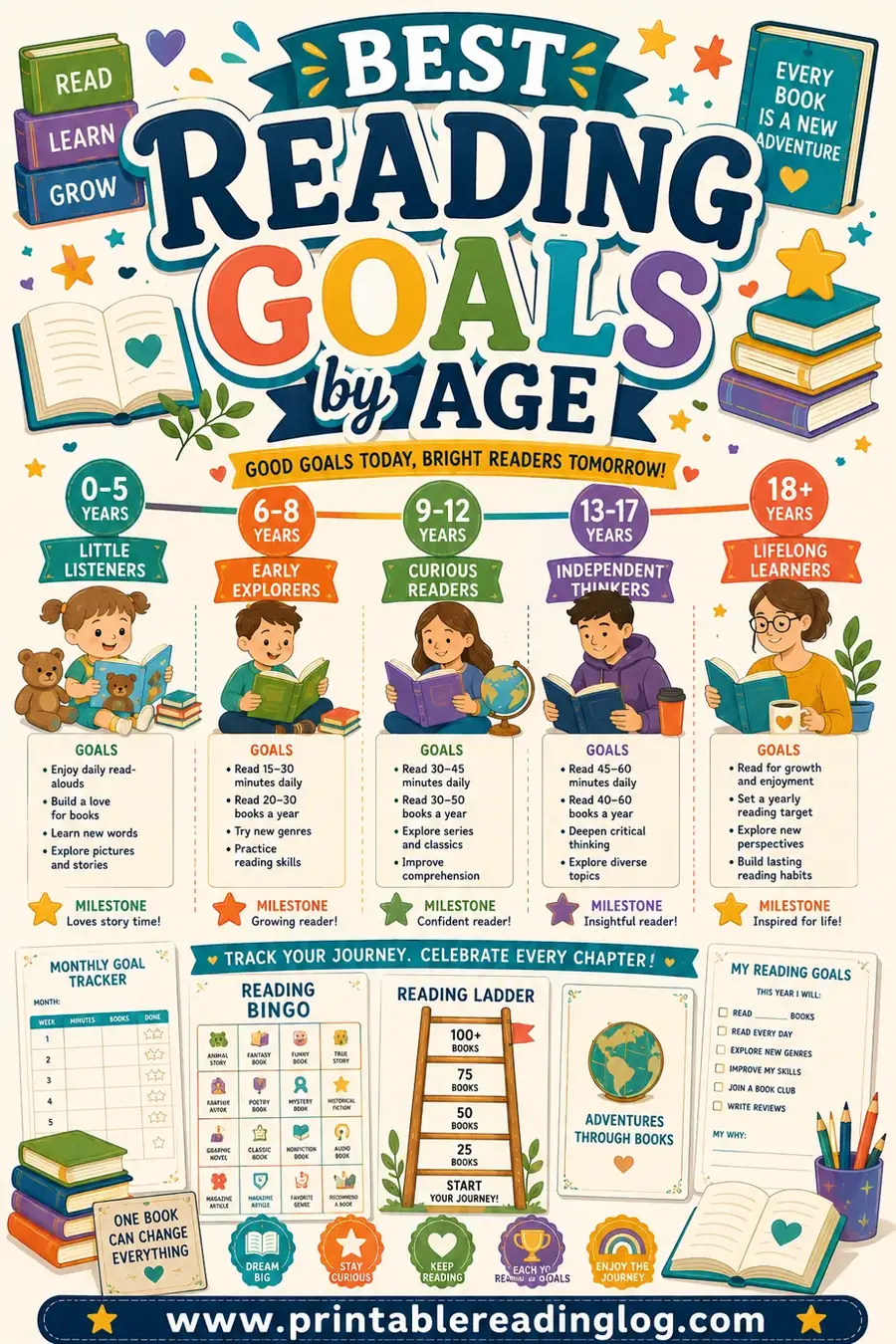
A Quick Reading Goals Chart by Age
Here's the whole guide at a glance. Use it as a starting point, then adjust up or down based on the actual reader in front of you.
| Age group | Daily reading goal | Bigger goal | Best way to track |
|---|---|---|---|
| Toddlers (1–3) | 5–10 min, shared | Read every day | "Did we read?" sticker row |
| Preschool (3–5) | 15 min, shared | 20 picture books/month | Color-in book chart |
| Early elementary (5–7) | 15–20 min | 1 short book/week | Title + star rating log |
| Upper elementary (8–10) | 20–30 min | 1 book/week | Monthly book log |
| Tweens & teens (11–17) | 20–30 min | 12+ books/year | Page or book-count log |
| Adults (18+) | 20–30 min | 12–52 books/year | Yearly tracker |
Print this and the matching daily log together so the goal and the tracking live side by side.
Don't Forget Adult Reading Goals
Reading goals aren't just for kids. A clear target is the best cure for the "I used to read so much" slump. The math is friendlier than people expect: just 20 minutes a day adds up to roughly 20 books a year for an average reader.
Popular adult goals:
- A book a month (12 a year) for a relaxed, steady pace.
- A book a week (52 a year) for an ambitious reading year.
- A minutes-per-day habit, like 30 minutes before bed, when book counts feel like pressure.
Whatever you pick, write it down and track it. A reading log for adults keeps the goal honest and, honestly, makes finishing a book feel even better when you log it.
How to Set the Right Number for Your Reader
The chart above is a guide, not a law. Here's how to fine-tune it.
Start from where they are, not where you want them
Watch the reader for a week with no goal at all. If they naturally read 10 minutes a day, set the goal at 12 to 15, not 45. A goal just out of reach motivates. A goal way out of reach discourages.
Pick one metric and stick with it
Minutes, pages, or books, choose one. Mixing metrics ("read 20 minutes AND finish 3 books AND read 500 pages") gets confusing fast. One clear number is easier to hit and easier to track.
Build in a streak, not a marathon
A goal of "read every day" with a few allowed skip days beats "read for 10 hours this weekend." Small and steady builds a real habit. Big bursts burn people out.
Adjust every few weeks
If the reader is hitting the goal easily, nudge it up. If they're missing it most days, lower it. The goal should flex around real life, not the other way around.
Frequently Asked Questions
What is a good daily reading goal for a child?
For most school-age kids, 15 to 20 minutes of reading a day is the widely recommended target, increasing to 20 to 30 minutes by upper elementary. Shared reading counts just as much as independent reading at younger ages.
How many books should a child read in a year?
It varies a lot by age and book length, but a common target is about one book a week for independent readers, or roughly 50 a year. For younger kids reading short picture books, the number is much higher; for teens reading long novels, it may be 12 to 20. Focus on consistency over the count.
What is a realistic reading goal for an adult?
A book a month (12 a year) is a comfortable, sustainable goal for most adults. A book a week (52 a year) is an ambitious but doable stretch goal. If counting books feels stressful, set a daily minutes goal instead, like 30 minutes before bed.
How do I set reading goals for a reluctant reader?
Start very small and let them choose the material. Even five minutes a day, or one page, counts as a win at first. Graphic novels, audiobooks, and magazines all count. Track every session so the reader can see the streak building, which is often the spark that gets them going.
Should reading goals be in minutes, pages, or books?
Any of the three works; pick the one that motivates your reader. Younger kids do best with minutes, since book length varies wildly. Older kids and adults often prefer page counts or book counts because the progress feels tangible. The most important thing is to track it.
How do I keep my child motivated to hit a reading goal?
Make the goal visible and let the child own the tracking. A printable log they mark themselves, plus a small reward for a streak (a special book, extra reading time, or simply praise), keeps motivation high. Reading alongside them helps even more.
Set Your Reading Goal Today
Pick the age, grab a realistic number from the chart, and make it real. Open the free reading log maker, choose a daily or yearly target, and print a tracker you can hang where everyone sees it. It's free, there's no sign-up, and watching the boxes fill in is the kind of small win that turns a reading goal into a reading habit. Happy reading, and may every page count.