Reading Log for Preschool: Fun, Simple & Printable
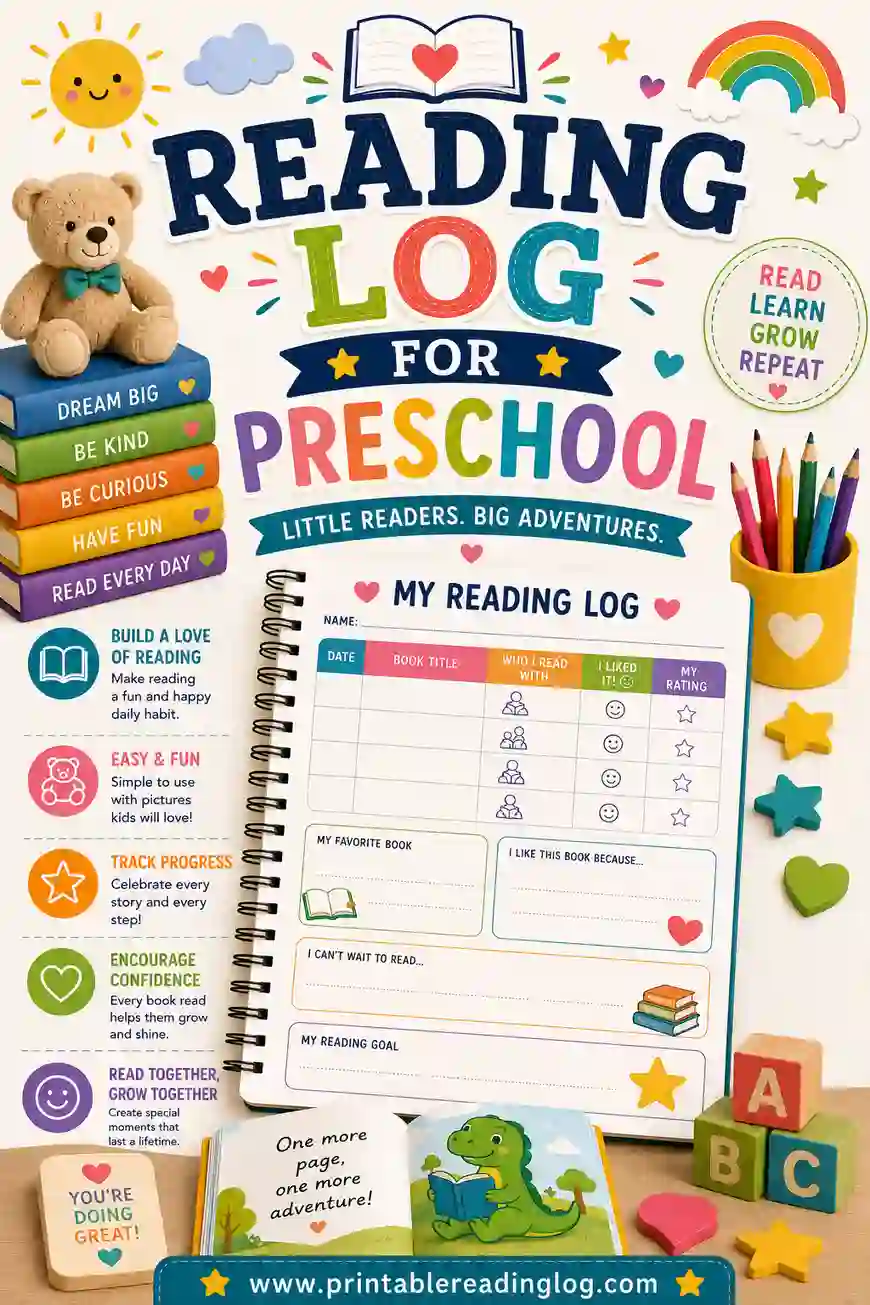
A reading log for preschool is a simple, picture-friendly sheet that tracks the books you read aloud to a young child, usually with stars or stickers instead of numbers. Since preschoolers can't read or write yet, the log records shared reading, time spent with books, and the joy of story time, not independent reading. The easiest way to make one is to use a free reading log generator, pick a colorful kid style, and print a sheet your little one can help fill in with stickers.
Want to skip ahead and just make one? Open the free tool, choose a simple sticker-style log, and print. No sign-up, no fee, nothing to install.
What Is a Preschool Reading Log?
It's a tracking sheet built for the under-five crowd, which means it works completely differently from a grade-schooler's log. There are no minutes to count, no quizzes, no pages to record. Instead, the log captures the thing that actually matters at this age: time spent sharing books together.
A typical preschool log gives the child a row or a box for each story, and they mark it with a sticker, a star, or a quick crayon scribble. That simple act, "I get to put a sticker on after we read," turns story time into something a three-year-old looks forward to.
The point of a preschool log isn't to measure. It's to celebrate. Every sticker says, "We read, and that's wonderful." That positive association is the whole foundation of a lifelong reading habit.
Why Track Reading at the Preschool Age?
Some parents wonder if it's silly to log reading for a kid who can't read yet. It isn't. The years before kindergarten are when reading habits and a love of books take root, and a simple log helps in a few real ways.
- It builds a daily ritual. Knowing a sticker comes after story time gives a child a reason to ask for "one more book."
- It makes reading feel special. A child who decorates their own log feels ownership over reading. It becomes their thing, not just something grown-ups make them do.
- It keeps you consistent. Honestly, the log is partly for the grown-up. A visible sheet nudges busy parents to keep story time happening even on hectic days.
- It celebrates progress you can see. A page full of stars is proof, for both of you, that reading is a regular part of life.
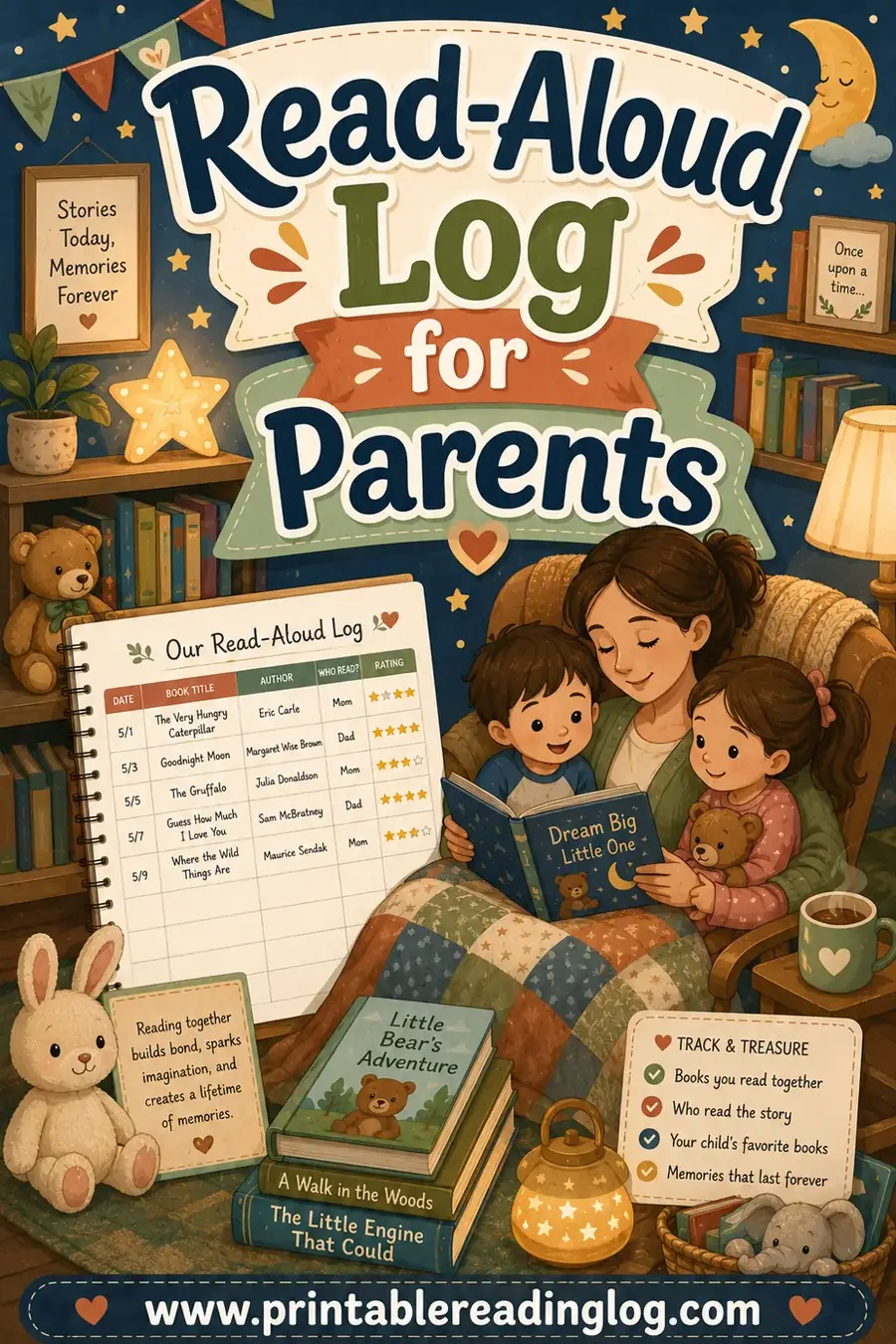
Read-alouds at this age do enormous good for vocabulary, attention, and bonding. For more on getting the most from them, our read-aloud log for parents guide goes deeper.
What to Track on a Preschool Log (Keep It Tiny)
The golden rule: less is more. A preschooler can't handle columns, and neither can a tired parent at bedtime. Track the bare minimum that still feels rewarding.
Good things to track:
- A sticker or star per story — the main event.
- The book's name — written by the grown-up, optional.
- A smiley face — did we have fun? Almost always yes.
- A tiny drawing — let the child scribble their favorite part.
Things to skip entirely: minutes, page counts, ratings, reading levels, and anything that turns story time into a chore. There's plenty of time for that later. Right now, the goal is pure joy.
A sample preschool reading log
| Day | Story | Sticker | We liked it |
|---|---|---|---|
| Mon | The Very Hungry Caterpillar | ⭐ | 😄 |
| Tue | Goodnight Moon | ⭐ | 😊 |
| Wed | Where the Wild Things Are | ⭐ | 😄 |
| Thu | Brown Bear, Brown Bear | ⭐ | 😊 |
| Fri | The Very Hungry Caterpillar (again!) | ⭐ | 😄 |
Notice Friday: preschoolers love repeats, and that's a good thing. Re-reading a favorite builds vocabulary and confidence. Let them pick the same book a hundred times if they want.
Fun Ways to Use the Log
A preschool log works best when it feels like play, not paperwork. A few ideas to keep it joyful:
Make stickers the reward. Let the child choose and place the sticker themselves. The placing is half the fun, and the fine-motor practice is a bonus.
Color a path to a treat. Turn the log into a road or a ladder where each book colored in moves a little closer to a small reward, like picking the next library book.
Theme the week. Spend a week on animal books, then trucks, then bedtime stories. The log becomes a little record of what you explored together.
Let them "read" to you. Have your child retell a familiar book in their own words, then add a special sticker for "I told the story." It builds confidence before any actual reading begins.
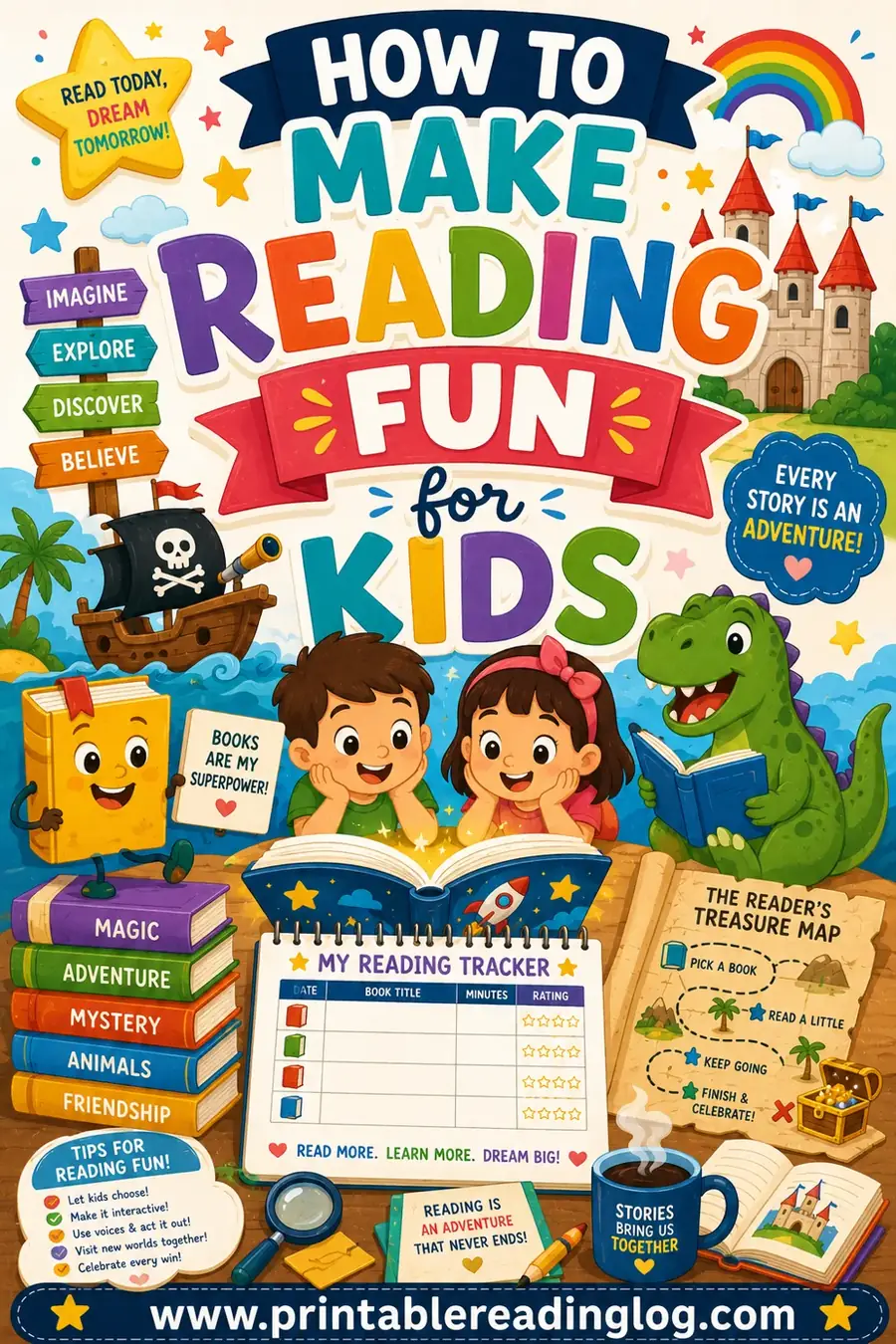
For a pile more ideas on keeping books fun at this age, see how to make reading fun for kids.
Picking Books for the Log
The best preschool books are short, rhythmic, and full of pictures. You're after books that beg to be read aloud and re-read. Here are types that tend to land well.
| Book type | Why preschoolers love it | Example feel |
|---|---|---|
| Rhyming books | The rhythm is catchy and predictable | Sing-song, bouncy |
| Repetitive text | Kids can "read along" by memory | "Brown bear, brown bear..." |
| Lift-the-flap | Hands-on, full of surprises | Interactive, giggly |
| Bedtime stories | Calm, soothing wind-down | Quiet, cozy |
| Counting & ABCs | Sneaks in early learning | Playful, bright |
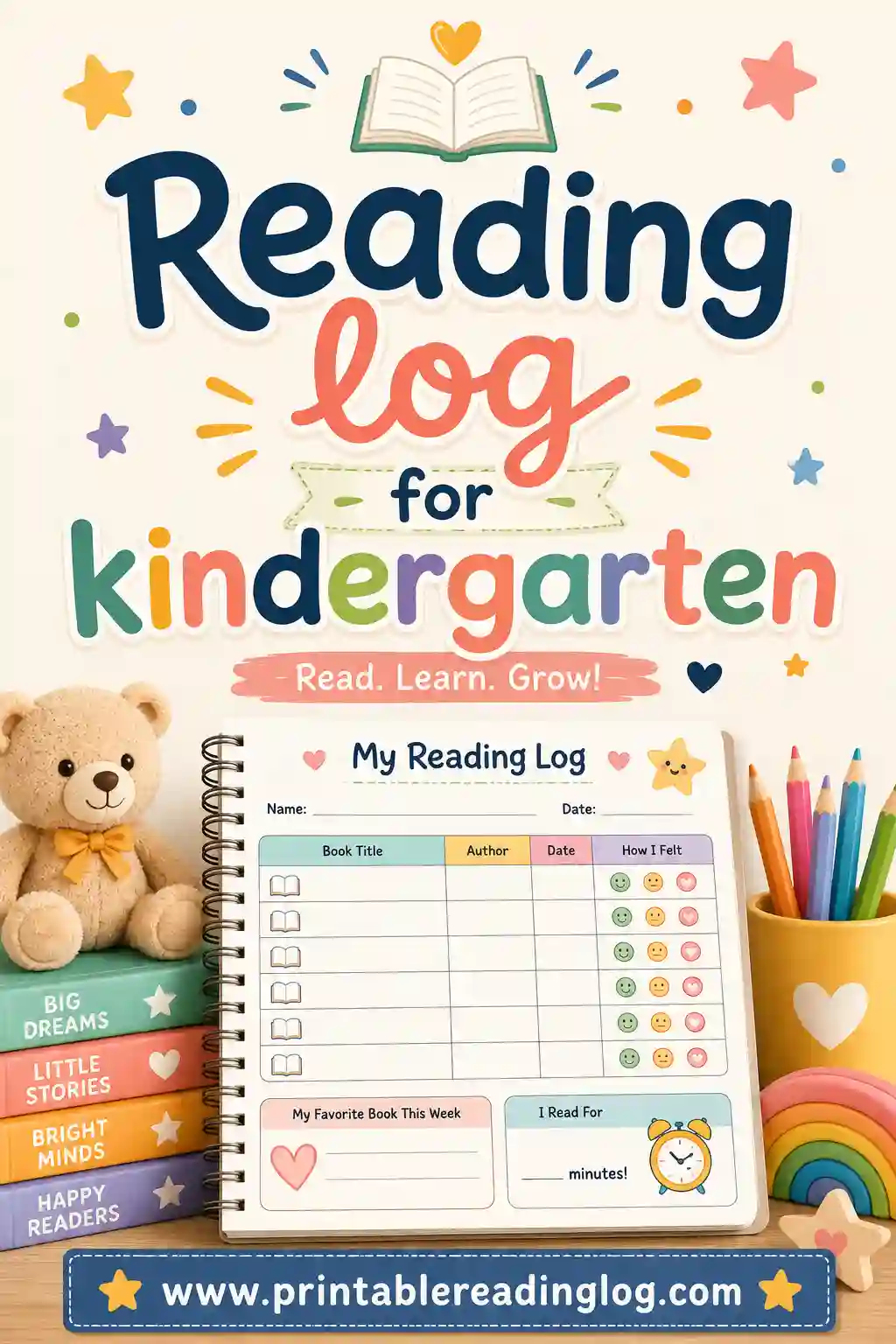
Mix it up, but don't fight the favorites. If your child wants the same caterpillar book every night for a month, that repetition is doing real work. Once your reader is heading toward "big kid" books, our reading log for kindergarten guide is the natural next step.
Building the Story-Time Habit
The log is a tool; the habit is the goal. A little structure makes daily reading almost automatic.
Pick a consistent time. Bedtime is the classic, but any reliable slot works. Predictable rituals help little kids settle in.
Keep books and the log together. A basket by the reading chair with the log clipped on means no hunting around when you've got a sleepy toddler.
Read with your voice. Different voices for characters, sound effects, a dramatic pause. Your enthusiasm is contagious, and it's what makes a kid beg for "again!"
Keep it short and sweet. Two short books with full attention beat one long book with a wriggly, checked-out child. Quality over quantity.
End on the sticker. Close every session with the child placing their sticker. It's a tidy, happy bookend that they'll look forward to.
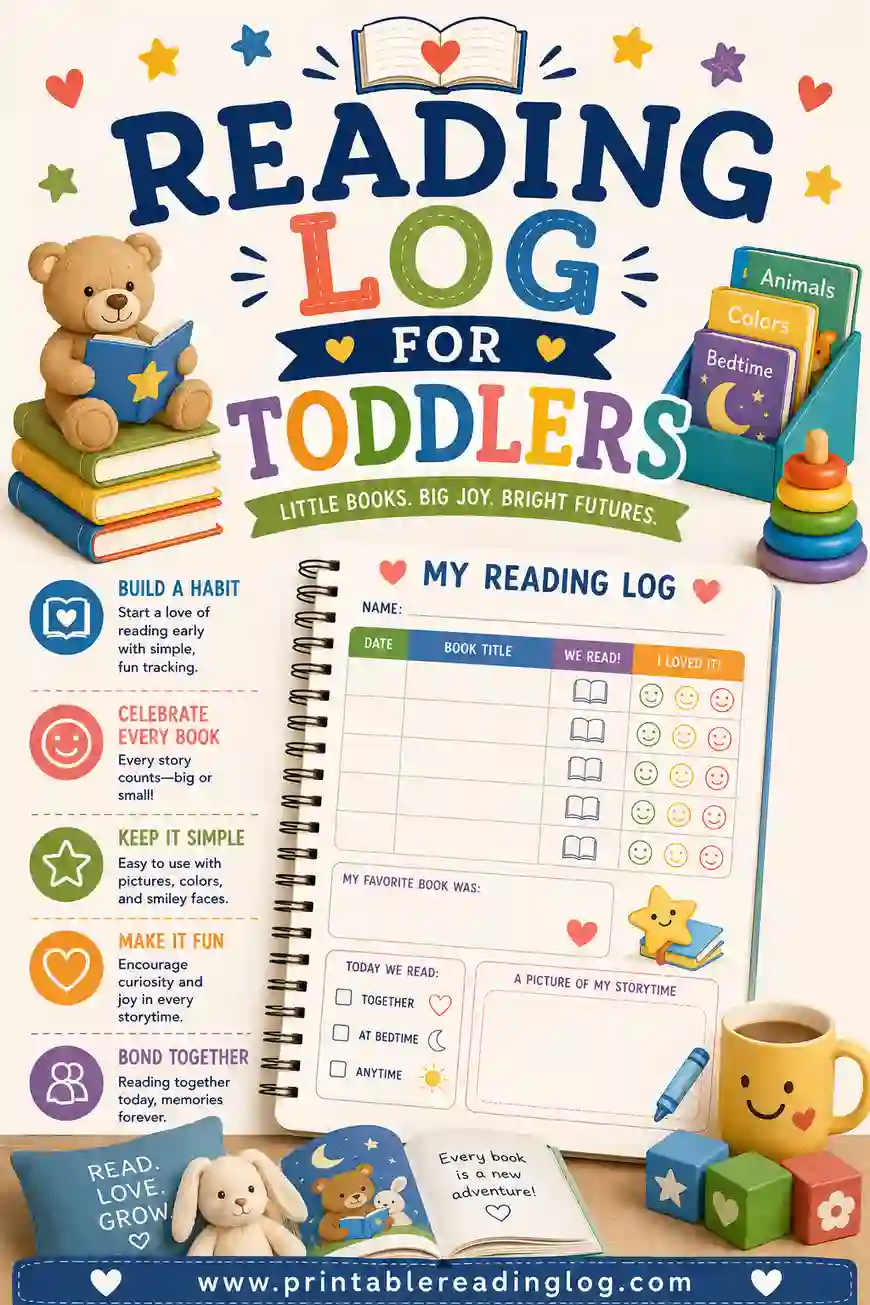
If your child is younger than three, the gentler pace in our reading log for toddlers guide may fit even better.
When your preschooler resists
Even book-loving little ones have off days. Some evenings your three-year-old would rather do anything but sit still for a story. Don't force it, and definitely don't turn the log into a battle. A few gentle moves usually win them back. Let them pick the book, even if it's the same one for the hundredth time. Read in a cozy fort or under a blanket to make it an event. Keep it shorter than usual, one quick book counts. Or try reading while they play nearby; plenty of kids absorb the story even when they look distracted. The goal is to keep the association with books warm and positive. A single skipped night is nothing. What matters is that, most of the time, story time feels like a treat, and the sticker waiting at the end is a small, happy reason to come back tomorrow.
Tie the log to library trips
A weekly or monthly library visit pairs perfectly with the log. Let your child help choose the books that will fill next week's rows, and the log becomes a little plan for your reading adventures together. Many libraries also run their own preschool reading programs with prizes, and your home log makes a great companion to those, keeping the reading going between visits.
Making the Log Print-Ready
A few small touches make a preschool log nicer to use day after day.
- Choose a bright, simple style. Big boxes and a little white space. The free tool has colorful kid layouts that suit this age.
- Leave room for stickers. Boxes should be big enough for a chubby sticker and a chubby hand.
- Print on sturdy paper. Cardstock survives stickers, crayons, and the occasional juice spill.
- Put the child's name at the top. Maybe with a spot to draw a self-portrait. Ownership makes it theirs.
- Print a fresh sheet often. A new page each week or month keeps the novelty alive and gives you a stack of keepsakes.
Frequently Asked Questions
Why track reading for a child who can't read yet?
Because the preschool years are when a love of books takes root. A log makes story time a fun daily ritual, gives your child something to be proud of, and nudges you to keep reading together even on busy days. You're tracking shared reading, not independent reading.
What should I put on a preschool reading log?
Keep it tiny: a sticker or star for each story, the book's name (you write it), and maybe a smiley face for "we had fun." Skip minutes, pages, and ratings. At this age the goal is joy, not measurement.
How many books should we read a day?
There's no magic number. Even one or two short books a day, read with full attention, is wonderful. Consistency matters more than quantity. Some days you'll read five; some days one. Both count.
Is it okay to read the same book over and over?
Completely okay, and actually great. Repetition builds vocabulary, confidence, and a sense of mastery. If your child wants the same book every night for a month, let them, and give it a sticker every time.
Can my preschooler help fill in the log?
Yes, and they should. Let them choose and place the stickers, color the boxes, or scribble their favorite part. Filling in their own log gives them ownership and makes reading feel like their special thing.
Is the printable preschool reading log free?
Yes. You build and print it yourself at no cost, with no sign-up and no watermark. Print a fresh, colorful sheet as often as you like.
Ready to Make Story Time Even More Fun?
Grab some stickers, pick tonight's books, and open the free reading log generator to print a bright, simple sheet your preschooler will love filling in. It's free, there's no sign-up, and a page full of stars is a beautiful way to show a little one that reading is something to celebrate. Happy story time.